

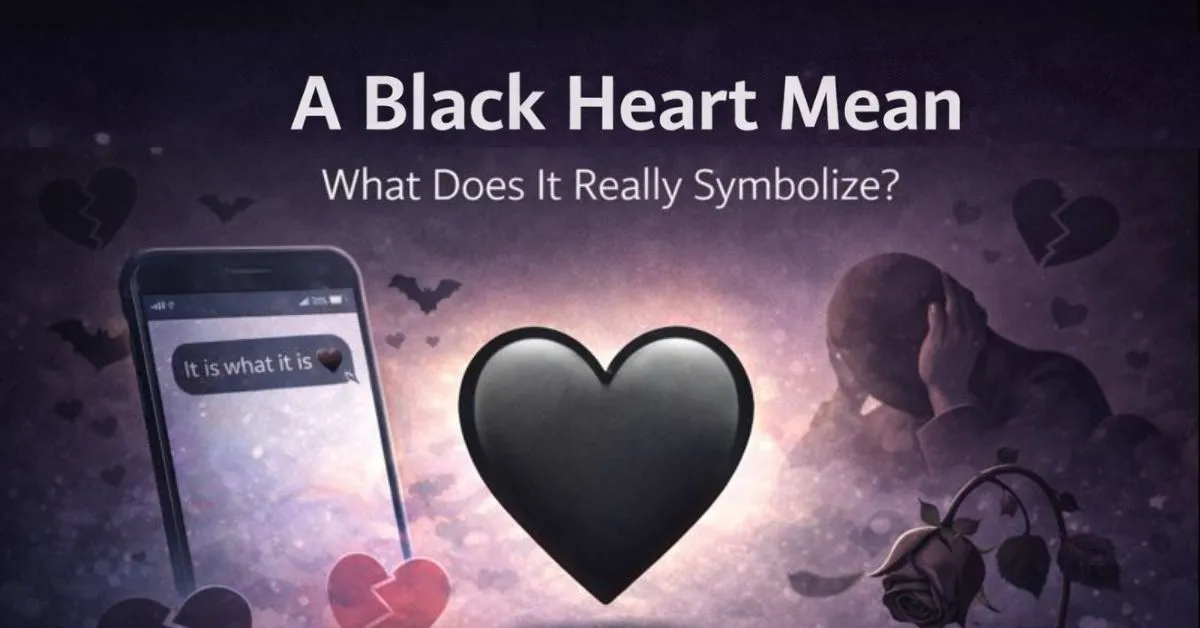
In the world of digital communication, emojis have become a universal language, allowing people to express emotions, humor, and personality with just a single symbol.
Among these, the black heart emoji 🖤 has gained attention for its mysterious and versatile meaning.
Unlike the classic red heart ❤️, which symbolizes love and affection, the black heart can convey a wide range of emotions—from dark humor and sarcasm to deep love, sophistication, or even mourning.
Its interpretation often depends on context, cultural background, and the relationship between the sender and receiver.
Beyond texting, the black heart has also found a place in art, fashion, and social media, symbolizing everything from rebellion and individuality to elegance and aesthetic appeal.
This article will explore the origins, symbolism, cultural significance, and modern uses of the black heart, helping you understand what it truly means when someone sends 🖤.
The Origins of the Black Heart Symbol
The black heart symbol has a surprisingly rich history that stretches far beyond its modern use as an emoji. Traditionally, the heart has been associated with love, compassion, and emotion, but the color black adds layers of complexity and nuance. In literature and art, black hearts often represented grief, mourning, or sorrow, especially in the context of loss or death. For example, Victorian-era illustrations sometimes used black hearts to depict broken or unrequited love, emphasizing melancholy and emotional depth.
Beyond sorrow, black hearts have also symbolized mystery, rebellion, and sophistication. In Gothic literature and subcultures, the black heart came to represent individuality, nonconformity, and an embrace of the darker aspects of human nature. This symbolic use of black hearts highlights the duality of human emotion—combining darkness and beauty in a single image.
With the rise of digital communication, the black heart transitioned from abstract symbolism into the world of emojis. Added to Unicode in 2015, the black heart emoji 🖤 became a versatile tool for expressing emotions that go beyond the traditional red heart. People began using it to convey dark humor, sarcasm, edgy aesthetics, or even deep, enduring love. Its popularity demonstrates how symbols evolve over time, adapting from historical and cultural contexts into the fast-paced, expressive language of modern messaging.
Emotional and Psychological Meanings
The black heart emoji 🖤 carries a range of emotional and psychological meanings, making it one of the most versatile symbols in digital communication. Unlike the traditional red heart ❤️, which universally represents love and affection, the black heart conveys emotions that are more complex, nuanced, or unconventional. For many, sending a black heart expresses a sense of dark humor or irony, allowing them to communicate playful sarcasm without words.
In romantic contexts, the black heart can indicate a deep, intense, or unconventional form of love. Some people use it to express a love that is enduring, mysterious, or even rebellious against traditional expressions of affection. At the same time, it can signal heartbreak, detachment, or emotional pain, reflecting the dual nature of human emotion: love intertwined with darkness.
Psychologically, people who frequently use the black heart emoji may identify with its symbolic undertones. It can reflect traits such as independence, introspection, or a fascination with alternative aesthetics like Gothic culture. In social media and texting, it allows users to express emotions that don’t fit neatly into mainstream categories, making it a powerful tool for personal expression.
Ultimately, the black heart emoji is context-dependent. Its meaning can shift depending on the relationship between sender and receiver, the tone of the conversation, and cultural understanding. This flexibility is what makes the black heart a compelling and emotionally rich symbol in modern communication.
Digital Culture & Social Media Usage
In today’s digital age, the black heart emoji 🖤 has become a prominent feature across social media platforms like Instagram, Twitter, TikTok, and WhatsApp. Its appeal lies in its versatility: it can communicate emotion, aesthetic, humor, or personality in ways that words alone often cannot. Unlike the traditional red heart ❤️, which is straightforward and romantic, the black heart adds nuance, allowing users to express irony, rebellion, or a more refined sense of style.
Influencers and celebrities have contributed to its popularity by using the black heart to set a particular mood or brand identity. For example, in posts featuring fashion, music, or personal statements, the black heart often conveys sophistication, edginess, or emotional depth. Among everyday users, it is frequently employed to emphasize sarcastic remarks, dark humor, or even solidarity during difficult times, such as mourning or social causes.
Trends in digital culture show that the black heart emoji is particularly favored by younger audiences and communities that embrace alternative or aesthetic-driven communication. It also allows for emotional subtlety; for instance, someone might use 🖤 to show appreciation without implying traditional romantic affection. Its rise highlights how emojis are no longer just decorative symbols—they have evolved into a complex visual language, capable of expressing identity, sentiment, and social context simultaneously.
In essence, the black heart emoji bridges emotion and style, proving that even a single symbol can carry multiple layers of meaning in modern online communication.
Comparison with Other Heart Emojis
While the black heart emoji 🖤 has gained popularity for its unique meaning, it is part of a larger family of heart emojis, each conveying different emotions and tones. The classic red heart ❤️ is universally recognized as a symbol of love, romance, and affection. It is straightforward, warm, and positive, often used in personal messages, romantic texts, and expressions of care.
The broken heart 💔, on the other hand, communicates heartbreak, loss, or emotional pain. It is often used in the context of failed relationships, disappointment, or grief. This emoji conveys vulnerability and sadness, making its meaning distinct from the playful or mysterious tones of the black heart.
Other heart colors also carry specific meanings. For example, the purple heart 💜 can symbolize compassion, luxury, or admiration, while the blue heart 💙 often conveys trust, loyalty, and calmness. Each color adds a layer of nuance, allowing users to express emotions more precisely than words alone.
The black heart 🖤 stands out because it blends emotional depth with stylistic expression. Unlike the red or pink hearts that focus on traditional love, the black heart can signal sarcasm, dark humor, rebellion, or sophistication. Its ambiguity allows for more flexible communication, letting users convey messages that are subtle, edgy, or unconventional.
Understanding these differences helps readers navigate emoji communication effectively. While a heart might seem simple, the color and context drastically change its meaning, making the black heart a versatile and expressive symbol in modern digital language.
Black Heart in Dark/Gothic Culture
The black heart has long held significance in Gothic and alternative subcultures, where it is more than just a digital symbol—it embodies identity, aesthetic, and philosophy. In Gothic fashion, literature, and music, the black heart represents themes of mystery, melancholy, and rebellion against mainstream norms. It conveys an appreciation for the darker aspects of human emotion, embracing sadness, introspection, and individuality rather than avoiding them.
In Gothic literature, for example, black hearts often symbolize complex characters grappling with sorrow, inner conflict, or defiance, highlighting emotional depth and intensity. Similarly, Gothic fashion uses the black heart as an emblem of sophistication, mystery, and elegance, blending the aesthetic of darkness with style. In this context, the black heart becomes a personal statement, signaling uniqueness and alignment with alternative values.
Modern digital culture has carried these associations into online spaces. Emojis like 🖤 allow users to subtly express their connection to Gothic or alternative culture, nevertheless through social media posts, profiles, or creative content. Beyond aesthetics, the black heart in these communities represents authenticity and emotional honesty—a way to convey feelings that are complex, nuanced, or unconventional.
Overall, the black heart functions as a bridge between historical symbolism and contemporary subcultural identity. No matter in literature, fashion, or social media, it communicates depth, individuality, and a fascination with the darker yet beautiful aspects of life, making it a powerful symbol for those who embrace alternative expression.
Positive Interpretations
In modern communication, it can symbolize elegance, sophistication, and strength, making it a popular choice for those seeking a stylish and refined expression. Unlike traditional red or pink hearts, which convey conventional love or affection, the black heart offers a more unique and individualized way to communicate emotions.
In relationships, the black heart can represent deep, enduring love that is unconventional or mysterious. Couples may use it to signify a love that is strong, resilient, and outside traditional norms, highlighting depth and intensity rather than superficial affection. It is also a way to express loyalty, commitment, and emotional complexity, signaling that feelings run deeper than what a simple red heart might convey.
Beyond romance, the black heart is often used in creative and aesthetic contexts. Social media influencers, artists, and designers employ it to complement dark or minimalist visuals, emphasizing beauty, style, and sophistication. In personal expression, it can reflect confidence, individuality, and a strong sense of identity, showing that the sender embraces their uniqueness.
Ultimately, the black heart emoji proves that darkness and positivity are not mutually exclusive. Its versatility allows it to express complex, layered emotions while remaining stylish and meaningful, making it a powerful symbol for personal identity, affection, and self-expression in both digital and cultural spaces.
Common Misinterpretations
Despite its popularity, the black heart emoji 🖤 is often misunderstood, leading to potential confusion in digital communication. Unlike the universally recognized red heart ❤️, the black heart carries multiple meanings that vary depending on context, relationship, and cultural background. This ambiguity can sometimes result in misinterpretation.
In reality, the emoji may simply reflect dark humor, sarcasm, aesthetic preference, or a deeper form of love.
Misinterpretations are also common in social media posts or public messaging, where the intended personal or emotional meaning may be unclear to broader audiences. Someone using 🖤 to indicate sophistication, style, or individuality could be mistakenly seen as expressing negativity or detachment.
To avoid misunderstandings, it’s important to consider context, audience, and tone. Pairing the black heart emoji with text that clarifies intent, or using it consistently within a particular communication style, can help convey the correct meaning. Understanding its multifaceted nature ensures that the black heart is appreciated for its expressive versatility rather than being misread as cold or hostile.
Ultimately, while the black heart is a rich and meaningful symbol, careful use and awareness of context are key to communicating its intended message accurately.
Cultural Differences
The meaning of the black heart emoji 🖤 is not universal and can vary significantly across cultures, reflecting differing associations with color, symbolism, and emotion. In Western cultures, black is often linked to mourning, darkness, mystery, or rebellion. As a result, the black heart may convey edgy humor, individuality, or emotional depth.
In contrast, some Eastern cultures perceive black differently. While it can represent formality, elegance, or strength, it is not always associated with negativity. In certain contexts, black may symbolize stability, sophistication, or resilience, giving the black heart a more positive or neutral interpretation. Consequently, the same emoji might be understood differently depending on cultural background, social norms, and personal experiences.
Language also plays a role
Understanding these cultural nuances is essential for accurate communication. Using the black heart emoji without awareness of context can lead to misunderstandings, while thoughtful application allows it to serve as a versatile and expressive symbol that resonates across diverse communities.
Fun & Creative Uses
Beyond its emotional and symbolic meanings, the black heart emoji 🖤 has become a popular tool for creative expression in both digital and physical spaces. Social media users often incorporate it into posts, captions, and comments to enhance aesthetic appeal, add humor, or make a statement. Its versatility allows it to complement minimalist designs, dark-themed visuals, or alternative fashion content, giving posts a stylish and edgy touch.
Artists and designers use it to evoke sophistication, mystery, or emotional depth in their work. For example, black heart motifs appear in digital illustrations, merchandise, album covers, and promotional materials, where it conveys elegance and individuality. In tattoo culture, a black heart can symbolize personal strength, resilience, or a unique perspective on love and life.
In everyday texting, the black heart can add flair to conversations, signaling personality, humor, or aesthetic sensibility. It allows users to express themselves in ways that are unconventional or visually striking, without relying on lengthy explanations. Some people even use multiple black hearts to emphasize style, emotion, or solidarity, turning a simple symbol into a playful form of personal branding.
Ultimately, the black heart emoji demonstrates how symbols evolve from simple representations into versatile tools for creativity, identity, and expression. Its use in digital and physical media highlights its appeal as both an emotional and artistic symbol, making it a favorite among those who want to convey depth, style, or individuality in fun and innovative ways.
Conclusion
The black heart emoji 🖤 is far more than a simple symbol in digital communication; it is a versatile and multi-layered representation of emotion, identity, and style.
Its meanings range from dark humor, sarcasm, and rebellion to deep love, sophistication, and elegance.
Unlike the traditional red heart ❤️, which conveys straightforward affection, the black heart offers subtlety and complexity, allowing users to express emotions that are unconventional, nuanced, or context-specific.
Historically, black hearts appeared in literature, art, and culture as symbols of grief, melancholy, or mystery.
Today, they have evolved into both a digital language and an aesthetic statement, embraced by social media users, artists, influencers, and alternative communities alike.
In Gothic and subcultural contexts, the black heart conveys individuality, emotional depth, and a fascination with the darker sides of life.
In modern texting, it can signify loyalty, enduring love, dark humor, or personal style, depending on the sender’s intent and the surrounding context.
Cultural differences also influence interpretation, with black hearts representing elegance, resilience, or sophistication in some regions, while in others, they may hint at mourning or detachment.
Misunderstandings can occur, which is why context, audience, and tone are critical when using this emoji.
Ultimately, the black heart demonstrates how a single symbol can carry multiple layers of meaning—emotional, aesthetic, and cultural.
Nevertheless used to express love, individuality, or style, it remains a powerful, expressive, and enduring symbol in both digital and real-world communication.

Elena Moretti is a highly accomplished Italian business executive and Country Business Unit Head for Building Products at Siemens S.p.A., known for her expertise in leadership, digital transformation, smart buildings, and strategic business growth. With a degree in Business Administration from Bocconi University, Moretti has built a distinguished career spanning finance, operations, and executive management in complex engineering‑driven industries.