

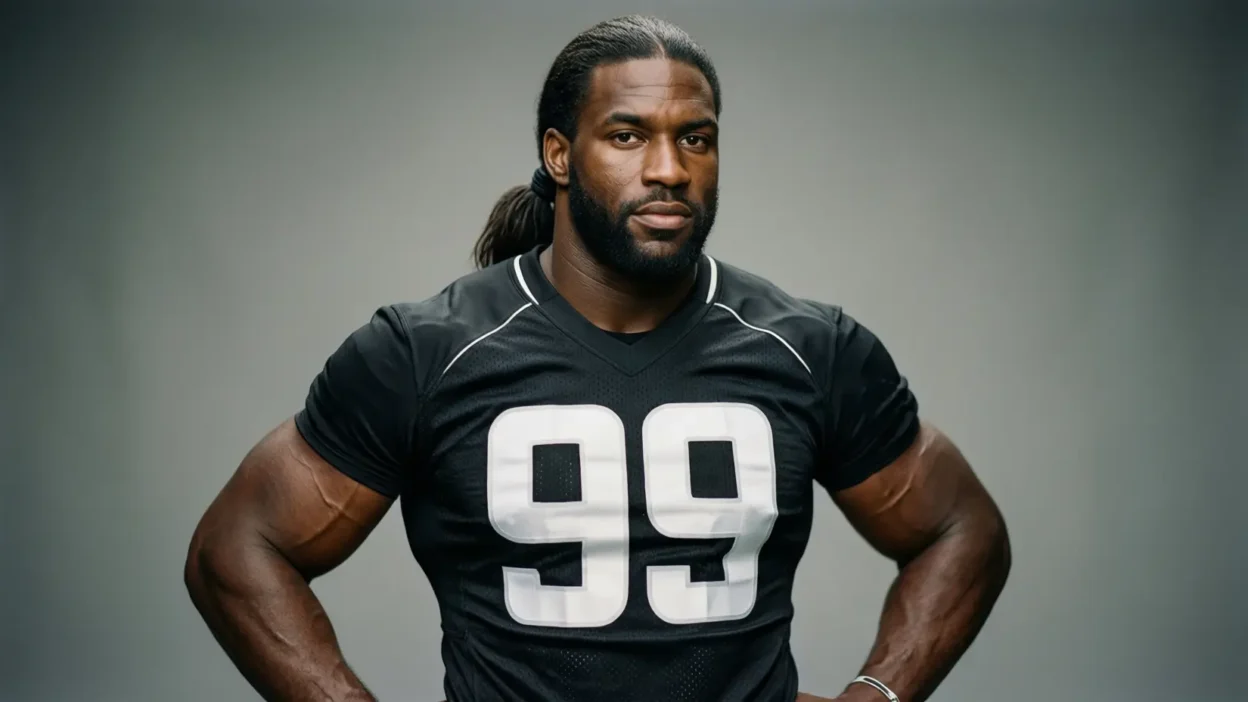
Aaron Donald is one of the most dominant defensive players the NFL has ever seen, and much of the fascination surrounding him goes beyond stats and accolades.
Fans, analysts, and aspiring athletes alike often ask a simple but important question: what is Aaron Donald’s weight, and how does it contribute to his on-field dominance?
While weight is just a number on paper, in football it plays a critical role in strength, leverage, speed, and durability—especially for a defensive tackle.
Aaron Donald stands out because he has mastered the balance between size and explosiveness, proving that elite performance isn’t just about being the biggest player on the field.
His weight, combined with exceptional conditioning and technique, allows him to overpower offensive linemen while remaining incredibly fast off the snap.
Understanding Aaron Donald’s weight offers deeper insight into how modern NFL athletes optimize their bodies for peak performance and long-term success.
Aaron Donald’s Official Weight and Physical Profile
Aaron Donald’s listed playing weight has consistently been around 280–285 pounds, paired with a height of approximately 6 feet 1 inch. While these numbers may seem modest compared to many NFL defensive tackles—who often weigh well over 300 pounds—they are a major reason Donald is such a unique and effective player. His physical profile challenges the traditional belief that bigger is always better in the trenches.
What truly separates Aaron Donald is not just his weight, but how that weight is distributed. He carries an exceptionally high amount of lean muscle mass with very low body fat, giving him an elite strength-to-weight ratio. This allows him to generate tremendous power without sacrificing speed or agility. At the NFL Combine, his measurements and performance metrics reinforced the idea that his body composition was far more important than raw size.
Compared to the average defensive tackle, Aaron Donald is technically “undersized,” yet his compact frame gives him a lower center of gravity. This makes it harder for offensive linemen to gain leverage against him, while allowing Donald to explode off the line of scrimmage. His weight also contributes to his durability, as he has maintained elite performance levels across multiple seasons without significant drop-off.
In short, Aaron Donald’s official weight is a perfect example of how functional strength, muscle density, and athletic efficiency matter far more than scale numbers alone.
How Aaron Donald’s Weight Evolved Over His Career
Aaron Donald’s weight has not been static throughout his football journey; instead, it has evolved strategically as his career progressed. During his college years at the University of Pittsburgh, Donald played at a slightly lighter weight, focusing on speed, quickness, and technique rather than sheer mass. This approach helped him dominate at the collegiate level and set the foundation for his explosive playing style.
Leading up to the NFL Draft and Combine, Aaron Donald weighed in at around 285 pounds, a number that raised questions among scouts who were accustomed to larger defensive tackles. However, his exceptional strength tests, agility drills, and on-field performance quickly silenced concerns about his size. Rather than bulking up dramatically, Donald entered the NFL committed to refining his existing physique.
In his early NFL seasons, Donald made minor adjustments to his weight, fine-tuning his muscle mass to handle the physical demands of professional offensive linemen. These changes were not about getting heavier, but about becoming stronger and more durable without losing speed. As his career progressed, Donald focused on maintaining a consistent playing weight, prioritizing conditioning, recovery, and muscle quality over significant size increases.
This disciplined approach has allowed Aaron Donald to remain explosive well into his career. By resisting unnecessary weight gain, he preserved the quickness and leverage that define his dominance. His weight evolution reflects a modern NFL philosophy: optimal performance comes from balance, not bulk.
Why Aaron Donald’s Weight Is Ideal for His Position
Aaron Donald’s weight is ideally suited for his role as a defensive tackle because it maximizes both power and explosiveness without sacrificing mobility. At around 280–285 pounds, he possesses enough mass to withstand double teams and anchor against the run, while still being light enough to move with rare quickness. This balance allows him to attack gaps aggressively and disrupt plays before they fully develop.
One of the biggest advantages of Aaron Donald’s weight is his power-to-weight ratio. His strength levels are exceptional, enabling him to generate force far beyond what his size alone would suggest. This means offensive linemen often struggle to control him, even when they outweigh him by 20 to 40 pounds. His compact frame and lower center of gravity further enhance his leverage, making it difficult for blockers to gain proper positioning.
Speed is another critical factor. Many heavier defensive tackles lose effectiveness on passing downs due to reduced agility, but Donald’s weight allows him to stay on the field in all situations. He can explode off the snap, change direction quickly, and pursue quarterbacks and ball carriers with uncommon efficiency for an interior lineman.
Ultimately, Aaron Donald’s weight is ideal because it supports a playing style built on quickness, technique, and relentless pressure. Rather than relying on sheer size, he leverages optimized body composition to dominate at the highest level of professional football.
Training Methods That Support Aaron Donald’s Playing Weight
Aaron Donald’s ability to maintain his ideal playing weight is the result of an intense, highly specialized training regimen focused on strength, explosiveness, and functional movement. Rather than training simply to add mass, Donald’s workouts are designed to maximize power while preserving speed and mobility. This approach allows him to stay dominant without unnecessary weight gain.
A major component of his training is heavy compound lifting, including squats, deadlifts, bench presses, and power cleans. These exercises build total-body strength and reinforce the muscle density needed to compete against larger offensive linemen. Donald is known for lifting extremely heavy weights with precise technique, which contributes to his exceptional power-to-weight ratio.
In addition to raw strength work, Donald emphasizes explosive movements such as sled pushes, resisted sprints, box jumps, and medicine ball throws. These drills translate directly to on-field performance by improving his first-step quickness and ability to generate force in short bursts. Agility and footwork drills further help him maintain balance and coordination at his playing weight.
Conditioning also plays a critical role. High-intensity interval training and position-specific conditioning ensure that his weight remains functional throughout an entire game. During the offseason, his training volume may increase, while in-season workouts focus on maintenance and recovery.
By prioritizing strength efficiency, explosiveness, and conditioning, Aaron Donald’s training methods allow him to sustain peak performance at an optimal weight year after year.
Nutrition and Diet Behind Aaron Donald’s Weight
Maintaining Aaron Donald’s elite playing weight requires more than intense training—it also depends on a disciplined and carefully structured nutrition plan. His diet is designed to support muscle maintenance, recovery, and sustained energy while keeping body fat levels low. Rather than focusing on extreme calorie surplus or restrictive dieting, Donald’s nutrition strategy emphasizes balance and consistency.
Protein plays a central role in supporting his lean muscle mass. High-quality sources such as lean meats, fish, eggs, and protein supplements help repair muscle tissue after demanding workouts and games. Carbohydrates are equally important, providing the fuel necessary for high-intensity training sessions and explosive on-field performance. Complex carbohydrates like rice, sweet potatoes, and whole grains are commonly used to maintain energy without unnecessary weight gain.
Healthy fats also contribute to his overall nutrition plan, supporting hormone balance and joint health. Hydration is another critical factor, as maintaining proper fluid levels helps optimize performance and recovery while preventing muscle fatigue. Timing of meals matters as well, with a focus on pre-workout fueling and post-workout recovery nutrition.
Donald’s approach to diet aligns with his philosophy on weight: every pound must serve a purpose. By prioritizing nutrient-dense foods and avoiding excess calories, he ensures that his body composition remains optimized for speed, strength, and durability. This disciplined nutritional foundation is essential to sustaining his dominance at the NFL level.
Aaron Donald’s Weight Compared to Other NFL Defensive Linemen
When compared to other NFL defensive linemen, Aaron Donald’s weight highlights just how unconventional his dominance truly is. Most elite defensive tackles in the league typically weigh between 300 and 330 pounds, using sheer size to clog running lanes and overpower blockers. At around 280–285 pounds, Donald is noticeably lighter than many of his peers, yet his impact often surpasses theirs.
This difference in weight underscores a shift in how effectiveness at the position can be achieved. While heavier linemen rely on mass and reach, Donald compensates with exceptional strength, speed, and leverage. His lighter frame allows him to accelerate faster off the snap, often beating offensive linemen before they can fully engage. This quickness gives him a consistent advantage, particularly on passing downs where interior pressure is crucial.
Comparisons with other star defenders further emphasize his uniqueness. Even players known for athleticism at the position often outweigh Donald, yet few match his consistency in disruption and sack production. His ability to command double teams despite weighing less than many blockers speaks to his elite power-to-weight ratio.
As the NFL continues to evolve toward faster, more dynamic offenses, Donald’s success suggests that optimal weight and athletic efficiency may be more valuable than sheer bulk. His example has influenced how teams evaluate defensive line prospects, proving that dominance doesn’t always come in the biggest package.
Impact of Weight on Performance and Injury Prevention
Aaron Donald’s carefully maintained weight plays a significant role in both his elite performance and long-term durability. Carrying an optimized amount of mass allows him to generate explosive power without placing unnecessary stress on his joints and soft tissues. This balance is especially important for a defensive tackle, a position that involves constant high-impact collisions.
From a performance standpoint, Donald’s weight enhances his stamina and consistency. Because he is not carrying excess body fat, he can sustain a high level of intensity throughout an entire game. His conditioning allows him to remain effective late in contests, when heavier linemen may begin to fatigue. This endurance gives him a competitive edge in critical moments.
Injury prevention is another major benefit of his weight management. Excess weight can increase strain on the knees, hips, and lower back, particularly in positions that demand explosive movements. By maintaining a lean, muscular build, Donald reduces the cumulative stress on these areas. His strength training further stabilizes his joints, helping protect him from common football injuries.
Recovery is also influenced by weight. A well-conditioned body recovers more efficiently between games and practices, allowing Donald to maintain peak performance over long seasons. His ability to stay healthy and productive year after year highlights how proper weight management is not just about dominance, but also longevity in the NFL.
Common Myths About Aaron Donald’s Weight
Despite his long list of achievements, several myths continue to surround Aaron Donald’s weight and physical profile. One of the most common misconceptions is that he is “too small” to play defensive tackle at an elite level. While he may be lighter than many players at the position, his on-field performance clearly disproves the idea that size alone determines success in the trenches.
Another widespread myth is that bigger always means stronger in the NFL. Aaron Donald’s strength numbers and ability to overpower much heavier offensive linemen challenge this belief. His exceptional muscle density, technique, and leverage allow him to produce force that rivals or exceeds that of players who outweigh him significantly. This shows that functional strength is far more important than scale weight.
Some fans also assume that Donald’s weight is the result of genetics alone. While genetics play a role, his physique is largely the product of relentless training, disciplined nutrition, and meticulous attention to recovery. His body composition is carefully maintained through year-round effort, not chance.
Finally, there is a misconception that his weight limits his durability. In reality, his lean build and conditioning have contributed to consistent availability and sustained dominance. These myths overlook the science and strategy behind his weight, which has been a cornerstone of his success.
What Athletes and Fans Can Learn From Aaron Donald
Aaron Donald’s approach to weight offers valuable lessons for both aspiring athletes and everyday fitness enthusiasts. One of the most important takeaways is that optimal performance is not about being as heavy as possible, but about carrying weight that enhances speed, strength, and efficiency. Donald’s success shows that functional power and athleticism can outperform sheer size.
For young athletes, his example highlights the importance of developing proper technique and overall athleticism before focusing on adding mass. Building strength relative to body weight, improving mobility, and maintaining conditioning can lead to better long-term development than chasing numbers on a scale. Donald’s commitment to consistency and discipline demonstrates that elite results come from sustained effort over time.
Fitness-minded fans can also apply these principles. Rather than training solely for aesthetics or maximum bulk, focusing on movement quality, strength balance, and recovery can lead to healthier, more sustainable results. Nutrition, rest, and injury prevention are just as important as intense workouts.
Beyond physical lessons, Aaron Donald’s mindset stands out. His attention to detail, work ethic, and refusal to follow conventional norms have helped redefine expectations at his position. His career proves that understanding your body and optimizing it for performance can unlock extraordinary potential.
Frequently Asked Questions (FAQ)
What is Aaron Donald’s current weight?
Aaron Donald’s listed playing weight is generally around 280 to 285 pounds. While this number may fluctuate slightly during the offseason or throughout the year, he consistently maintains this range to preserve his ideal balance of strength, speed, and durability.
Is Aaron Donald undersized for a defensive tackle?
By traditional NFL standards, yes—many defensive tackles weigh over 300 pounds. However, Donald’s exceptional strength, leverage, and explosiveness more than compensate for being lighter. His success has proven that effectiveness at the position is not solely dependent on size.
Did Aaron Donald gain weight during his NFL career?
Rather than making major weight gains, Donald focused on refining his body composition. Any increases were strategic, emphasizing lean muscle rather than bulk, allowing him to handle NFL physicality without sacrificing quickness.
How does Aaron Donald stay so lean at his weight?
He combines intense strength and conditioning programs with disciplined nutrition and recovery habits. His training emphasizes functional strength and explosiveness, while his diet supports muscle maintenance and low body fat levels.
Is Aaron Donald’s weight realistic for non-NFL athletes to aim for?
For most people, his exact weight is not a realistic or necessary goal. The key takeaway is not the number itself, but the principle behind it—optimizing body composition for performance, health, and sustainability rather than chasing size alone.
Conclusion:
Aaron Donald’s weight is far more than a statistic listed on a roster—it is a key component of what makes him one of the most dominant defensive players in NFL history.
At a playing weight of around 280–285 pounds, Donald has redefined what is possible for a defensive tackle, proving that optimal body composition can outweigh traditional size expectations.
His success highlights how strength, speed, leverage, and conditioning work together to create elite performance.
Throughout his career, Donald has shown that maintaining the right weight is a continuous process.
Through disciplined training, precise nutrition, and a relentless focus on recovery, he has preserved explosiveness while minimizing unnecessary wear and tear on his body.
This balance has allowed him to remain effective season after season, even as the physical demands of the NFL continue to evolve.
More broadly, Aaron Donald’s example reflects a shift in modern football toward efficiency and athletic optimization.
His dominance challenges long-held assumptions that bigger is always better, especially in the trenches. Instead, his career emphasizes the value of functional strength, adaptability, and smart body management.
Ultimately, understanding Aaron Donald’s weight provides deeper insight into why he has been so successful.
It is not just how much he weighs, but how purposefully that weight is built and maintained.
His approach serves as a blueprint for athletes at all levels who aim to maximize performance while sustaining long-term health and durability.

Amina Khalid is a registered clinical psychologist and certified Behaviour Support Practitioner based in Brisbane, Australia. With a Doctorate in Clinical Psychology and more than a decade of experience supporting families, caregivers, and individuals with complex behavioural needs, she is known for her compassionate approach and evidence‑based practice. Amina also lectures in clinical and counselling psychology and specializes in psychometric assessment and capacity‑building interventions for children and adults.