

Monitoring your puppy’s growth is one of the most important tasks for any new dog owner.
Many owners struggle with guessing their puppy’s weight, but the AKC Puppy Weight Calculator simplifies this process by providing breed-specific predictions and tracking tools.
If you have a small, medium, or large breed, understanding your puppy’s weight helps ensure proper nutrition, exercise, and overall health. In this article, we’ll explore how the AKC Puppy Weight Calculator works, step-by-step instructions for using it, and how to monitor your puppy’s growth accurately.
We’ll also discuss common mistakes to avoid, factors that affect weight, and practical tips to keep your puppy healthy and happy. By the end, you’ll be fully equipped to track your puppy’s growth with confidence.
What is the AKC Puppy Weight Calculator?
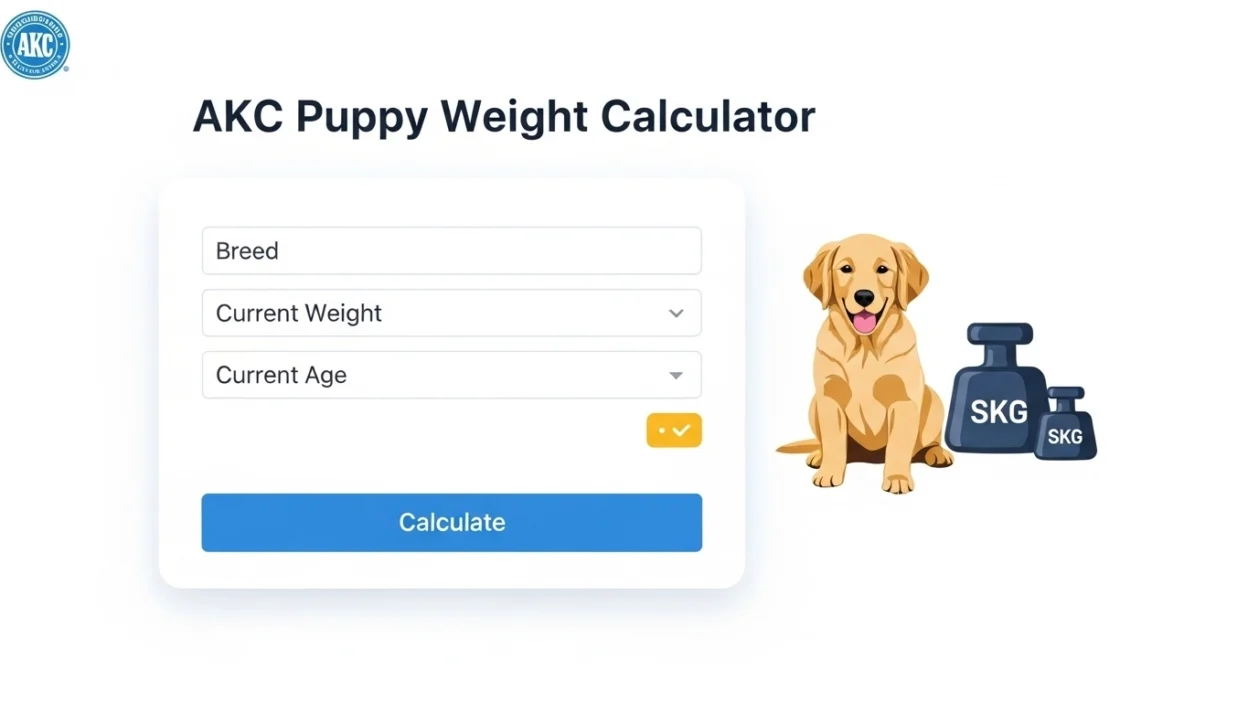
The AKC Puppy Weight Calculator is a specialized tool designed to help dog owners predict their puppy’s adult weight and monitor growth accurately. Developed with guidance from the American Kennel Club (AKC), this calculator uses breed, age, and current weight to estimate a puppy’s growth trajectory. It is particularly useful because puppies of different breeds grow at vastly different rates. For instance, a small breed like a Chihuahua reaches adult size much faster than a large breed like a Golden Retriever. The calculator provides a realistic weight range rather than a fixed number, helping owners understand the expected growth pattern for their specific breed.
Using this tool can prevent many common issues associated with misjudging a puppy’s size. Overfeeding or underfeeding is a frequent problem that can affect development, joint health, and overall wellness. By tracking growth with the AKC calculator, you can adjust feeding portions and monitor for any unusual weight changes. Additionally, the calculator can serve as a guide for veterinarians to determine if your puppy is on track for healthy development.
In short, the AKC Puppy Weight Calculator is an essential resource for proactive puppy care. It simplifies growth monitoring, supports breed-specific insights, and helps ensure your puppy develops at a healthy pace, providing peace of mind for every dog owner.
How to Use the AKC Puppy Weight Calculator
Using the AKC Puppy Weight Calculator is simple, but accuracy depends on careful measurement and proper input. The first step is to weigh your puppy using a reliable scale. For small puppies, a kitchen or baby scale works well, while larger breeds may require a digital pet scale or a visit to your veterinarian. Make sure your puppy is calm and dry for the most accurate reading.
Next, identify your puppy’s breed. The AKC calculator is most precise for purebred dogs, as growth patterns differ widely between breeds. If your puppy is a mixed breed, use the closest matching breed or calculate an average if both parent breeds are known.
Once you have the weight and breed, enter your puppy’s current age in weeks or months. The calculator uses these three factors—breed, age, and current weight—to predict your puppy’s adult weight and provide a growth curve. This range helps you track whether your puppy is growing too quickly, too slowly, or right on target.
Tips for accuracy:
- Weigh your puppy weekly to monitor changes.
- Record each measurement in a notebook or app.
- Compare actual weight to the calculator’s prediction regularly.
- Adjust feeding, exercise, or vet visits if your puppy consistently falls outside the expected range.
By following these steps, the AKC Puppy Weight Calculator becomes a powerful tool for ensuring your puppy grows healthy, strong, and happy.
Understanding Puppy Growth and Weight Charts
Puppy growth is a dynamic process that varies widely depending on breed, genetics, and nutrition. Understanding puppy growth and weight charts can help you track development accurately and ensure your puppy stays healthy. Most puppies experience rapid growth during the first few months of life, gaining several pounds every week, especially in medium and large breeds. Small breeds grow quickly in the first 8–12 weeks and then slow down, while larger breeds continue to grow steadily for up to 12–18 months.
AKC weight charts provide a visual representation of normal growth patterns for different breeds. These charts indicate average weight ranges by age, helping you compare your puppy’s measurements against expected growth. By plotting your puppy’s weight on the chart, you can see if they are on track or if adjustments to diet or care are needed.
It’s important to remember that these charts are guidelines, not strict rules. Puppies may grow slightly faster or slower depending on their individual metabolism, health, and activity levels. For mixed-breed puppies, you may need to estimate growth using the parent breeds’ charts and average their expected adult weights.
Using growth charts alongside the AKC Puppy Weight Calculator gives you a clear picture of your puppy’s development.
Factors That Affect Puppy Weight
A puppy’s weight is influenced by multiple factors, and understanding these can help you track growth accurately and maintain their health. One of the primary influences is genetics and breed. Small breeds like Chihuahuas or Yorkshire Terriers naturally have lower adult weights, while large breeds such as Labradors or Great Danes grow faster and reach heavier adult sizes. Even within the same breed, puppies from different litters can vary due to genetic differences inherited from their parents.
Nutrition also plays a critical role. Puppies need a diet formulated specifically for growth, with adequate protein, fat, vitamins, and minerals. Overfeeding or underfeeding can lead to unhealthy weight gain or stunted growth. Monitoring portion sizes and following feeding guidelines for your puppy’s age and breed is essential.
Health conditions can significantly impact weight. Parasites, infections, or congenital issues may prevent normal weight gain, while hormonal or metabolic conditions can cause unexpected growth changes. Regular veterinary check-ups ensure your puppy stays on a healthy growth track.
Activity level and exercise affect muscle development and overall growth. Puppies that are very active may burn more calories and develop leaner body mass, while less active puppies may gain weight faster.
Environmental factors, such as stress or changes in living conditions, can also influence appetite and growth. By considering all these factors alongside tools like the AKC Puppy Weight Calculator, you can accurately monitor your puppy’s weight and ensure they develop into a healthy adult dog.
How to Monitor Your Puppy’s Growth at Home
Monitoring your puppy’s growth at home is essential for ensuring they develop healthily and stay within their expected weight range. The first step is to weigh your puppy regularly. For the most accurate results, weigh them at the same time each week, ideally in the morning before meals. Small puppies can be weighed on a kitchen or baby scale, while larger breeds may need a digital pet scale or a visit to the veterinarian.
Keep a growth journal or use an app to track each measurement. Recording weekly weights allows you to compare your puppy’s growth against breed-specific AKC weight charts and predictions from the AKC Puppy Weight Calculator. This makes it easier to identify any sudden weight changes or patterns that may require attention.
Observe your puppy’s body condition as well. A healthy puppy should have a visible waist when viewed from above and a slight tummy tuck from the side. Feel their ribs gently; you should be able to feel them without pressing too hard, but they shouldn’t be visible.
Watch for red flags, such as failure to gain weight, sudden drops, or rapid excessive weight gain. These can indicate health issues or improper nutrition and should prompt a veterinary consultation.
Lastly, combine weight monitoring with proper feeding, exercise, and veterinary care. Regular tracking, guided by the AKC Puppy Weight Calculator, ensures your puppy grows at a healthy pace, prevents potential health problems, and gives you peace of mind as they develop into a strong, happy adult dog.
Common Mistakes When Estimating Puppy Weight
Estimating a puppy’s weight may seem simple, but many dog owners make mistakes that can affect their puppy’s growth and overall health. One of the most common errors is relying on visual guesses. Puppies can appear bigger or smaller than they actually are, especially when comparing them to siblings or other puppies. This often leads to overfeeding or underfeeding, which can cause health problems like obesity or stunted growth.
Another frequent mistake is ignoring breed differences. Each breed has a unique growth pattern, and what is normal for a small breed puppy may be too low or too high for a large breed puppy. Using a one-size-fits-all approach or comparing your puppy to unrelated breeds can give misleading results.
Skipping regular weigh-ins is another common issue. Without consistent tracking, sudden weight changes can go unnoticed until they cause problems. Weekly or biweekly weighing helps detect trends early, ensuring proper intervention if needed.
Many owners also misinterpret mixed-breed growth. If your puppy is a mix, relying solely on one parent breed’s growth chart can be inaccurate. In such cases, use the AKC Puppy Weight Calculator for guidance and monitor actual growth closely.
Finally, overfeeding in response to weight concerns is a mistake. Feeding more than necessary can lead to rapid weight gain and health complications.
Avoiding these common mistakes by using tools like the AKC Puppy Weight Calculator, tracking weight accurately, and understanding breed-specific growth ensures your puppy develops healthy, balanced growth.
FAQs:
1. How often should I weigh my puppy?
It’s best to weigh your puppy once a week during the first few months. This helps track rapid growth and ensures any unusual changes are noticed early.
2. Can small breeds grow faster than large breeds?
Yes. Small breed puppies often reach adult size within 6–8 months, while large breeds may continue growing for 12–18 months. Understanding breed-specific growth patterns is crucial.
3. What should I do if my puppy isn’t gaining weight as expected?
If your puppy’s weight consistently falls below the expected range, consult a veterinarian. Underlying health issues or dietary deficiencies may need attention.
4. How accurate is the AKC Puppy Weight Calculator for mixed breeds?
For mixed breeds, the calculator provides an estimated weight range based on parent breeds. While not exact, it offers a helpful guideline for tracking growth.
5. When should I consult a veterinarian?
Seek veterinary advice if your puppy shows sudden weight loss, rapid weight gain, loss of appetite, or any signs of illness. Early intervention ensures healthy growth.
6. Can I use the calculator to adjust feeding portions?
Yes, but always combine the calculator’s guidance with breed-specific nutritional requirements and your vet’s recommendations.
Conclusion
Monitoring your puppy’s growth is essential for ensuring they develop into a healthy, happy adult dog. The AKC Puppy Weight Calculator is an invaluable tool that simplifies this process, providing breed-specific guidance and realistic weight predictions.
Remember, several factors influence puppy weight, including genetics, nutrition, health, and activity levels.
Using growth charts, tracking weekly progress, and consulting your veterinarian when necessary ensures your puppy stays on the right track. Avoid common mistakes like guessing weight visually or overfeeding based on assumptions.
With the AKC Puppy Weight Calculator, proper nutrition, and attentive monitoring, you can confidently guide your puppy through every stage of growth.
This proactive approach helps maintain their health, supports optimal development, and gives you peace of mind as your puppy thrives

Daniel Johansson is an acclaimed Swedish operatic tenor, celebrated internationally for his powerful voice, dramatic presence, and versatile repertoire spanning from Puccini to Wagner. Born in Småland, Sweden, he trained at the University College of Opera in Stockholm, where he laid the foundation for a distinguished career in classical music and opera performance.