
If you’ve ever received a short reply like “ALR” in a text message or online chat and wondered what it meant, you’re not alone.
As digital communication becomes faster and more casual, abbreviations and slang terms like ALR are used more frequently across social media platforms, messaging apps, and comment sections.
While ALR may seem simple at first glance, its meaning can change depending on context, tone, and who is using it. For some people, it’s just a quick way to say “alright,” while others may interpret it differently based on the conversation.
This confusion is exactly why so many people search for the meaning of ALR online. In this article, we’ll break down what ALR means, how it’s commonly used in texting and social media, and how to understand its tone so you can respond confidently without second-guessing the message.
What Does ALR Mean? (Primary Definition)
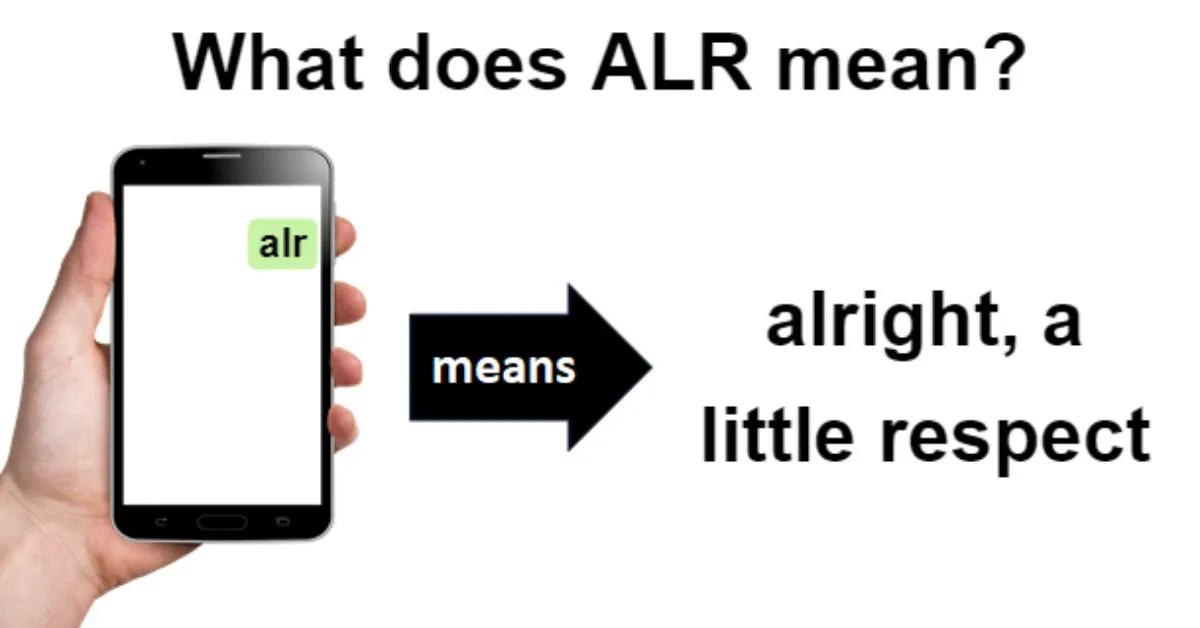
The most common and widely accepted meaning of ALR is “alright.” In texting and online conversations, ALR is simply a shortened version of the word “alright,” used to save time and keep messages brief. As digital communication continues to favor speed and convenience, people often drop vowels or shorten full words, and ALR fits perfectly into this trend.
When someone uses ALR, they are usually expressing agreement, acknowledgment, or acceptance. For example, if someone asks, “We’re meeting at 7 pm, okay?” a reply of “ALR” typically means “Alright, that works.” In most cases, it carries a neutral or casual tone and doesn’t add extra emotion unless supported by punctuation, emojis, or surrounding context.
It’s important to understand that ALR doesn’t always sound enthusiastic. Compared to writing the full word “alright,” ALR can feel more brief or emotionally flat. Some people use it intentionally to keep responses short, while others use it out of habit. This is why ALR can sometimes be interpreted as slightly dismissive or uninterested, even when no negative intent is meant.
Overall, ALR is best understood as a casual confirmation. It’s commonly used in informal conversations with friends, family, or acquaintances and is rarely intended to be formal. Understanding this primary meaning helps avoid confusion and makes it easier to interpret the tone behind short digital replies.
Alternative Meanings of ALR
Although ALR most commonly means “alright,” it can occasionally have alternative meanings depending on context. One less common but still relevant interpretation is “already.” In fast-paced conversations, some people shorten “already” to ALR, especially when typing quickly or replying informally. For example, in a conversation like “Did you send the file?” a reply of “ALR” could mean “Already sent.” However, this usage is far less widespread than “alright” and usually relies heavily on surrounding context.
Because both meanings exist, understanding the conversation flow is essential. If ALR is used as a response to a question or instruction, it almost always means “alright.” If it’s used in response to a status update or progress-related question, it may be interpreted as “already.” Misunderstandings can happen when context is unclear, which is why many people prefer spelling out the full word when clarity matters.
Outside of texting slang, ALR can also appear as an abbreviation or acronym in niche areas such as usernames, brand names, or technical references. In these cases, ALR doesn’t carry the slang meaning at all and should be interpreted based on the specific field or platform where it appears. However, these uses are uncommon and rarely match the search intent of someone encountering ALR in a casual message.
In everyday digital communication, the slang meanings dominate. When you see ALR in a text, chat, or social media reply, the safest assumption is that it means “alright” unless the context clearly suggests otherwise.
Where Is ALR Commonly Used?
ALR is most commonly used in informal digital communication, where speed and brevity are prioritized over proper grammar or spelling. Text messaging is the primary place you’ll encounter ALR, especially in one-on-one conversations. When people are chatting casually, they often use ALR as a quick acknowledgment or agreement without adding extra words. It allows conversations to move forward without interrupting the flow.
Social media platforms are another major space where ALR appears frequently. On apps like Instagram, Snapchat, TikTok, and Twitter (X), users rely on short replies in comments, direct messages, and story reactions. ALR fits naturally into these environments because it’s fast to type and widely understood among regular users. On platforms where replies are often brief, a single-word response like ALR is considered normal and acceptable.
ALR is also more common among younger audiences, particularly Gen Z and millennials, who are more comfortable using abbreviations and internet slang. These users often favor efficiency and casual tone over formality, making ALR a natural part of their digital vocabulary. However, older users may still encounter it and feel uncertain about its meaning, especially if they are less familiar with texting slang.
Despite its popularity online, ALR is rarely used in face-to-face communication or formal writing. You’re unlikely to see it in emails, academic work, or professional messages. Its usage is closely tied to casual, digital environments where short and simple responses are the norm.
How to Use ALR Correctly
Using ALR correctly is all about understanding context, tone, and audience. At its core, ALR is a casual way to say “alright”, and it works best in informal messaging with friends, family, or acquaintances. When used appropriately, it signals acknowledgment, agreement, or acceptance without overcomplicating the conversation. For instance, if a friend texts, “I’ll pick you up at 6 pm,” replying with “ALR” communicates that you’re aware and okay with the plan.
The placement of ALR in a sentence can affect its tone. As a standalone reply, it’s short and neutral, often used to quickly confirm something. For example:
- Friend: “Movie starts at 8.”
- You: “ALR.”
ALR can also appear mid-sentence to maintain flow while responding casually:
- “I ALR finished my homework, so we can hang out.”
Tone is another key factor. Because ALR is brief, it can sometimes come across as neutral or even slightly indifferent. Adding punctuation or emojis can soften the tone and prevent misunderstandings:
- “ALR 🙂” feels friendlier than “ALR.”
It’s important to avoid overusing ALR, especially in longer conversations, as it may make replies feel robotic or detached. Pairing ALR with more expressive responses when appropriate can keep communication natural.
Overall, using ALR correctly involves reading the situation, keeping messages concise, and matching the tone to the relationship and platform. When done right, ALR becomes a convenient, universally understood shorthand in casual digital communication.
Tone & Emotional Interpretation of ALR
While ALR may seem like a simple abbreviation for “alright,” the tone and emotion behind it can vary widely depending on context, punctuation, and the relationship between the people texting. Because ALR is short and lacks descriptive words, it often relies on subtle cues to convey emotion. For example, a plain “ALR” can feel neutral, but the same reply with an emoji, like “ALR 🙂”, may feel friendly or reassuring.
The emotional interpretation of ALR also depends on the conversation’s context. In a casual chat, ALR usually signals agreement or acknowledgment without adding excitement. However, if used in a discussion where more detailed feedback is expected, it might come across as dismissive or indifferent. For instance:
- Friend: “I thought we could try a new restaurant tonight.”
- You: “ALR.”
Here, the response may feel neutral or uninterested unless paired with more words or emojis.
Another factor is punctuation. Ending ALR with a period (“ALR.”) can make it seem final or slightly cold, while using an exclamation mark (“ALR!”) can add enthusiasm. Similarly, pairing ALR with words like “sure” or “great” softens the tone: “ALR, sounds good!”
Understanding these subtle cues is key to avoiding miscommunication. While ALR is convenient for quick replies, it’s important to read the conversation and consider how your tone may be perceived. By doing so, you can use ALR effectively without unintentionally coming across as uninterested, dismissive, or rude in your digital conversations.
Formal vs Informal Usage of ALR
ALR is primarily a casual, informal abbreviation, and its use in formal settings is generally discouraged. In texting, social media, or casual chats with friends, it fits perfectly because it’s short, easy to type, and widely recognized. However, in professional emails, academic writing, or business communication, ALR is considered too informal and can give the impression of carelessness or lack of professionalism.
For example, responding to a work email with “ALR” could seem dismissive or rushed. In these contexts, it’s better to write the full word “alright” or use more formal alternatives like “understood,” “noted,” or “okay.” Similarly, academic papers or official documents should avoid ALR entirely, as abbreviations like this are inappropriate outside informal conversations.
The key to using ALR appropriately lies in reading the audience and platform. Messaging apps like WhatsApp, Instagram, Snapchat, or casual group chats are safe spaces for ALR. On the other hand, professional platforms such as LinkedIn, email threads, or official reports require more polished language. Even in semi-formal texting, like texting a colleague you know well, moderation is important—ALR can work if the tone is casual and the relationship allows it.
In short, ALR thrives in informal, fast-paced digital environments but should be avoided in formal communication. Understanding this distinction ensures you maintain professionalism while still leveraging casual slang where it feels natural. By keeping ALR in the right spaces, you can communicate efficiently without giving the wrong impression.
ALR vs Similar Slang Terms
Understanding ALR is easier when you compare it with similar slang terms that are commonly used in digital conversations. While ALR stands for “alright”, other abbreviations like OK, Aight, or even the full word alright carry slightly different tones and connotations. Knowing the differences can help you choose the most appropriate response depending on context and audience.
ALR vs OK: Both are short confirmations, but OK is more neutral and widely understood across all age groups. ALR often feels more casual and is mostly used in texting or social media chats. For instance:
- “Are we meeting at 5?”
- “OK” → Neutral acknowledgment
- “ALR” → Casual acknowledgment, slightly more modern
ALR vs Aight: Aight is an informal, phonetic spelling of “alright” often used in casual or regional speech, particularly in certain social or cultural circles. Compared to ALR, Aight can sound more playful or expressive, while ALR is a cleaner, shorter version suited for texting.
ALR vs Alright (full word): Writing out “alright” is more traditional and can convey politeness or formality, whereas ALR is clearly casual. Using the full word may be preferred in slightly more professional or thoughtful digital communication.
By understanding these subtle differences, you can tailor your messaging. ALR works best in quick, informal conversations with friends or peers, while OK or the full word “alright” may be better suited for clarity, neutrality, or professionalism. Knowing when to use each ensures your tone is communicated accurately and reduces the chance of misunderstandings.
Common Misunderstandings About ALR
Despite being a simple abbreviation, ALR is often misunderstood in digital communication. One of the most common misconceptions is assuming it always means “already.” While some contexts may allow this interpretation, in most casual texting or social media chats, ALR almost always means “alright.” Misreading it as “already” can lead to confusion or unnecessary follow-up questions in a conversation.
Another frequent misunderstanding involves tone and intent. Because ALR is short and lacks expressive words, some recipients may perceive it as dismissive, uninterested, or even rude, especially if they expect a longer, more detailed response. For instance, replying “ALR” to a friend’s excited message may seem blunt, even if the sender simply intended to acknowledge the message quickly. Adding emojis or punctuation can help clarify tone, but without them, the meaning can feel ambiguous.
Overusing ALR is another issue. Frequent use of the abbreviation in ongoing conversations can make your replies appear robotic or detached, which may unintentionally give a cold impression. Similarly, using ALR in professional or formal communication can be misinterpreted as careless or unprofessional.
Finally, context is key. ALR’s meaning can shift slightly depending on the platform, relationship, or topic of conversation. Recognizing whether the conversation is casual, playful, or serious helps prevent misunderstandings.
In short, while ALR is a convenient shorthand, awareness of context, tone, and frequency is essential. By understanding these common pitfalls, you can use ALR effectively and avoid miscommunication in digital conversations.
Should You Use ALR?
Deciding whether to use ALR depends largely on context, audience, and tone. In casual, digital conversations—like texting friends, replying to social media comments, or chatting in informal group messages—ALR is a perfectly acceptable shorthand. It’s quick to type, widely understood, and conveys acknowledgment or agreement efficiently. For example, if a friend asks, “Want to grab lunch at 1?” replying with “ALR” signals that you’re on board without overcomplicating the message.
However, ALR isn’t suitable for all situations. In formal or professional communication, such as emails, academic writing, or business chats, using ALR can come across as too casual or even careless. In these cases, it’s better to write out the full word “alright” or choose alternatives like “understood” or “okay.” Doing so ensures clarity and maintains a professional tone.
Even in casual texting, it’s important to consider tone and relationship. ALR is brief and neutral by nature, so overusing it or relying on it in emotionally sensitive conversations may unintentionally make you seem indifferent. Pairing ALR with emojis, extra words, or a friendly tone can prevent misunderstandings and make your messages feel warm and engaged.
In essence, ALR is a versatile shorthand that works best in quick, informal conversations where speed and brevity matter. By understanding when and how to use it, you can communicate efficiently while maintaining the intended tone, avoiding confusion, and keeping your messages casual yet clear.
SEO-Focused FAQ Section
To make your blog post more helpful and SEO-friendly, answering frequently asked questions about ALR is essential. These FAQs clarify confusion, provide context, and improve chances of ranking in Google’s People Also Ask section.
1. What does ALR mean in texting?
In texting, ALR almost always means “alright.” It’s a quick way to acknowledge a message, show agreement, or confirm plans without typing the full word.
2. What does ALR mean on Snapchat?
On Snapchat, ALR is used similarly. When someone sends a short message or asks a question, replying with ALR signals that you understand or agree. The tone is casual and friendly.
3. Does ALR mean already or alright?
While ALR can sometimes be interpreted as “already” depending on context, the primary and most common meaning is “alright.” Context clues from the conversation usually indicate the correct interpretation.
4. Is ALR rude?
Not inherently. ALR is neutral, but because it’s brief, it can feel blunt or indifferent in certain situations. Adding emojis or extra words can soften the tone if needed.
5. Can ALR be used professionally?
Generally, no. ALR is informal shorthand suitable for casual messaging. In professional emails or academic communication, it’s better to use “alright,” “understood,” or “okay.”
6. What is the full form of ALR?
The full form of ALR is “alright.” It’s an abbreviation used mainly in digital communication to save time and keep messages short.
Conclusion
In today’s fast-paced digital world, abbreviations like ALR have become a staple of casual communication.
While its primary meaning is “alright,” ALR can occasionally be interpreted as “already” depending on context, though this usage is far less common.
Understanding its meaning, tone, and appropriate usage is key to avoiding miscommunication in texting, social media, or online chats.
ALR thrives in informal settings where brevity and speed are important. It’s widely used among younger audiences on platforms like Instagram, Snapchat, TikTok, and WhatsApp to signal acknowledgment, agreement, or acceptance without typing out full sentences.
However, the tone behind ALR can vary. A plain “ALR” may feel neutral, while adding punctuation or emojis can make it sound friendlier, enthusiastic, or playful. Misreading this tone is one of the main reasons ALR can sometimes be misunderstood.
It’s important to note that ALR is not suitable for professional or formal communication. In emails, academic work, or business contexts, writing the full word “alright” or using alternatives like “understood” ensures clarity and maintains professionalism.
Overall, ALR is a convenient shorthand for casual conversation. By understanding its meaning, context, and tone, you can use it effectively, respond confidently, and avoid unintended misunderstandings.
Whether you’re texting a friend, replying on social media, or simply navigating online chats, ALR remains a quick, easy, and widely recognized way to say “alright.”

Rafael Domínguez Gamas (born February 14, 1883 in Cárdenas, Tabasco; died January 23, 1959 in Veracruz) was a prominent Mexican lawyer, educator, journalist, writer, and academic. He studied law at the Instituto Juárez and also worked as a professor there. Early in his career he directed schools in various towns in Tabasco and contributed frequently to publications such as Alba, El Renacimiento, and El Eco de Tabasco. In 1914 he moved to Veracruz, where he worked with the journal El Dictamen. He was later elected a corresponding member of the Academia Mexicana de la Lengua for his contributions to Mexican literature and language studies. Domínguez authored numerous books and essays including Azul como tus ojos (1925) and Diccionario general de gentilicios (1948).