

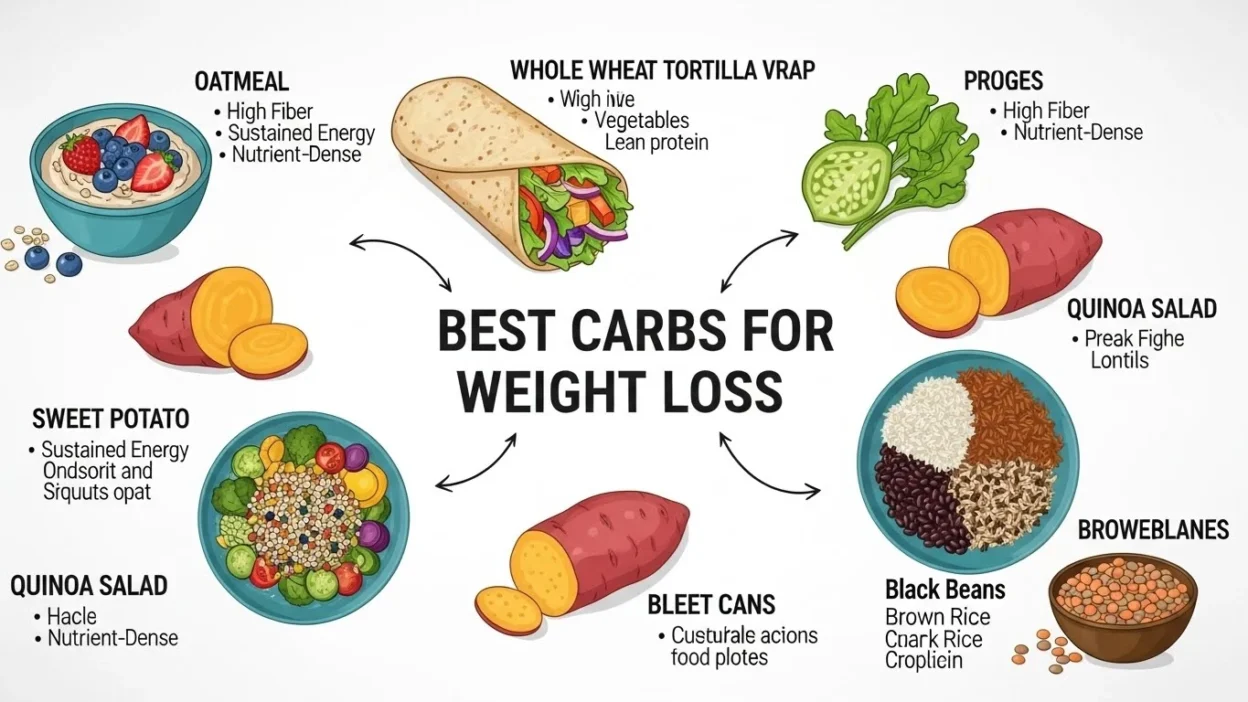
Carbs often get a bad reputation in weight loss circles, but the truth is, not all carbs are created equal. In fact, choosing the best carbs for weight loss can boost your energy, keep you full longer, and even support fat burning.
Many people make the mistake of cutting out carbs entirely, which can lead to low energy, cravings, and slow metabolism. Instead, focusing on healthy carbs, like complex grains, fiber-rich vegetables, and low-carb fruits, can make weight loss easier and more sustainable.
This guide will break down the top carbs that help you shed fat, explain how to time and portion them effectively, and provide meal ideas that are both nutritious and satisfying.
If you’re a beginner or looking to fine-tune your diet, understanding the right carbs is key to reaching your weight loss goals in 2026.
Understanding Carbs and Their Role in Weight Loss
Carbohydrates are one of the three main macronutrients your body needs, alongside protein and fat. They are the body’s primary source of energy, fueling everything from daily activities to intense workouts. Many people mistakenly believe that all carbs cause weight gain, but the reality is more nuanced. The type and quality of carbs you consume play a crucial role in your metabolism and fat loss.
Carbs are generally classified into simple carbs and complex carbs. Simple carbs, found in sugary drinks, candies, and white bread, are digested quickly and can lead to spikes in blood sugar and insulin. This may contribute to fat storage when consumed in excess. On the other hand, complex carbs like oats, quinoa, brown rice, and legumes digest slowly, providing sustained energy and keeping you fuller for longer.
In addition to energy, carbs affect hormones that regulate hunger and satiety. High-fiber carbs help slow digestion, reduce cravings, and support a healthy gut. When combined with protein and healthy fats, they can enhance fat-burning while preserving lean muscle. Understanding the role of carbs is essential for making smart carb choices that support weight loss and overall health.
Best Complex Carbs for Weight Loss
When it comes to losing weight, not all carbs are created equal. Complex carbs are the ones that can actually help you stay full, maintain energy, and support fat loss. Unlike simple carbs, they digest slowly, preventing blood sugar spikes and keeping hunger at bay. Choosing the right complex carbs is key to a sustainable weight loss plan.
Whole grains are among the top choices. Foods like oats, quinoa, brown rice, barley, and whole wheat pasta provide fiber, vitamins, and minerals while slowly releasing energy. They help regulate appetite and prevent overeating throughout the day.
Legumes such as lentils, chickpeas, black beans, and kidney beans are also excellent options. Packed with protein and fiber, they promote fullness and stabilize blood sugar, making it easier to stick to a calorie-controlled diet.
Vegetables that are rich in complex carbs, like sweet potatoes, broccoli, spinach, and zucchini, not only provide fiber but also essential micronutrients your body needs during weight loss. Sweet potatoes, for instance, are high in fiber and antioxidants, which help reduce inflammation while keeping energy levels steady.
Incorporating these high-quality, complex carbs into your meals ensures you get enough energy for workouts and daily activity while avoiding the pitfalls of refined, simple carbs. With smart choices like these, carbs can become a powerful ally in your weight loss journey.
Low Carb, Fiber Rich Fruits
While many fruits contain natural sugars, some are low in carbs and high in fiber, making them ideal for weight loss. These fruits provide essential vitamins, antioxidants, and minerals without causing blood sugar spikes, helping you stay full and energized throughout the day.
Berries are among the best choices. Blueberries, raspberries, strawberries, and blackberries are low in carbs but rich in fiber and antioxidants. Fiber slows digestion, which helps control appetite and prevents overeating. Antioxidants, on the other hand, support metabolism and overall health. Adding a handful of berries to breakfast, yogurt, or smoothies can enhance flavor and nutrition without adding excess calories.
Other low-carb fruits include apples, pears, and kiwi. These fruits are naturally sweet yet packed with soluble fiber, which helps reduce cravings and improve digestion. Grapefruit is another option often recommended in weight loss diets because it helps regulate insulin and may support fat burning.
When including fruits in your diet, portion control is key. Even low-carb fruits contain natural sugar, so sticking to recommended servings—typically one small fruit or half a cup of berries per snack—ensures you gain their benefits without overconsuming carbs.
Incorporating fiber-rich fruits alongside complex carbs and protein is a smart strategy for those looking to lose weight. They satisfy your sweet cravings, improve satiety, and contribute to a balanced, nutrient-dense diet, proving that you don’t need to avoid all carbs to achieve your weight loss goals.
High Fiber Carbs That Aid Fat Loss
Fiber is one of the most important nutrients for weight loss, and incorporating high-fiber carbs into your diet can make a significant difference. Fiber slows digestion, keeps you fuller for longer, and helps regulate blood sugar levels, all of which support fat loss. Unlike refined carbs, fiber-rich foods prevent sudden spikes and crashes in energy that often lead to overeating.
Some of the best high-fiber carbs include whole grains like barley, oats, and whole wheat pasta. These foods provide sustained energy and essential nutrients while promoting satiety. Barley, for example, contains a type of soluble fiber called beta-glucan, which helps lower cholesterol and control appetite.
Legumes are another excellent source of fiber. Lentils, chickpeas, black beans, and kidney beans are packed with both fiber and protein, making them ideal for keeping hunger in check and supporting muscle retention during weight loss.
Seeds such as chia seeds and flaxseeds are also powerful fiber-rich foods. Adding a tablespoon of chia or flax to smoothies, oatmeal, or yogurt increases fiber intake and helps improve digestion.
Vegetables like broccoli, Brussels sprouts, and carrots are high in fiber and low in calories, making them perfect additions to any weight loss meal plan.
By focusing on high-fiber carbs, you can curb cravings, stabilize blood sugar, and support your metabolism. These foods make it easier to maintain a calorie deficit while staying energized, proving that smart carb choices are essential for effective fat loss.
Carb Timing for Optimal Weight Loss
Not all carbs are created equal, and when you eat them can be just as important as the type you choose. Carb timing plays a key role in weight loss by helping to manage energy levels, reduce fat storage, and support muscle recovery.
Pre-workout carbs are essential for fueling your body during exercise. Eating a small portion of complex carbs, like oats or a banana, about 30–60 minutes before a workout can provide sustained energy and improve performance. This ensures you burn calories efficiently and avoid fatigue.
Post-workout carbs help replenish glycogen stores in muscles, aiding recovery and supporting lean muscle retention. Pairing carbs like quinoa, sweet potatoes, or brown rice with protein after exercise enhances muscle repair while minimizing fat gain.
Breakfast carbs are also important. Starting your day with complex carbs, such as whole-grain toast with avocado or oatmeal with berries, kickstarts your metabolism and keeps hunger at bay until your next meal.
Evening carb choices matter too. Consuming slow-digesting, fiber-rich carbs like roasted vegetables or legumes at dinner can provide satiety without causing excess fat storage. Avoid refined or sugary carbs at night, as they are more likely to be stored as fat.
By paying attention to when and what carbs you eat, you can maximize energy, curb cravings, and support fat loss. Proper carb timing makes it easier to stick to your diet while still enjoying the foods you love, proving that carbs can be a weight loss ally rather than an enemy.
Portion Control: How Much Carbs Should You Eat
Even when choosing the best carbs for weight loss, portion control is crucial. Eating too many carbs, even healthy ones, can slow your progress, while eating the right amounts keeps your energy steady and supports fat loss.
For most adults aiming for weight loss, carbs should make up about 40–50% of daily calories, depending on activity level. Active individuals may need more, while sedentary people may require less. This can translate to roughly 150–200 grams of carbs per day for a moderately active adult. Tracking portions using grams, cups, or visual methods can help ensure you stay on target.
The plate method is an easy way to control portions: fill half your plate with non-starchy vegetables, a quarter with protein, and a quarter with complex carbs like quinoa, sweet potatoes, or brown rice. This ensures you get fiber, protein, and essential nutrients without overeating carbs.
Using measuring cups or a kitchen scale can also help when starting out. Over time, you’ll learn to estimate portions visually. Another tip is to pair carbs with protein or healthy fats; this slows digestion, enhances satiety, and prevents blood sugar spikes.
Remember, portion control doesn’t mean cutting carbs completely—it’s about eating the right amount of the right carbs. By balancing your portions and choosing high-quality, fiber-rich carbs, you can enjoy satisfying meals while supporting weight loss and overall health.
Common Mistakes with Carbs in Weight Loss
Even with the best intentions, many people sabotage their weight loss efforts by making simple carb-related mistakes. Recognizing these pitfalls can help you stay on track and achieve sustainable results.
One of the most common errors is avoiding all carbs entirely. While low-carb diets can work for some, cutting out carbs completely can lead to fatigue, poor workout performance, and intense cravings. Your body needs carbs for energy, and eliminating them may slow metabolism rather than speed up fat loss.
Another mistake is overconsuming refined carbs like white bread, pastries, pasta made from refined flour, and sugary drinks. These foods digest quickly, spike blood sugar levels, and can easily lead to fat storage if eaten in excess.
Some people also ignore fiber and protein pairing. Eating carbs alone, especially without fiber or protein, can cause rapid digestion and leave you hungry soon after a meal. Pairing carbs with protein, healthy fats, and fiber helps control appetite and stabilizes blood sugar.
Finally, many fall for “low-carb” processed snacks marketed as healthy alternatives. These often contain hidden sugars, unhealthy fats, or additives that undermine weight loss goals. Always check labels and focus on whole, minimally processed foods.
Avoiding these mistakes allows you to enjoy carbs strategically while staying on a weight loss-friendly diet. Remember, it’s not about eliminating carbs—it’s about choosing the right carbs, timing them properly, and controlling portions. Smart decisions make carbs a valuable ally in shedding fat.
Sample Meal Plan Featuring the Best Carbs
Creating a meal plan with the best carbs for weight loss makes it easier to stay on track while enjoying satisfying, nutrient-rich meals. By combining complex carbs, fiber-rich fruits, and vegetables with protein and healthy fats, you can support fat loss without feeling deprived.
Breakfast:
Start the day with oatmeal topped with berries and chia seeds. This meal provides slow-digesting carbs, fiber, and antioxidants to keep you full until lunch. Alternatively, whole-grain toast with avocado and a boiled egg gives energy and healthy fats.
Lunch:
Try a quinoa and chickpea salad with mixed vegetables and olive oil. Quinoa and chickpeas are rich in fiber and protein, keeping blood sugar stable and hunger at bay. Adding colorful vegetables boosts vitamins and minerals.
Dinner:
Opt for baked sweet potato with grilled chicken and steamed broccoli. Sweet potatoes are a slow-digesting carb, while chicken provides lean protein and broccoli adds fiber for satiety.
Snacks:
Low-carb, fiber-rich fruits like apple slices, berries, or a small pear are excellent choices. Pair them with Greek yogurt or a handful of nuts for additional protein and healthy fats.
FAQs:
1. Can I eat carbs at night without gaining weight?
Yes! The key is choosing slow-digesting, fiber-rich carbs like sweet potatoes, legumes, or vegetables. Pair them with protein to prevent fat storage. Avoid refined carbs and sugary foods late at night.
2. Do carbs inherently make you gain fat?
No. Weight gain occurs when you consume more calories than you burn, not simply from carbs. Eating high-quality complex carbs in appropriate portions supports energy and weight loss.
3. How do I choose the best carbs for meals?
Focus on whole, minimally processed foods: whole grains, legumes, vegetables, and low-carb fruits. Avoid sugary snacks and refined grains that spike blood sugar.
4. Are low-carb diets suitable for everyone?
Low-carb diets may help some individuals lose weight quickly, but they’re not ideal for everyone. People who are active or do strength training may benefit more from moderate-carb diets with complex carbs to fuel workouts.
5. How can I control cravings for high-carb foods?
Pair carbs with protein and fiber, drink water, and eat slowly. Planning meals with healthy carbs prevents sudden hunger and reduces cravings for refined carbs.
Conclusion
Carbs don’t have to be the enemy when it comes to weight loss. Choosing the best carbs like complex grains, legumes, fiber-rich vegetables, and low-carb fruits can provide sustained energy, keep you full, and support fat-burning.
The key is to focus on quality, portion control, and timing. Incorporating high-fiber carbs and pairing them with protein and healthy fats prevents blood sugar spikes, reduces cravings, and makes sticking to your diet easier.
Avoid common mistakes like cutting out all carbs, relying on refined or processed foods, or ignoring portion sizes. Instead, plan meals that include smart carb choices, whether at breakfast, lunch, dinner, or as snacks.
By making carbs a strategic part of your diet, you can enjoy satisfying meals while steadily progressing toward your weight loss goals.
Remember, sustainable fat loss is about balance, not restriction, and smart carb choices are a powerful tool in achieving lasting results.

Margaret Johnson was an American blues and early jazz vocalist and pianist active during the 1920s. She began her recording career in the early part of that decade, performing in vaudeville and jazz ensembles, and is best remembered for her work in blues music.