
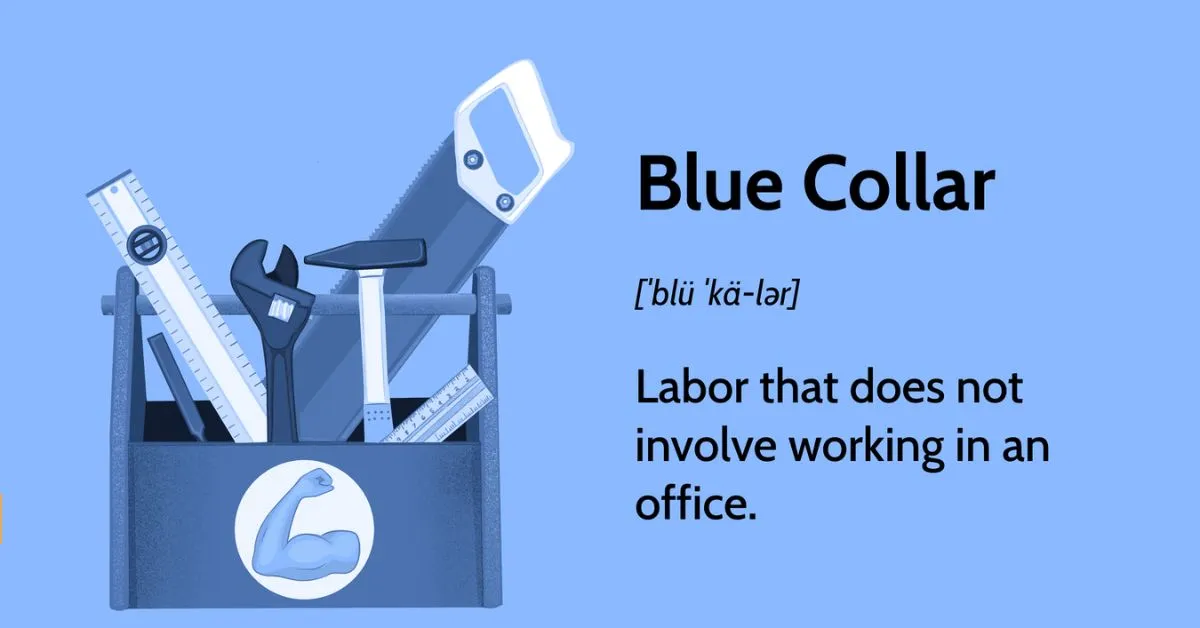
The term “blue collar” is commonly used to describe a segment of the workforce that performs manual labor or skilled trades, often in industries like manufacturing, construction, and maintenance.
Unlike white-collar roles, which typically involve office or managerial work, blue-collar jobs are hands-on, physically demanding, and essential to keeping society functioning smoothly.
The origin of the term dates back to the early 20th century when industrial workers often wore durable blue uniforms to distinguish themselves from office employees.
Despite their crucial role in the economy, blue-collar workers are sometimes misunderstood or undervalued, with many people assuming these jobs are low-skilled or offer limited opportunities for growth.
In reality, blue-collar careers require specialized skills, technical knowledge, and dedication.
This article will explore the meaning, history, examples, challenges, and modern trends of blue-collar work, offering a complete understanding of this vital part of the workforce.
Origin and Meaning of “Blue Collar”
The term “blue collar” has its roots in the early 20th century, originating in the United States to describe workers who performed manual labor. The name comes from the durable blue uniforms or shirts commonly worn by industrial and factory workers, which helped hide dirt and stains from physical work. This visual distinction set blue-collar workers apart from white-collar employees, who typically wore dress shirts, ties, and suits in office environments.
Historically, blue-collar jobs were associated with industries such as manufacturing, mining, construction, and transportation. These roles required practical skills, physical effort, and technical knowledge, rather than formal education or office experience. Over time, the term expanded to include a wide range of skilled trades, including electricians, plumbers, welders, and mechanics.
The meaning of blue-collar work has evolved significantly. While it once implied purely industrial labor, today it represents any career that is hands-on, skill-based, and essential to daily life and the economy. Blue-collar work is no longer limited to traditional industries; modern sectors like renewable energy, logistics, and technology-driven manufacturing also employ blue-collar workers.
Understanding the origin and meaning of “blue collar” helps clarify the unique role these workers play in society. It highlights the value of their labor and the specialized skills required, challenging the misconception that blue-collar jobs are unskilled or less important than office-based professions.
Characteristics of Blue-Collar Jobs
Blue-collar jobs are defined primarily by the hands-on, physical, and practical nature of the work. Unlike office-based roles, blue-collar work often involves manual labor, technical tasks, and skill-based operations that are essential for production, construction, and maintenance. These jobs typically take place in workshops, factories, construction sites, warehouses, or outdoors, rather than in offices.
One key characteristic of blue-collar work is the requirement for specialized skills. Many roles demand knowledge of tools, machinery, or technical processes, and some require formal vocational training or apprenticeships. For example, electricians, plumbers, and machinists need precise technical skills, while other roles may rely more on physical endurance and coordination.
Another defining feature is the structure of compensation. Blue-collar workers are often paid hourly wages and may receive overtime pay for extended hours. Some are part of unions, which help secure benefits, fair wages, and workplace protections.
The work schedule is another important aspect. Many blue-collar roles involve shift work, early mornings, or extended hours, depending on industry demands. Physical demands and exposure to environmental factors, such as weather or industrial hazards, are also common challenges.
Despite these challenges, blue-collar jobs offer career stability, skill mastery, and opportunities for advancement, particularly for those who pursue specialized trades. These characteristics make blue-collar work an essential and respected component of the economy.
Examples of Blue-Collar Occupations
Blue-collar jobs cover a wide range of professions, all of which involve hands-on, skilled, or physical labor. Traditionally, these occupations were concentrated in manufacturing, construction, and transportation, but modern blue-collar work has expanded into other sectors as well.
In construction and trade industries, common blue-collar roles include electricians, plumbers, carpenters, welders, and HVAC technicians. These workers build, repair, and maintain infrastructure, homes, and commercial buildings. Their work requires technical expertise, problem-solving skills, and adherence to safety standards.
In manufacturing and industrial settings, blue-collar workers include assembly line operators, machinists, factory supervisors, and equipment operators. They ensure that products are assembled efficiently and safely, often using specialized tools and machinery. Accuracy, productivity, and teamwork are critical in these roles.
Service-oriented blue-collar occupations include mechanics, delivery drivers, sanitation workers, and maintenance staff. These positions are essential for keeping communities functional, from vehicle repairs and waste management to everyday logistics.
Modern trends have also created new blue-collar opportunities. Renewable energy technicians, robotics maintenance specialists, and skilled logistics workers are increasingly in demand. These roles combine traditional hands-on labor with technical knowledge and sometimes digital skills.
By exploring examples of blue-collar occupations, it becomes clear that these jobs are diverse, skill-intensive, and vital to society. They are far from “unskilled” labor; instead, they require training, dedication, and technical proficiency, making blue-collar work an indispensable part of the economy.
Blue Collar vs. White Collar Key Differences
Understanding the distinction between blue-collar and white-collar work helps clarify the unique role each plays in the economy. The most noticeable difference lies in the nature of the work. Blue-collar jobs involve manual labor, technical skills, and hands-on tasks, while white-collar jobs are primarily office-based, managerial, or administrative.
Education and training requirements also vary. White-collar roles often require a college degree or specialized certifications, whereas many blue-collar positions rely on vocational training, apprenticeships, or on-the-job experience. This does not make blue-collar work any less skilled; in fact, many trades require advanced technical knowledge and certifications.
Income and compensation structures differ as well. White-collar employees are usually salaried, with benefits like health insurance, retirement plans, and paid leave. Blue-collar workers are often paid hourly wages and may earn overtime pay, with union membership sometimes providing additional benefits and protections.
Work environment is another contrast. White-collar work is typically climate-controlled offices, whereas blue-collar jobs often take place in factories, construction sites, or outdoors, sometimes involving physical strain or exposure to hazards.
Social perceptions and stereotypes persist, with white-collar roles often viewed as “prestigious” and blue-collar jobs as “less professional.” However, both types of work are essential for a functioning society. Blue-collar workers build, maintain, and repair the infrastructure that white-collar employees depend on, highlighting the interconnected importance of both.
Importance of Blue-Collar Workers in the Economy
Blue-collar workers are the backbone of the economy, providing essential services and labor that keep industries running smoothly. Without their efforts, infrastructure, manufacturing, and everyday services would grind to a halt. From constructing roads and buildings to maintaining utilities and machinery, blue-collar jobs form the foundation of modern society.
In the manufacturing and production sector, blue-collar workers ensure that goods are created efficiently and safely. Assembly line operators, machine technicians, and factory workers are critical in producing everything from electronics to automobiles. Similarly, in construction and maintenance, carpenters, electricians, plumbers, and HVAC specialists build and maintain homes, offices, and public infrastructure. Their work directly supports economic growth and community development.
Blue-collar workers are also indispensable in essential services, including transportation, sanitation, and logistics. Delivery drivers, warehouse staff, and sanitation workers ensure that goods, services, and waste management systems function seamlessly, sustaining daily life and commerce.
The COVID-19 pandemic highlighted the vital role of blue-collar jobs. Workers in healthcare support, food supply chains, and delivery services kept societies operational during lockdowns, demonstrating how much communities rely on manual and skilled labor.
Overall, blue-collar workers contribute not just economically, but socially as well. Their labor underpins infrastructure, industry, and essential services, proving that these roles are critical to both local communities and the broader economy.
Challenges Faced by Blue-Collar Workers
While blue-collar workers play a vital role in society and the economy, they often face significant challenges. One of the most obvious is physical strain and health risks. Many roles involve heavy lifting, repetitive tasks, or operating dangerous machinery, which can lead to injuries or long-term health issues. Construction workers, factory operators, and mechanics are particularly susceptible to workplace accidents.
Another challenge is wage disparity and limited benefits. Although some skilled trades offer competitive pay, many blue-collar jobs have lower wages compared to white-collar roles. Access to health insurance, retirement plans, and paid leave can be limited, especially for workers in small companies or non-unionized positions.
Job instability is also common in certain sectors. Economic downturns, outsourcing, and automation can reduce demand for manual labor, leaving workers vulnerable to layoffs. For instance, some manufacturing jobs have declined due to robotics and AI technologies replacing human labor.
Blue-collar workers also contend with social misconceptions and undervaluation. Society sometimes stereotypes these roles as unskilled or less prestigious, despite the specialized knowledge, training, and expertise required. This can affect self-esteem, career advancement, and public perception.
Despite these challenges, many blue-collar workers pursue training, certifications, and apprenticeships to improve skills and advance their careers. Addressing these issues requires better safety standards, fair compensation, and societal recognition, ensuring that blue-collar work remains respected, sustainable, and rewarding.
Modern Trends in Blue-Collar Work
Blue-collar work has evolved significantly in recent years, influenced by technology, automation, and changing labor demands. While traditional roles like construction, manufacturing, and maintenance remain important, new trends are reshaping the industry and creating opportunities for skilled workers.
One major trend is technological integration. Automation, robotics, and advanced machinery are becoming commonplace in factories and construction sites. This requires blue-collar workers to develop technical skills, including machine operation, troubleshooting, and maintenance of automated systems. For example, robotics technicians and CNC machine operators are now essential in modern manufacturing.
Vocational training and upskilling have also gained prominence. Apprenticeships, trade schools, and certification programs are helping workers enhance their expertise and stay competitive. This trend is making blue-collar careers more professionalized and opening doors to higher-paying roles.
Another significant trend is diversity and inclusion. Traditionally male-dominated fields are gradually welcoming more women and underrepresented groups, promoting equality and innovation within trades. Careers like welding, electrical work, and logistics now attract a more diverse workforce.
Additionally, entrepreneurship is on the rise. Many skilled workers are starting small businesses as contractors, repair specialists, or independent service providers, leveraging their expertise and earning potential.
Overall, modern blue-collar work is no longer limited to manual labor. It combines technical proficiency, adaptability, and innovation, making these roles essential for economic growth and highly rewarding for workers who invest in their skills.
How to Succeed in a Blue-Collar Career
Building a successful blue-collar career requires dedication, skill development, and strategic planning. Unlike many white-collar roles, success in hands-on trades is often measured by expertise, reliability, and practical knowledge.
One of the first steps is vocational training and apprenticeships. These programs provide structured learning and hands-on experience in fields like plumbing, electrical work, welding, or machinery operation. Apprenticeships also offer mentorship from experienced professionals, helping new workers understand industry standards, safety protocols, and efficient work practices.
Specializing in high-demand skills is another key factor. Trades such as electricians, HVAC technicians, and renewable energy installers often command higher wages due to technical expertise and certification requirements. Continuous learning, including attending workshops or earning advanced certifications, can open doors to promotions, supervisory roles, or independent contracting opportunities.
Networking and professional connections also matter. Joining unions, trade associations, or industry groups provides access to job opportunities, training resources, and career advice. Experienced mentors can guide workers in skill development, problem-solving, and career growth.
Finally, long-term success depends on financial planning and professional reputation. Blue-collar workers who manage finances wisely, maintain certifications, and develop a strong work ethic often achieve stability, higher earnings, and job satisfaction.
By combining skills, training, networking, and dedication, individuals can thrive in blue-collar careers, proving that these roles offer not only stability but also opportunities for advancement and personal growth.
Common Misconceptions and Myths About Blue-Collar Jobs
Blue-collar jobs are often surrounded by misconceptions and stereotypes that misrepresent the skill, dedication, and value of these roles. One common myth is that blue-collar work is unskilled or low-paying. In reality, many trades, such as plumbing, electrical work, welding, and HVAC, require extensive training, certifications, and technical expertise. Skilled tradespeople often earn competitive wages, especially when specializing in high-demand fields.
Another misconception is that blue-collar jobs are only for men. While historically male-dominated, more women are entering trades such as construction, welding, and automotive repair. Diversity in blue-collar work is growing, and companies are increasingly promoting inclusive workplaces.
Some people also assume that blue-collar careers offer limited opportunities for advancement. However, workers can progress into supervisory positions, management, or start their own contracting businesses. Long-term planning, skill development, and certifications can lead to highly rewarding careers with financial stability.
Another myth is that blue-collar work is less important than white-collar work. On the contrary, blue-collar workers build, maintain, and repair the infrastructure, goods, and services that society depends on every day. Without them, offices, homes, and public services would not function effectively.
Challenging these misconceptions is essential to recognize the skill, value, and importance of blue-collar workers. These roles are not only vital to the economy but also offer career growth, stability, and personal fulfillment for those who pursue them.
Conclusion
Blue-collar work is the foundation of society and the economy, encompassing a wide range of skilled, hands-on, and essential jobs.
From construction and manufacturing to logistics and maintenance, blue-collar workers ensure that daily life runs smoothly and infrastructure remains functional.
Despite common misconceptions, these roles require technical expertise, physical skill, and dedication, and they often provide competitive pay, career growth, and personal fulfillment.
Modern trends, including technology, vocational training, and increased diversity, are reshaping blue-collar careers, creating new opportunities for advancement and innovation.
At the same time, challenges such as physical strain, wage disparities, and social undervaluation remain, highlighting the need for recognition, fair compensation, and safe working conditions.
Understanding the meaning, history, and importance of blue-collar work helps society appreciate the value these workers bring.
By supporting, respecting, and investing in skilled trades, we can ensure that blue-collar careers continue to thrive as a vital part of our economy and communities.

Margaret Johnson was an American blues and early jazz vocalist and pianist active during the 1920s. She began her recording career in the early part of that decade, performing in vaudeville and jazz ensembles, and is best remembered for her work in blues music.