
As a new mom, I know how overwhelming it can feel to juggle breastfeeding, sleepless nights, and the pressure to lose postpartum weight. I’ve been there looking in the mirror and wondering how to shed those extra pounds without affecting my baby’s nutrition.
The good news is, losing weight while breastfeeding is possible, but it requires a gentle, balanced approach. Rapid dieting or extreme workouts can actually harm both you and your baby, so the key is safe, gradual weight loss.
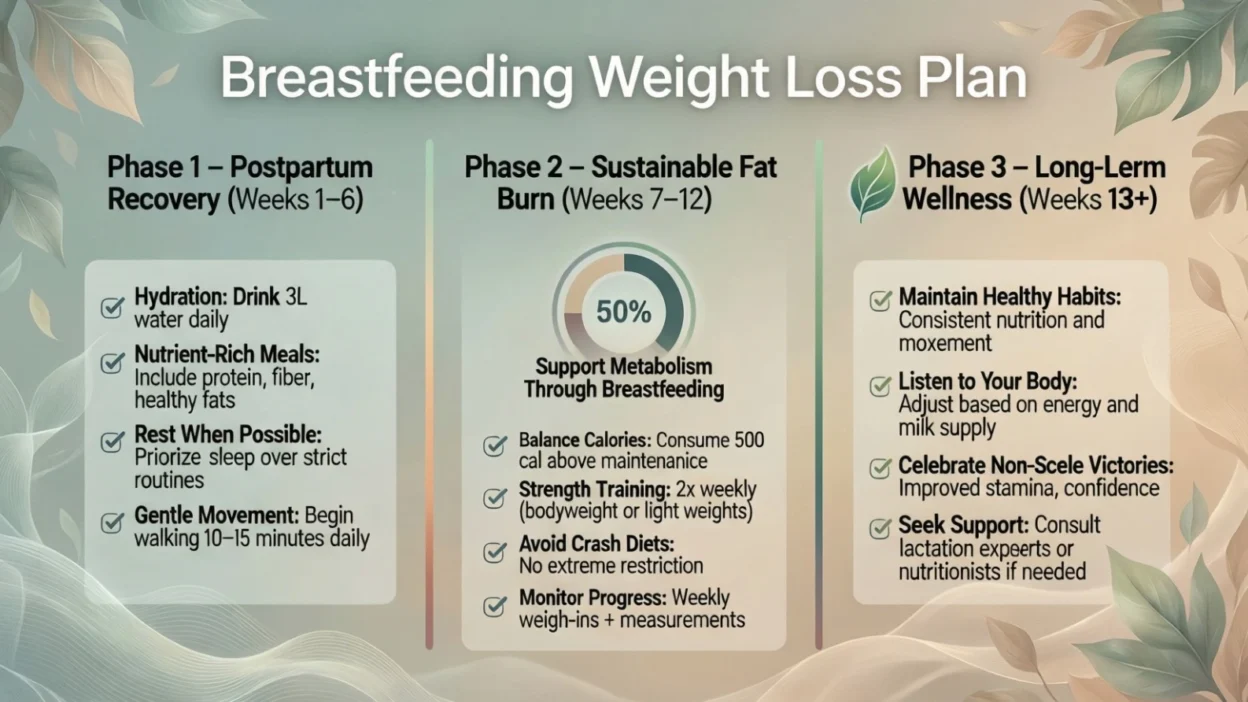
In this guide, I’ll share a complete breastfeeding weight loss plan that focuses on nourishing meals, smart exercises, and lifestyle habits that fit into a busy mom’s routine.
If you’re searching for postpartum nutrition tips, lactation-friendly meal plans, or effective ways to stay active, this plan will help you feel energized, confident, and supported on your journey to a healthier, stronger you.
Understanding Postpartum Weight Loss While Breastfeeding
After giving birth, many new moms naturally wonder how breastfeeding impacts weight loss. The body undergoes significant changes postpartum, and breastfeeding can play a key role in burning extra calories. Producing milk requires energy—about 300–500 calories per day—which can help support gradual weight loss. However, it’s important to remember that every mom’s journey is unique. Some may lose weight quickly, while others find it slower due to hormonal fluctuations, sleep deprivation, and lifestyle factors.
Metabolism and hormones are major players. Prolactin, the hormone responsible for milk production, helps the body burn fat more efficiently, while oxytocin supports uterine recovery. This natural fat-burning mechanism can aid in returning to a healthy weight—but it’s not a shortcut. Crash diets or skipping meals can lower milk supply and leave you feeling drained.
Setting realistic weight loss goals is essential. Most experts recommend losing about 0.5–1 pound per week while breastfeeding, which allows your body to recover safely and maintain nutrition for your baby. Tracking progress, rather than focusing solely on the scale, can help you stay motivated. Remember, this phase is about balancing health, energy, and self-care, not perfection.
Essential Nutrition for Breastfeeding Moms
Nutrition is the foundation of any breastfeeding weight loss plan. What you eat not only affects your body but also impacts the quality of your breast milk. During this period, your body needs extra nutrients to support recovery, maintain energy, and keep your baby healthy.
First, focus on balanced meals with protein, healthy fats, and complex carbohydrates. Protein helps repair tissues and keeps you full longer—think eggs, lean meats, beans, and Greek yogurt. Healthy fats, such as avocado, nuts, and olive oil, support brain health for both mom and baby. Complex carbs like whole grains, fruits, and vegetables provide long-lasting energy without causing blood sugar spikes.
Key nutrients to prioritize include calcium, iron, and vitamin D. Calcium is vital for bone strength, while iron helps combat postpartum fatigue. Leafy greens, fortified dairy products, and lean meats are great sources. Don’t forget hydration: breastfeeding moms need extra fluids, so aim for at least 8–10 glasses of water daily.
Some foods also promote lactation, like oats, fenugreek, and certain seeds, while sugary, highly processed foods can lead to weight gain and energy crashes. Eating smaller, frequent meals can prevent hunger and help regulate metabolism.
By focusing on nutrient-rich, satisfying foods, you can support milk supply, feel energized, and gradually lose weight. Good nutrition is not about restriction—it’s about making smart, sustainable choices that nurture both you and your baby.
Sample Meal Plans for Breastfeeding Weight Loss
Creating a structured meal plan can make losing weight while breastfeeding easier and less stressful. The key is to focus on nutrient-dense, lactation-friendly meals that provide enough energy without excess calories. Here’s a sample framework for busy moms:
Breakfast Ideas:
- Overnight oats with chia seeds, berries, and a spoon of almond butter
- Scrambled eggs with spinach and whole-grain toast
- Greek yogurt with sliced banana and a sprinkle of granola
Lunch Options:
- Grilled chicken salad with mixed greens, avocado, and olive oil dressing
- Quinoa bowl with roasted vegetables, chickpeas, and tahini
- Whole-grain wrap with lean turkey, hummus, and plenty of veggies
Dinner Choices:
- Baked salmon with steamed broccoli and brown rice
- Stir-fried tofu with mixed vegetables and soba noodles
- Lentil soup with whole-grain bread and a side of leafy greens
Snack Ideas:
- Apple slices with peanut butter
- Carrot and cucumber sticks with hummus
- Handful of nuts or seeds
- Lactation cookies or energy balls (homemade)
Tips for Success:
- Prepare meals in advance to save time
- Keep healthy snacks visible and within reach
- Eat smaller, frequent meals to sustain energy and support milk supply
- Avoid skipping meals, as it can lower energy and affect breastfeeding
By following a structured meal plan like this, you can support milk production, maintain energy, and gradually lose postpartum weight. It’s not about strict dieting—it’s about making practical, nourishing choices that fit your lifestyle.
Safe Exercise Tips While Breastfeeding
Exercise is an important part of any breastfeeding weight loss plan, but it’s essential to approach it safely, especially in the postpartum period. Your body needs time to heal after childbirth, so start slowly and gradually increase intensity. Low-impact workouts are the safest way to burn calories, strengthen muscles, and improve overall energy without compromising milk supply.
When to Start: Most moms can begin gentle exercise 4–6 weeks postpartum, but it’s best to get approval from your healthcare provider, especially if you had a C-section or complications.
Low-Impact Exercise Options:
- Walking: A simple way to burn calories and relieve stress. Stroller walks let you exercise with your baby.
- Yoga & Pilates: Help restore core strength, improve flexibility, and support pelvic floor recovery.
- Postnatal Strength Training: Light resistance exercises using bands or body weight help tone muscles and support metabolism.
Tips for Exercising While Breastfeeding:
- Wear a supportive sports bra to prevent discomfort.
- Time workouts after feeding or pumping to avoid engorged breasts.
- Stay hydrated before, during, and after exercise.
- Listen to your body: avoid pushing through pain or exhaustion.
Exercises with Baby: Baby-wearing walks, gentle squats while holding your baby, or stroller-friendly workouts can keep your baby involved and help you stay consistent.
By combining safe, gradual exercise with proper nutrition, you can promote postpartum weight loss, build strength, and boost energy, all while supporting breastfeeding and recovery.
Lifestyle Habits to Support Weight Loss
While nutrition and exercise are essential, lifestyle habits play a crucial role in any breastfeeding weight loss plan. Postpartum life is busy and unpredictable, so focusing on small, manageable habits can make a big difference in maintaining energy, supporting milk production, and achieving gradual weight loss.
Prioritize Sleep:
Adequate rest is vital for recovery and metabolism. Although newborn schedules are demanding, try to nap when your baby sleeps or share nighttime duties with a partner. Even short periods of rest help reduce stress hormones that can hinder weight loss.
Manage Stress:
High stress levels can lead to emotional eating and fatigue. Simple practices like deep breathing, meditation, or short walks outside can help you feel calmer and more in control.
Stay Hydrated:
Breastfeeding increases fluid needs, so drinking 8–10 glasses of water daily is essential. Herbal teas and water-rich foods like fruits and vegetables can help you stay hydrated.
Mindful Eating:
Focus on eating slowly, paying attention to hunger cues, and choosing nutrient-dense foods. Avoid eating on autopilot while multitasking, as this can lead to overeating.
Track Progress Without Pressure:
Instead of obsessing over the scale, notice improvements in energy, mood, and strength. Small victories, like being able to walk longer distances or prep healthy meals, are just as important as weight loss.
Common Challenges and How to Overcome Them
Even with a solid breastfeeding weight loss plan, many new moms face challenges that can make the journey feel frustrating. Understanding these obstacles and having strategies to overcome them is key to staying on track.
Slow Weight Loss or Plateaus:
Postpartum weight loss is often gradual, and it’s normal to hit a plateau. Focus on consistency rather than speed. Adjusting meal portions, adding gentle exercise, or tracking progress with measurements instead of the scale can help.
Balancing Breastfeeding, Work, and Self-Care:
Juggling multiple responsibilities leaves little time for meal prep or exercise. Prioritize small, achievable goals like 10-minute walks, batch-cooking meals, or doing short at-home workouts. Remember, small steps add up over time.
Social Pressure and Family Expectations:
Well-meaning comments about body image or eating habits can be discouraging. Stay focused on your personal goals and communicate boundaries with family or friends.
Motivation and Consistency:
Fatigue and a busy schedule can make it hard to stay motivated. Celebrate small victories, track non-scale progress like energy levels and mood, and remind yourself that slow, steady weight loss is healthiest for both you and your baby.
FAQs
Many new moms have questions about losing weight while breastfeeding, and it’s normal to feel uncertain about what’s safe and effective. Here are answers to some of the most common concerns:
1. Can I safely diet while breastfeeding?
Yes, but extreme calorie restriction is not recommended. A gradual approach—losing 0.5–1 pound per week—is safest and ensures your milk supply remains stable. Focus on nutrient-rich, balanced meals rather than cutting calories drastically.
2. How much weight can I lose per week?
Safe postpartum weight loss is typically 0.5–1 pound per week. Every mom’s body is different, so don’t compare your progress to others. Consistency in eating well, exercising safely, and practicing self-care matters more than speed.
3. Will exercise affect my milk supply?
Moderate exercise does not negatively impact milk production. Hydration and timing are key: exercise after feeding or pumping to avoid discomfort and maintain milk flow.
4. Which foods help with lactation?
Oats, leafy greens, lean proteins, nuts, and seeds can help support milk production. Avoid highly processed foods, which may impact energy levels and weight loss.
5. How do I stay energized while losing weight?
Frequent, balanced meals with protein, complex carbs, and healthy fats are essential. Staying hydrated, resting whenever possible, and incorporating light exercise can also boost energy.
Conclusion
Losing weight while breastfeeding can feel challenging, but with the right approach, it’s completely achievable.
The key is to focus on gradual, safe, and sustainable weight loss that nourishes both you and your baby. Rapid dieting or extreme exercise can compromise your health and milk supply, so a balanced plan that combines nutrition, exercise, and healthy lifestyle habits is essential.
Following a breastfeeding weight loss plan starts with understanding your body. Breastfeeding naturally burns extra calories, but your metabolism, hormones, and postpartum recovery all influence weight loss.
By setting realistic goals, prioritizing nutrient-rich meals, and staying hydrated, you can support your energy levels and milk production while gradually shedding baby weight.
Incorporating safe, low-impact exercises like walking, yoga, and gentle strength training helps rebuild core strength, improve mood, and increase calorie burn without stressing your body.
Alongside this, healthy lifestyle habits—sleeping when possible, managing stress, and practicing mindful eating—further support your progress.
Remember, challenges such as slow weight loss, cravings, or busy schedules are normal. Anticipating these hurdles, creating practical strategies, and celebrating small victories will keep you motivated and consistent.
Ultimately, the journey is about more than just the scale. It’s about feeling strong, energized, and confident while caring for your baby.
By following this plan, you can achieve lasting, healthy results, maintain breastfeeding, and embrace your postpartum body with patience and self-compassion.

Amina Khalid is a registered clinical psychologist and certified Behaviour Support Practitioner based in Brisbane, Australia. With a Doctorate in Clinical Psychology and more than a decade of experience supporting families, caregivers, and individuals with complex behavioural needs, she is known for her compassionate approach and evidence‑based practice. Amina also lectures in clinical and counselling psychology and specializes in psychometric assessment and capacity‑building interventions for children and adults.