
In today’s fast-paced digital world, texting and social media have introduced countless abbreviations that can leave some people scratching their heads.
One of the most common and sometimes confusing acronyms you’ll see online is BTW. Whether you’re scrolling through Instagram comments, chatting on WhatsApp, or reading emails, BTW pops up everywhere, often without explanation.
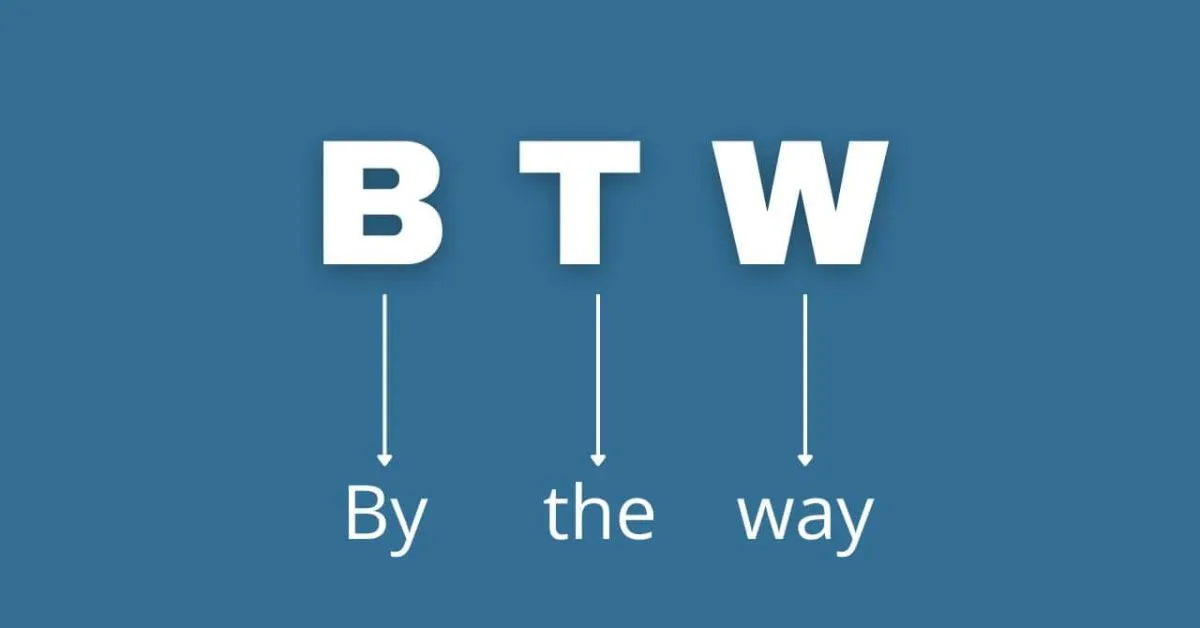
So, what does BTW actually mean, and when should you use it? In simple terms, BTW stands for “By The Way”, and it’s used to add extra information or a side note in a conversation.
Understanding this abbreviation can make your texting clearer and help you keep up with online communication trends.
In this guide, we’ll break down the meaning, origin, proper usage, and examples of BTW, as well as common mistakes to avoid, so you’ll never be confused when you see it again.
What Does BTW Mean?
The acronym BTW stands for “By The Way”. It is one of the most common abbreviations used in texting, social media, emails, and online chats. Essentially, BTW is a way to add extra information, a side note, or an afterthought to a conversation without interrupting the main topic. For example, if you are texting a friend about weekend plans and suddenly remember something else, you can say, “I’ll bring snacks. BTW, do you want me to pick up drinks too?” Here, BTW introduces additional information naturally and casually.
BTW is primarily informal and is used to make conversations smoother, friendlier, and more conversational. It is rarely used in formal writing unless the tone is intentionally casual. You will often see it in messages, group chats, social media posts, and comments.
Besides texting, BTW can appear in emails or online forums when someone wants to add a minor detail or side note. For example, in an email: “Please find the report attached. BTW, I updated the figures in the last column for accuracy.”
Overall, BTW is a convenient way to share extra information quickly. Knowing how and when to use it will make your digital communication clearer, faster, and more relatable. It’s a small abbreviation, but it carries a lot of conversational power.
Origin of BTW
The abbreviation BTW, meaning “By The Way,” has its roots in early digital communication, emerging from the need to type quickly in emails, instant messages, and online forums. In the 1990s, as email became popular and internet chat rooms started flourishing, people began using shorthand to save time and keystrokes. Just like LOL (Laugh Out Loud) or BRB (Be Right Back), BTW was born as a convenient way to convey a full phrase in just three letters.
Before the internet, the phrase “by the way” was already commonly used in spoken and written English to introduce a secondary idea or side note. With the rise of texting and instant messaging, abbreviations became a standard part of digital language, and BTW quickly became a staple in online conversations.
BTW also gained popularity because it allowed writers to keep their messages concise without losing clarity. In early SMS messages, where character limits were strict, using abbreviations like BTW was not only practical but necessary. Today, BTW remains widely used across social media platforms, chat apps, and even casual emails, making it one of the most recognized and enduring internet acronyms.
Understanding the origin of BTW helps explain why it’s used the way it is: a quick, informal way to add extra information. Its evolution from spoken English to digital shorthand shows how language adapts to technology, blending efficiency with clarity in everyday communication.
How to Use BTW Correctly
Using BTW correctly is essential to make your messages clear, friendly, and natural. Since BTW stands for “By The Way,” it is primarily used to add a side note or extra information in a conversation without interrupting the main topic.
1. Placement in a Sentence:
BTW can be placed at the beginning, middle, or end of a sentence. For example:
- Beginning: “BTW, I forgot to tell you about the meeting.”
- Middle: “I’ll send you the document, BTW, it includes the latest updates.”
- End: “I enjoyed our chat earlier, see you tomorrow BTW.”
2. Tone and Context:
BTW is informal and works best in casual conversation. It’s suitable for texting friends, posting on social media, or informal emails. Avoid using BTW in formal or professional documents, as it can come across as too casual or even careless.
3. Examples in Everyday Use:
- Texting a friend: “I got the tickets for the movie. BTW, do you want popcorn?”
- Social media comment: “Love your new post! BTW, your last photo was amazing too.”
- Email to a colleague (informal context): “I’ve attached the draft for review. BTW, the client called this morning with feedback.”
4. Key Tip:
Use BTW sparingly. Overusing it can make your writing seem cluttered or distract from the main message. Think of it as a conversational bridge that smoothly introduces additional information.
Mastering the correct usage of BTW ensures your messages feel natural, concise, and friendly, helping you communicate effectively in the digital age.
Common Mistakes and Misunderstandings with BTW
While BTW is a simple and widely recognized abbreviation, many people make mistakes when using it, which can confuse readers or make messages seem awkward. Understanding these common errors will help you communicate more clearly.
1. Using BTW in Formal Writing:
One of the most frequent mistakes is using BTW in professional emails or official documents. Since BTW is informal, it can appear unprofessional. For instance, writing, “Please review the report, BTW, the deadline is tomorrow,” may come across as too casual in a business setting. In professional communication, it’s better to use “by the way” in full or rephrase the sentence.
2. Overusing BTW:
Some people sprinkle BTW throughout a conversation unnecessarily. Overusing it can distract from the main message and make texts or posts feel cluttered. Example of overuse: “BTW, I’m late. BTW, I forgot my bag. BTW, the weather is nice.” One BTW per message is usually sufficient.
3. Confusing BTW with Other Acronyms:
Beginners sometimes confuse BTW with acronyms like BTT (Back To Topic) or BWL (Burst With Laughter), which can lead to misunderstandings. Always double-check the abbreviation you intend to use.
4. Misplacing BTW in a Sentence:
Putting BTW randomly or without context can confuse readers. Ensure it clearly introduces a side note or additional information.
By avoiding these mistakes, your use of BTW will feel natural, smooth, and easy for readers to understand, whether in texting, social media, or casual emails.
Variations & Related Acronyms
While BTW is a popular and versatile abbreviation, it’s just one of many shorthand terms used in texting, social media, and online conversations. Understanding related acronyms can help you communicate more naturally and interpret messages correctly.
1. FYI (For Your Information):
Like BTW, FYI is used to provide additional information. However, FYI is often more neutral or formal in tone, while BTW is conversational. Example:
- FYI: “The meeting has been moved to 3 PM.”
- BTW: “The meeting is at 3 PM, BTW, don’t forget your report.”
2. TBH (To Be Honest):
TBH is used to express honesty or share an opinion, whereas BTW is for adding extra details. Example:
- “TBH, I didn’t enjoy the movie.”
- “I liked the movie, BTW, the soundtrack was amazing.”
3. IMHO (In My Humble Opinion):
This acronym is used when offering a personal viewpoint. It differs from BTW, which simply introduces additional information rather than an opinion.
4. FWIW (For What It’s Worth):
FWIW is another related acronym used to provide side information, often with a subtle opinion or suggestion. BTW, on the other hand, is neutral and casual.
5. Combining Acronyms:
Sometimes, people combine BTW with other acronyms in chats, like:
- “I’ll bring dessert, BTW FYI, the fridge is almost full.”
Knowing these variations and related abbreviations helps you understand subtle differences in tone and context. By mastering BTW alongside other acronyms, your texting and online communication will feel smoother, clearer, and more expressive.
BTW in Pop Culture and Media
The abbreviation BTW has become more than just a texting shorthand it’s also a part of pop culture and media. Its widespread recognition makes it instantly understandable, even to people who don’t use texting frequently. From memes to TV shows and social media, BTW appears in various forms to convey casual, side-note communication.
On social media platforms like Twitter, Instagram, and TikTok, BTW is often used in captions, comments, or posts to add extra information or a playful aside. For example, a caption might read: “Loved this coffee shop! BTW, their pastries are amazing too!” This usage keeps posts conversational and relatable.
In TV shows and online videos, characters often use BTW in dialogue to mimic real-life texting language. This reflects the shift in how digital communication influences modern storytelling, making content feel more authentic and connected to younger audiences.
BTW also appears frequently in internet memes, where it’s used humorously to deliver punchlines or unexpected side notes. Memes rely on brevity, and BTW’s concise nature makes it perfect for this purpose.
Even outside digital media, BTW has made its way into casual spoken conversations, especially among younger generations. People often say “by the way” aloud in informal situations, reflecting the same function as the abbreviation.
The cultural presence of BTW highlights its enduring relevance in communication. It’s not just an abbreviation; it’s part of how people connect, add humor, and convey small but meaningful details in everyday conversations.
FAQs About BTW
Even though BTW is widely used, many people have questions about its meaning, usage, and context. Here are some of the most common FAQs to help you understand this popular abbreviation.
1. Is BTW formal or informal?
BTW is primarily informal. It works best in casual texting, social media posts, or friendly emails. In professional or formal writing, it’s better to use the full phrase, “by the way,” instead of the abbreviation.
2. Can BTW be used in professional emails?
Yes, but only in semi-formal or casual professional contexts, such as messaging a close colleague or adding a minor note in a friendly email. Avoid using BTW in formal reports, official documents, or communication with clients.
3. What’s the difference between BTW and FYI?
While both are used to provide additional information, FYI is usually neutral or informational, while BTW adds a casual, conversational side note. Example:
- FYI: “The meeting has been rescheduled to 3 PM.”
- BTW: “The meeting is at 3 PM, BTW, don’t forget to bring the agenda.”
4. Are there regional differences in using BTW?
BTW is widely recognized in English-speaking countries, and its meaning remains the same globally. However, usage frequency may vary depending on texting habits or cultural preferences.
5. Common misconceptions about BTW:
Some people think BTW is only used online, but it’s also used in spoken language as “by the way.” Additionally, it should not be overused in a single conversation, as that can make messages cluttered.
Understanding these FAQs ensures you use BTW appropriately and helps you interpret messages accurately in everyday communication.
Conclusion
In the fast-paced world of digital communication, abbreviations like BTW have become essential tools for keeping conversations quick, clear, and friendly.
Standing for “By The Way,” BTW allows you to introduce side notes, extra information, or minor details without interrupting the flow of a message.
From texting and social media to casual emails and even pop culture, BTW has cemented itself as one of the most widely recognized and versatile acronyms.
Using BTW correctly involves knowing its informal nature, placing it appropriately in a sentence, and avoiding overuse.
Understanding related acronyms like FYI, TBH, and IMHO also helps you communicate more naturally and interpret messages accurately.
Next time you see BTW in a message or want to add a quick side note yourself, you’ll know exactly what it means and how to use it.
BTW, now you’re fully equipped to master this small but powerful abbreviation!

Margaret Johnson was an American blues and early jazz vocalist and pianist active during the 1920s. She began her recording career in the early part of that decade, performing in vaudeville and jazz ensembles, and is best remembered for her work in blues music.