

Curling is a sport that combines precision, strategy, and teamwork, but many beginners overlook one critical aspect: the weight of the curling stone.
Understanding the curling stone’s weight is essential for anyone who wants to improve their skills, whether you’re a recreational player practicing at a local rink or a professional preparing for international competitions.
Beyond gameplay, knowledge of stone weight also plays a role in safety, equipment selection, and proper delivery technique.
In this guide, we’ll explore everything you need to know about curling stone weight, from its history and standard measurements to tips for handling and maximizing performance on the ice.
What is a Curling Stone?
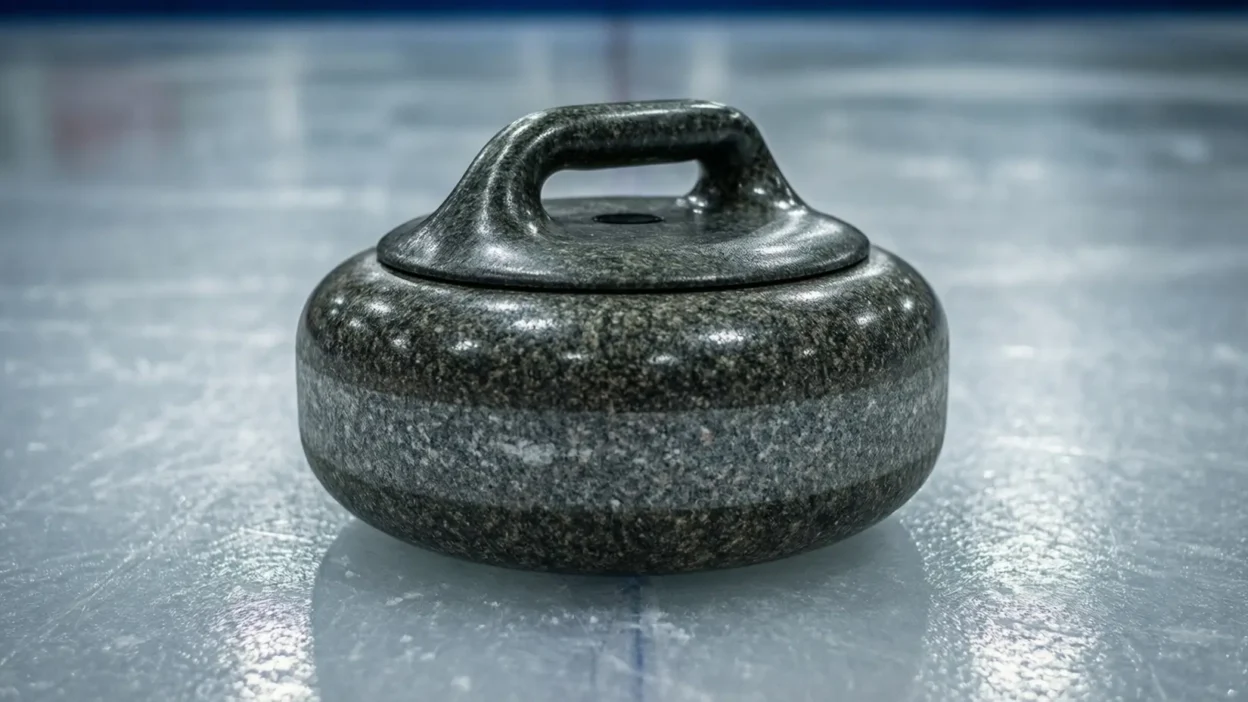
A curling stone is the fundamental piece of equipment in the sport of curling, often referred to as “chess on ice” because of the strategic play involved. Unlike balls used in other sports, curling stones are heavy, smooth, and specifically shaped to slide on ice with precision. Granite is ideal because it can withstand repeated impacts and maintain a smooth running surface over years of use.
Each stone weighs between 38 and 44 pounds (17.24–19.96 kg) and has a diameter of about 11 inches (28 cm), with a thickness of approximately 4.5 inches (11.5 cm). The top of the stone features a handle, which allows players to grip and rotate the stone to control its direction and curl. The bottom surface, called the running band, is a narrow, flat ring that contacts the ice, reducing friction and allowing the stone to glide smoothly.
The combination of weight, shape, and material allows players to execute a variety of shots, including draws, takeouts, and guards. Understanding the stone’s construction and characteristics is essential for mastering the sport. From casual play to professional competitions, the curling stone’s design and weight play a central role in every shot made on the ice.
Standard Weight of Curling Stones
The weight of a curling stone is one of the most important aspects of the game, as it directly affects how the stone moves on the ice. According to the World Curling Federation (WCF), official curling stones must weigh between 38 and 44 pounds (17.24–19.96 kg).
Any variation outside the official range can affect gameplay significantly—stones that are too light may stop too quickly, while overly heavy stones require extra force and can tire players quickly.
The weight of the stone also influences strategy. Heavier stones tend to maintain their line better, making them useful for defensive shots like guards, whereas lighter stones can be easier to manipulate for finesse shots, such as draws and taps. Recreational stones may vary slightly in weight, but professional competitions strictly follow WCF guidelines.
Understanding and practicing with the correct stone weight is crucial for players at every level. By mastering the balance and momentum of a standard curling stone, athletes can improve accuracy, control, and consistency, making each shot more strategic and effective.
History of Curling Stone Weight
The curling stone has a rich history that dates back several centuries, with its weight playing a key role in the evolution of the sport. These stones varied greatly in size and weight, making gameplay unpredictable. Players had to adapt their techniques based on each stone’s unique characteristics, which added an extra layer of challenge to early matches.
As curling became more organized, players and clubs began to recognize the importance of standardizing stone weight for fairness and consistency. By the 19th century, curling clubs in Scotland had started shaping stones from granite, selecting heavier, denser rocks that could withstand repeated impacts on ice. The weight range gradually became formalized, and by the early 20th century, stones typically fell between 38 and 44 pounds (17–20 kg), closely aligning with modern standards.
The World Curling Federation (WCF) later codified these regulations, ensuring that all official competitions used stones within the same weight range. The use of granite quarries, particularly in Scotland and Canada, became common because granite provides durability, smoothness, and the proper weight distribution for accurate sliding.
Understanding the historical development of stone weight highlights how the sport evolved from casual outdoor games into the highly strategic, professional competitions we see today, where every pound of a stone can influence the outcome of a match.
Why Curling Stone Weight Matters
The weight of a curling stone is not just a number—it directly influences every aspect of gameplay, from delivery to sweeping. A stone that falls within the official range of 38 to 44 pounds (17.24–19.96 kg) provides the right balance between control and momentum, allowing players to execute precise shots on the ice.
Heavier stones carry more momentum, which is essential for takeout shots where one stone must knock another out of play. However, their weight requires more strength and technique, both in delivery and sweeping. Lighter stones, while easier to throw, may stop too soon or be more affected by ice conditions, making accuracy a bigger challenge. Players must adjust their technique based on the stone’s weight to achieve consistent results.
Weight also affects strategy. Guard stones, which block the opponent’s path, benefit from a slightly heavier stone that maintains its line, while finesse shots like draws and taps may require lighter, more controllable stones. For competitive curlers, understanding the subtle differences in weight allows for better judgment on shot selection and speed control.
Finally, the stone’s weight impacts safety and equipment handling. Proper lifting and throwing techniques are necessary to avoid strain or injury, especially during long games. By appreciating the role of weight in both mechanics and strategy, players can maximize performance, make smarter tactical decisions, and enjoy a safer, more effective curling experience.
How Stone Weight Affects Gameplay
The weight of a curling stone plays a crucial role in how the game unfolds, influencing shot execution, sweeping, and overall strategy. A properly weighted stone—between 38 and 44 pounds (17.24–19.96 kg)—ensures predictable movement across the ice, which is essential for both offensive and defensive play.
Heavier stones maintain momentum better, making them ideal for takeouts where the goal is to remove an opponent’s stone from play. Their mass allows them to travel farther with less deviation, but they require precise delivery and greater sweeping effort to control their path. Lighter stones, by contrast, are easier to throw with finesse, making them suitable for delicate shots like draws or taps, but they are more affected by ice conditions and can be harder to control over longer distances.
Heavier stones may need more vigorous sweeping to adjust speed or curl, while lighter stones respond more quickly to ice friction changes. Players must communicate and coordinate carefully to optimize stone movement based on its weight.
Guard stones benefit from heavier stones for stability, while attacking stones may use lighter ones for precise positioning. By understanding how weight interacts with momentum, friction, and curling mechanics, players can make better tactical decisions, ensuring each shot aligns with their overall game plan. Ultimately, mastering the effects of stone weight is essential for consistency, accuracy, and competitive success.
Choosing the Right Stone for Practice and Competition
Selecting the right curling stone is crucial for both beginners and experienced players, as weight and material directly impact gameplay. In official competitions, stones must adhere to the World Curling Federation standard of 38–44 pounds (17.24–19.96 kg). Competitive players typically use stones that fall in the middle of this range, around 42 pounds (19 kg), which balance momentum and control for consistent performance.
For beginners, slightly lighter stones may be easier to handle during practice sessions. Lighter stones allow new players to focus on mastering delivery, grip, and sweeping techniques without being overwhelmed by the stone’s weight. This approach builds confidence and helps prevent injuries from improper lifting or throwing.
Material also plays a key role. Official curling stones are made from dense granite, which ensures durability and smooth sliding. Recreational stones may vary in weight and material, such as resin or synthetic composites, but they are suitable for practice and casual games. Players should choose stones that closely mimic the weight and feel of professional granite stones to prepare for competition.
Home curling setups or local clubs may have a range of stone weights. When selecting stones, consider the players’ skill levels, physical strength, and game type. Practicing with the correct weight ensures accurate shot control, improves technique, and enhances overall enjoyment. By choosing stones thoughtfully, players can develop skills efficiently while enjoying a safer and more effective curling experience.
Maintaining and Handling Heavy Stones Safely
Curling stones are heavy, weighing between 38 and 44 pounds (17.24–19.96 kg), so proper handling and maintenance are essential for safety and longevity. Mishandling these stones can cause injuries or damage to the ice, so players should always use proper techniques when lifting, carrying, and delivering them.
When lifting a curling stone, it’s important to bend at the knees and keep the back straight, using both hands to grip the handle firmly. Avoid twisting your body while lifting, as this can strain muscles or joints.Using proper lifting and pushing techniques reduces fatigue and improves delivery accuracy during play.
Maintenance is equally critical. The running surface of the stone—the narrow band that contacts the ice—must remain smooth and free of chips or cracks. Regular inspection for damage, as well as occasional polishing, helps maintain consistent sliding behavior.
Storage also affects safety and performance.When transporting stones, use padded containers or carts to avoid dropping or damaging them.
By understanding proper handling, care, and storage, players can enjoy curling safely while ensuring their stones remain in optimal condition for precise, strategic gameplay.
Interesting Facts About Curling Stone Weight
Curling stones are not only central to the game but also have fascinating characteristics and trivia that make them unique in the world of sports. One of the most interesting facts is their weight: official stones weigh between 38 and 44 pounds (17.24–19.96 kg), which is heavier than most beginners expect. This weight, combined with the stone’s dense granite construction, allows it to slide smoothly while maintaining momentum across the ice.
Some curling stones have remarkable histories. For instance, certain stones used in Olympic competitions are carefully tracked and preserved because of their precision and consistency. Many of these stones come from Ailsa Craig, an island in Scotland famous for its rare blue granite, prized for durability and low friction. This granite is so resilient that Olympic stones can last for decades of use.
Curling stones also have a Guinness World Record associated with them: the heaviest curling stone ever recorded weighed 51 pounds (23 kg), used in special exhibitions rather than official matches. While this is outside the standard range, it demonstrates how weight affects gameplay and handling.
Another intriguing fact is that the “running band”—the thin, polished ring that touches the ice—plays a crucial role in performance. A stone’s weight interacts with this narrow contact area, influencing how much it curls and how far it travels. Even small differences in weight can significantly affect a player’s strategy, making curling a precise balance of science and skill.
FAQ:
1. What is the official weight of a curling stone?
Official curling stones weigh between 38 and 44 pounds (17.24–19.96 kg).
2. Can curling stones weigh more or less than the official range?
While recreational stones may vary slightly, stones used in official matches must stay within the regulated weight range. Heavier or lighter stones can alter gameplay, affecting accuracy, sliding, and sweeping dynamics.
3. How does the weight affect the stone’s movement?
Heavier stones carry more momentum, making them ideal for takeouts or defensive shots, while lighter stones are easier to throw for finesse shots, such as draws or taps. Weight also influences how much the stone curls and how sweeping can adjust its speed and direction.
4. Are all curling stones made of granite?
Some recreational stones may use synthetic materials, but granite is the standard for professional play.
5. Can beginners use official-weight stones?
Beginners can practice with lighter stones to build strength and technique.
Understanding these FAQs helps players of all levels appreciate the importance of curling stone weight, ensuring safer, more precise, and strategic gameplay on the ice.
Conclusion
The weight of a curling stone is more than just a technical specification—it is a defining factor that shapes every aspect of the game.
Official curling stones weigh between 38 and 44 pounds (17.24–19.96 kg), a range carefully standardized to ensure fairness, precision, and consistency in both practice and competitive play.
Understanding this weight is essential for players at all levels, from beginners learning delivery techniques to professionals executing strategic shots at high-stakes tournaments.
Heavier stones carry momentum for powerful takeouts and defensive guards, while lighter stones allow for finesse shots and subtle adjustments.
By mastering the dynamics of stone weight, players gain better control over their strategy, improving both consistency and performance.
From historical origins with irregular river rocks to today’s precision-engineered granite stones, curling stones have evolved while maintaining their essential weight standards.
Recognizing the significance of curling stone weight enriches appreciation for the sport, highlights the skill required, and empowers players to make informed choices in training and competition.
Ultimately, mastering stone weight is a key step toward excelling in curling, combining strategy, strength, and finesse on the ice.

Elena Moretti is a highly accomplished Italian business executive and Country Business Unit Head for Building Products at Siemens S.p.A., known for her expertise in leadership, digital transformation, smart buildings, and strategic business growth. With a degree in Business Administration from Bocconi University, Moretti has built a distinguished career spanning finance, operations, and executive management in complex engineering‑driven industries.