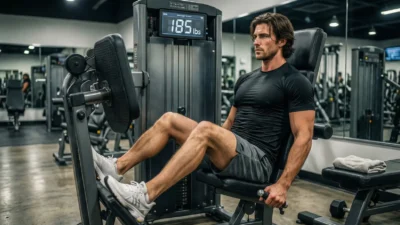

The hack squat machine weight is one of the most misunderstood numbers in the gym.
Many lifters load plate after plate without realizing that the machine itself already carries significant resistance before any weight is added.
Unlike barbell squats, hack squat machines use a sled system set on an angled track, which changes how much weight you’re actually moving and how it feels on your legs.
This confusion often leads to two problems: beginners either start too heavy and risk injury, or experienced lifters underestimate the machine and stall their progress.
Add to that the fact that sled weight varies by brand, angle, and design, and it’s no surprise that most people don’t know what “heavy” really means on a hack squat.
In this guide, you’ll learn how much a hack squat machine typically weighs, how to choose the right starting load, how it compares to barbell squats, and how to use the machine safely and effectively for strength and muscle growth.
What Is a Hack Squat Machine?
A hack squat machine is a plate-loaded lower-body exercise machine designed to mimic the squat movement while providing greater stability and control. Unlike a barbell squat, where the weight rests on your shoulders and requires full-body stabilization, the hack squat machine places your back against a padded sled that moves along fixed rails, typically set at an angle between 30 and 45 degrees.
The machine gets its name from the original “hack squat,” a movement where a barbell was lifted from behind the legs. Modern hack squat machines evolved from this concept to emphasize the quadriceps while reducing strain on the lower back. Because your torso is supported and your movement path is guided, the exercise minimizes balance demands and allows lifters to focus purely on leg drive.
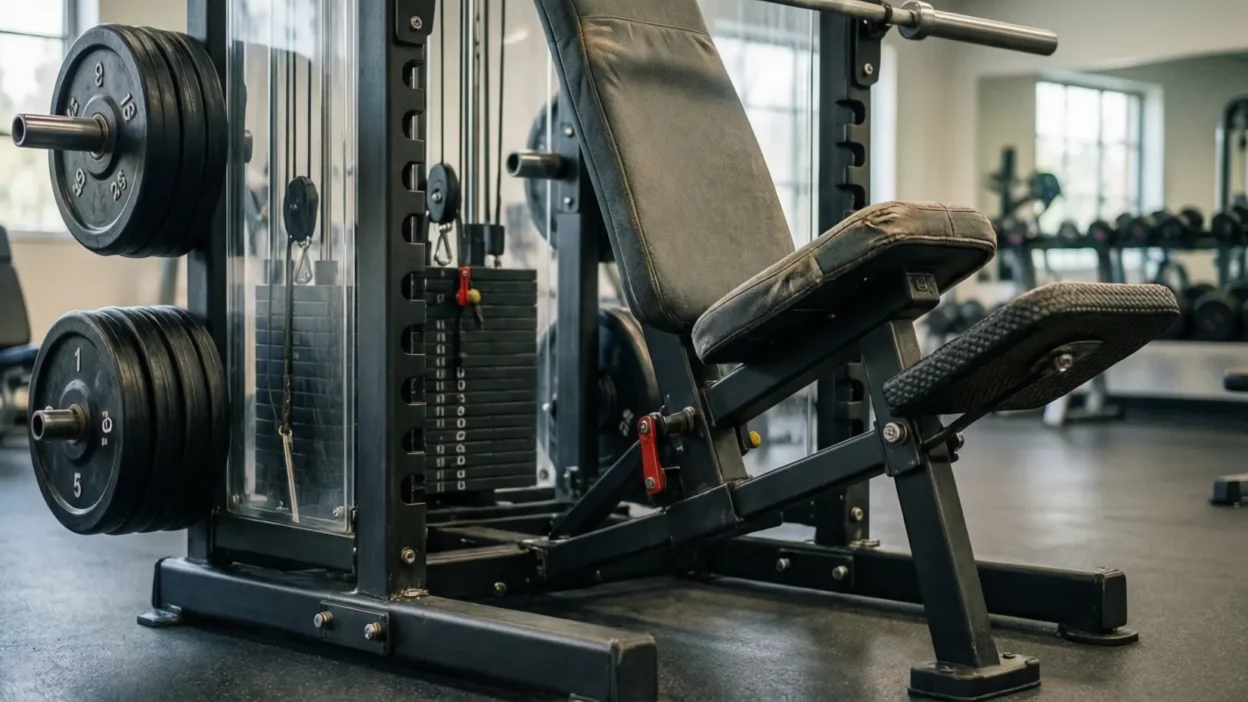
Most hack squat machines consist of a sled, shoulder pads, a foot platform, safety stops, and plate-loading horns. When you unrack the sled, you’re not just lifting the plates you add—you’re also moving the sled’s built-in weight, which can be substantial. This is one of the key reasons hack squat machine weight often feels heavier than expected.
Hack squats are commonly used in commercial gyms, bodybuilding programs, and rehabilitation settings. They’re ideal for lifters who want to overload the legs safely, train through a deep range of motion, or continue squatting when lower-back fatigue limits barbell performance. Understanding how the machine works is essential before determining how much weight you should load on it.
How Much Does a Hack Squat Machine Weigh?
When people ask about hack squat machine weight, they’re usually referring to how much resistance the machine provides before any plates are added. This is known as the empty sled weight, and it plays a major role in how heavy the exercise feels.
On average, most commercial hack squat machines have an empty sled weight ranging from 75 to 125 pounds (34–57 kg). However, this number is rarely printed on the machine itself, which creates confusion for many lifters. The actual resistance you feel depends not only on the sled’s mass but also on the angle of the rails. Because the sled moves on an incline rather than straight up and down, only a portion of the total weight is lifted against gravity.
For example, a sled that physically weighs 100 pounds may feel closer to 60–70 pounds of resistance, depending on the machine’s angle. This is why two hack squat machines can feel completely different even when loaded with the same number of plates. Older machines, budget models, or heavily reinforced commercial units often have heavier sleds than newer or more compact designs.
Another factor is friction and roller quality. Machines with smoother bearings may feel slightly lighter and more consistent, while poorly maintained machines can feel heavier due to increased resistance. Because of these variables, the most reliable way to judge hack squat machine weight is by how it feels through a full range of motion rather than by chasing a specific number.
Understanding the empty sled weight helps you choose appropriate starting loads, track progress accurately, and avoid overloading the machine too quickly—especially if you’re transitioning from barbell squats.
Hack Squat Machine Weight by Brand
Not all hack squat machines are built the same, and brand-specific design differences can significantly affect how much the machine weighs and how heavy it feels during use. This is why loading the same number of plates on two different machines can result in completely different training experiences.
Hammer Strength hack squat machines are known for their heavy-duty construction and dense steel frames. Their sleds typically fall on the heavier end of the spectrum, often feeling more demanding even before plates are added. These machines are commonly found in commercial gyms and are designed to handle high-volume, heavy loading over long periods.
Life Fitness hack squat machines tend to offer smoother movement with slightly lighter sled resistance. Their focus is on biomechanics and joint-friendly motion, which can make the weight feel more manageable despite similar plate loads. This makes them popular in fitness centers catering to a wide range of experience levels.
Rogue hack squat machines, often used in strength-focused gyms and home setups, are built for durability and high weight capacity. While the sled weight can vary by model, Rogue machines usually emphasize stability and minimal flex, contributing to a solid and predictable feel under heavy loads.
Other brands like Cybex, Body-Solid, and Technogym may use different rail angles, sled materials, and bearing systems, all of which influence effective resistance. Budget or older machines may feel heavier due to friction rather than true load.
Because manufacturers rarely publish exact sled weights, the best approach is to treat each machine as unique. Always start lighter when switching brands, assess resistance through full-depth reps, and adjust loading based on performance—not assumptions.
How Much Weight Can a Hack Squat Machine Hold?
Beyond the empty sled weight, many lifters want to know the maximum weight capacity of a hack squat machine. This refers to how much total load the machine is designed to safely handle, including plates, sled, and user force. While capacities vary, most commercial hack squat machines are built to support 800 to 1,200 pounds (360–545 kg) or more.
High-end commercial machines from brands like Hammer Strength, Rogue, and Life Fitness are engineered with thick steel frames, reinforced welds, and heavy-duty guide rails. These machines are designed for repeated heavy use in busy gyms and can safely accommodate advanced lifters pushing very high loads. In contrast, lighter-duty or home gym hack squat machines may have lower capacity limits, often ranging from 500 to 700 pounds, depending on construction quality.
It’s important to distinguish between theoretical capacity and practical use. Just because a machine can hold a certain amount of weight doesn’t mean it should be loaded to the maximum every session. Excessive loading can increase wear on bearings, guide rods, and safety stops, especially if the machine is poorly maintained.
Another limiting factor is plate horn length. Even if the frame can support more weight, you may physically run out of space to load additional plates. This is common in compact machines.
For safety and longevity, lifters should focus on controlled reps, full range of motion, and progressive overload rather than chasing extreme numbers. Proper technique and consistent progression will deliver far better results than testing a machine’s limits.
Hack Squat Machine Weight vs Barbell Squat Weight
Comparing hack squat machine weight to barbell squat weight is tempting, but the two are not directly interchangeable. While both exercises train similar muscle groups—primarily the quadriceps, glutes, and hamstrings—the mechanics and resistance patterns are very different.
In a barbell squat, the weight is loaded vertically and requires full-body stabilization. Your core, hips, upper back, and even ankles play a major role in controlling the bar path. On a hack squat machine, the sled follows a fixed track and your torso is supported, which dramatically reduces the need for stabilizer muscles. This allows many lifters to move more total weight on a hack squat than they can with a barbell—at least on paper.
However, the angled sled changes how gravity acts on the load. Only a portion of the total weight is lifted against gravity, which means 300 pounds on a hack squat does not equal 300 pounds on a barbell. Depending on the machine’s angle, the effective resistance may be closer to 60–75% of the loaded weight, not including sled mass.
Another major difference is joint positioning. Hack squats keep the knees more forward and the torso more upright, increasing quad emphasis but also making the movement feel more demanding at the bottom. This is why some lifters find hack squats harder despite using heavier loads.
Because of these factors, there is no reliable 1:1 conversion between hack squat and barbell squat weights. Each should be progressed independently, focusing on form, depth, and muscular effort rather than numerical comparisons.
Beginner, Intermediate, and Advanced Loading Guidelines
Choosing the right hack squat machine weight depends largely on your training experience, strength level, and familiarity with the machine. Because sled weight and machine angle vary, loading should always be based on performance rather than ego.
Beginners should start with just the empty sled or very light plates. The goal is to learn proper foot placement, depth, and knee tracking before adding resistance. Perform controlled sets of 10–15 reps and focus on full range of motion. Once you can complete all reps with good form and no joint discomfort, gradually increase weight in small increments.
Intermediate lifters can use the hack squat as a primary quad builder or accessory movement. A moderate load that allows 8–12 quality reps works well for hypertrophy. At this stage, progressive overload becomes important—adding small amounts of weight, extra reps, or improved tempo over time. Many lifters find they can load more weight on the hack squat than on barbell squats, but control should always take priority.
Advanced lifters often use heavy hack squats to push leg strength and muscle growth without overloading the lower back. Lower rep ranges (5–8 reps) with longer rest periods are common. Advanced techniques such as paused reps, slow eccentrics, or drop sets can increase intensity without relying solely on heavier loads.
Across all levels, proper warm-up, use of safety stops, and consistent technique are essential. Progressing slowly and intentionally will produce better long-term results than chasing maximum weight.
Why Hack Squat Weight Feels Different Than Other Exercises
Many lifters are surprised by how challenging the hack squat machine weight feels, even when using loads that seem moderate on paper. This difference comes down to biomechanics, machine design, and muscle involvement.
One of the biggest factors is the fixed movement path. Unlike free weights, the hack squat eliminates the need to balance the load. While this allows you to focus entirely on pushing with your legs, it also removes assistance from stabilizer muscles that normally help distribute effort during a barbell squat. As a result, the quadriceps often bear more direct stress throughout the movement.
The sled angle also plays a major role. Because the weight is pushed along an incline, tension remains more consistent from top to bottom. There’s less opportunity to “rest” at the top of the lift compared to a barbell squat, where joint stacking can briefly reduce muscular demand.
Another factor is body positioning. Hack squats keep your torso upright and your knees forward, which increases knee flexion and quad activation. This deeper knee angle makes the bottom portion of the movement particularly demanding, even with lighter loads.
Compared to machines like the leg press or Smith machine, hack squats typically offer a more restricted foot platform and steeper angle, increasing mechanical difficulty. Friction, roller quality, and maintenance can further influence how heavy the weight feels.
Ultimately, the hack squat doesn’t feel harder because it’s “worse” or “better”—it feels different because it places constant, targeted tension on the legs. Understanding this helps you choose smarter loads and train more effectively.
Foot Placement and Its Effect on Hack Squat Weight
Foot placement plays a major role in how heavy the hack squat machine weight feels and which muscles do most of the work. Small changes in stance can dramatically alter leverage, joint angles, and perceived resistance.
Placing your feet lower on the platform increases knee flexion and shifts more emphasis onto the quadriceps. This position typically makes the weight feel heavier, especially at the bottom of the movement, because the knees travel further forward. While effective for quad development, it requires excellent mobility and control to avoid excessive knee stress.
A higher foot placement reduces knee travel and increases hip involvement, shifting some of the load toward the glutes and hamstrings. Many lifters find this position allows them to use slightly heavier weights with less knee strain, making it a popular option for heavier sets.
Stance width also matters. A narrow stance increases quad activation and often makes the movement feel more challenging with the same weight. A wider stance can improve stability and recruit more glutes, sometimes reducing perceived difficulty.
Foot angle influences knee tracking and comfort. Slightly turning the toes outward can help align the knees and reduce joint stress, while keeping them too straight or excessively angled may limit depth or cause discomfort.
Because foot placement changes leverage, there is no single “correct” setup. Lifters should experiment with different positions using lighter weights before progressing. Adjusting foot placement strategically allows you to target specific muscles, manage joint stress, and get more results without constantly adding weight to the machine.
Common Mistakes When Loading a Hack Squat Machine
Despite its guided design, improper use of hack squat machine weight is common and can reduce effectiveness or lead to injury. One of the biggest mistakes is ignoring the sled weight. Many lifters assume they’re only lifting the plates they add, which often results in starting too heavy and sacrificing form.
Another frequent error is overloading too quickly. Because hack squats feel stable, lifters may add excessive weight before their joints and connective tissues are ready. This often leads to shortened range of motion, knee discomfort, or bouncing out of the bottom position.
Poor foot placement is also a major issue. Feet placed too low, too narrow, or unevenly can create unnecessary knee stress and limit depth. Conversely, placing the feet too high without control may reduce quad engagement and turn the movement into a partial hip press.
Many lifters also lock their knees at the top of the movement. While the hack squat allows for heavy loading, fully locking out under high load places stress on the knee joint and removes tension from the muscles. Maintaining a slight bend keeps constant tension and improves safety.
Finally, relying on momentum or performing partial reps diminishes muscle activation and increases injury risk. The hack squat is most effective when performed with controlled eccentrics, a brief pause at depth, and full extension without joint lockout.
Avoiding these mistakes allows you to train heavier over time while protecting your knees, hips, and lower back—making the hack squat a powerful and safe leg-building tool.
Safety Tips When Using Heavy Hack Squat Weights
Using heavy hack squat machine weight can be extremely effective for building leg strength and muscle, but safety should always come first. Although the machine provides support and a fixed path, improper setup or loading can still lead to joint strain or injury.
Start every session with a thorough warm-up. Light sled-only sets and gradually increasing loads help prepare the knees, hips, and ankles for heavier work. Skipping this step is one of the fastest ways to develop knee irritation.
Always set the safety stops at an appropriate height before unracking the sled. These stops protect you if you fail a rep and prevent you from getting trapped at the bottom of the movement. Never rely on strength alone when handling heavy loads.
Breathing and bracing are equally important. Take a deep breath before descending, brace your core, and exhale as you drive the sled upward. Proper bracing stabilizes the spine and improves force transfer, even though your back is supported.
Control the eccentric (lowering) phase of each rep. Dropping too quickly increases joint stress and reduces muscle engagement. A slow, controlled descent followed by a powerful but smooth ascent is ideal.
Finally, know when not to add weight. If depth decreases, knees cave inward, or pain appears, the load is too heavy. Long-term progress comes from consistent, pain-free training—not from testing limits every session.
By following these safety principles, you can train hard, protect your joints, and make the hack squat a reliable part of your lower-body program.
Hack Squat Machine Weight for Specific Training Goals
Selecting the right hack squat machine weight depends on your primary training goal. While the movement pattern stays the same, load, volume, and tempo should change based on whether you’re training for muscle growth, strength, or conditioning.
For muscle growth (hypertrophy), moderate to heavy loads that allow 8–12 controlled reps work best. The focus should be on time under tension rather than maximum weight. Slowing the eccentric phase and maintaining constant tension—without locking out at the top—will maximize quad activation. Many lifters benefit from using the hack squat after compound lifts to fully fatigue the legs.
When training for strength, heavier loads with lower rep ranges (5–8 reps) are more appropriate. Rest periods should be longer to allow for full recovery between sets. Advanced lifters often use hack squats as a way to overload the legs while minimizing lower-back fatigue from heavy barbell squats. Even here, perfect depth and control matter more than chasing numbers.
For fat loss and conditioning, lighter to moderate weights paired with higher reps (12–20) or shorter rest periods are effective. Hack squats can be included in supersets or metabolic circuits to elevate heart rate while still targeting the legs. In this context, weight selection should prioritize continuous movement and good form over load.
Regardless of the goal, progressive overload remains key. This doesn’t always mean adding more weight—it can also include extra reps, slower tempo, deeper range of motion, or reduced rest time. Matching hack squat weight to your goal ensures safer, more effective training.
Hack Squat Machine Weight for Home Gyms
Choosing the right hack squat machine weight capacity is especially important for home gym owners. Unlike commercial gyms, home setups must balance space, budget, and durability while still providing enough resistance for long-term progress.
One of the first considerations is machine footprint and ceiling height. Hack squat machines are large and often require significant vertical clearance due to the angled sled. Heavier-duty machines with thicker steel frames usually weigh more and take up more space, but they also offer greater stability and higher load capacity.
Weight capacity is another key factor. Many home gym hack squat machines are rated between 500 and 700 pounds, which is sufficient for most recreational lifters. However, stronger athletes or those planning long-term progression should look for models with higher ratings and longer plate horns to accommodate more plates.
Plate compatibility also matters. Some machines are designed for Olympic plates, while others may use standard plates. Using the wrong plates can limit loading potential or create balance issues. Additionally, consider the sled’s starting resistance, as lighter home machines may feel significantly different from commercial models.
Cost is often a deciding factor. While budget machines may save money upfront, they can lack smooth bearings and sturdy safety stops, making heavy loading less comfortable or less safe. Investing in a well-built machine can provide smoother resistance, quieter operation, and greater longevity.
For home gyms, the best hack squat machine is one that matches your strength level, fits your space, and allows safe, progressive loading over time—without exceeding your practical needs.
Expert Tips to Get More Out of Hack Squat Weight
You don’t always need to increase hack squat machine weight to make progress. Strategic technique adjustments can dramatically increase training stimulus while keeping joint stress under control.
One effective method is paused reps. Briefly pausing at the bottom of the movement eliminates momentum and forces the quadriceps to generate force from a dead stop. Even a one- to two-second pause can make moderate weights feel significantly heavier.
Slow eccentrics are another powerful tool. Lowering the sled over three to five seconds increases time under tension and enhances muscle control. This technique is especially useful for hypertrophy and for lifters who want to reduce joint strain while still training hard.
One-and-a-half reps increase intensity without adding plates. Lower fully, come halfway up, descend again, then complete the rep. This keeps the muscles under constant tension and targets the most difficult portion of the range of motion.
Mechanical drop sets can also be used effectively. Start with a quad-dominant foot position low on the platform, then move your feet higher as fatigue sets in—without changing the weight. This allows you to extend the set safely and maintain good form.
Finally, focus on depth consistency. Many lifters unknowingly shorten their range of motion as weight increases. Using a consistent depth—ideally with thighs reaching at least parallel—ensures progressive overload is meaningful and measurable.
By using these techniques, you can stimulate muscle growth, improve strength, and extend the usefulness of the hack squat without constantly chasing heavier loads. Smart intensity beats mindless loading every time.
Frequently Asked Questions
How much does a hack squat machine weigh without plates?
Most commercial hack squat machines have an empty sled weight between 75 and 125 pounds, though the effective resistance depends on the machine’s angle and design. Because manufacturers rarely list this number, the sled weight can vary widely between brands.
Why does hack squat weight feel heavier than a barbell squat?
Hack squats keep constant tension on the legs through a fixed movement path and upright torso position. This increases quad activation and removes assistance from stabilizer muscles, making the exercise feel more demanding even with similar or lighter loads.
How much weight should a beginner use on a hack squat?
Beginners should start with the empty sled or very light plates and focus on mastering technique. Once proper depth and knee tracking are consistent, weight can be increased gradually.
Is there a conversion between hack squat and barbell squat weight?
There is no reliable 1:1 conversion. Due to sled angle, biomechanics, and support, hack squat and barbell squat weights should be progressed independently.
Can hack squats be bad for your knees?
When performed with proper foot placement, controlled depth, and appropriate loading, hack squats are generally safe. Knee issues usually arise from poor technique or excessive weight.
How many plates can I load on a hack squat machine?
This depends on the machine’s weight capacity and plate horn length. Most commercial machines can safely handle several hundred pounds of added plates.
Conclusion
Understanding hack squat machine weight goes far beyond counting plates. Sled weight, machine angle, foot placement, and biomechanics all influence how heavy the exercise feels and how effective it is.
By selecting appropriate loads, focusing on technique, and progressing intelligently, you can use the hack squat to build strong, muscular legs safely and consistently.

Margaret Johnson was an American blues and early jazz vocalist and pianist active during the 1920s. She began her recording career in the early part of that decade, performing in vaudeville and jazz ensembles, and is best remembered for her work in blues music.