

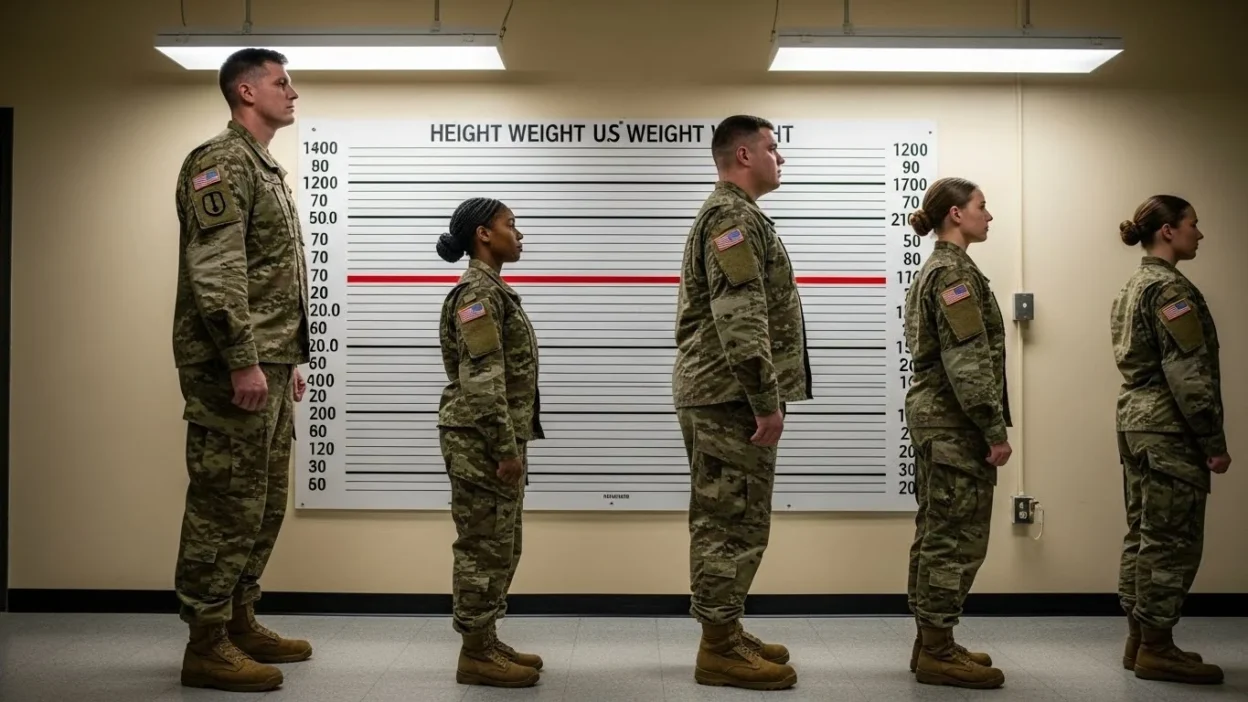
Joining the Army is a dream for many, but meeting the Army height and weight requirements is one of the first steps to becoming eligible.
Understanding these standards is crucial because they ensure recruits are physically ready, healthy, and capable of performing their duties safely.
Body composition, including body fat percentage, is also evaluated through methods like the tape test, highlighting the importance of overall fitness rather than just scale numbers.
Many aspiring soldiers wonder, “Can I join the Army if I’m slightly over or underweight?” or “How strict are the height limits?”
This guide answers those questions and provides detailed insights into Army weight standards, fitness requirements, and tips to meet them, helping you prepare confidently for enlistment.
Quick Overview of Army Height and Weight Standards
The Army height and weight requirements are designed to ensure that all recruits are physically capable of performing demanding tasks while minimizing health risks. These standards vary based on age, gender, and role, and they use height-to-weight charts and Body Mass Index (BMI) calculations to determine eligibility.
For men, the minimum height generally starts around 58 inches (4’10”) and the maximum can go up to 80 inches (6’8”), while people heights typically range from 58 inches (4’10”) to 72 inches (6’0”), depending on age. The weight standards correspond to these heights, with allowances for muscle mass, which means someone can weigh more if their body fat is within the acceptable range.
The Army also measures body composition through the tape test, which calculates body fat percentage using waist, neck, and hip measurements. Men are generally required to maintain body fat under 26%, while people must stay under 36%, though these numbers can vary slightly by age and specific role.
It’s important to note that these requirements are not just arbitrary numbers. They reflect the physical demands of Army life, including combat readiness, endurance, and overall health. By understanding the Army height chart, weight chart, and BMI standards, recruits can prepare effectively and avoid surprises during enlistment. Proper training, diet, and lifestyle adjustments can help candidates meet these standards confidently.
Height Requirements is Men and People in the Army
The Army height requirements ensure that all recruits can safely and effectively perform their duties. Height is measured without shoes, and recruits must meet both minimum and maximum limits to be eligible. For men, the standard height generally ranges from 58 inches (4’10”) to 80 inches (6’8”), while for people , it ranges from 58 inches (4’10”) to 72 inches (6’0”). These ranges may slightly vary depending on age and specific Army roles.
Certain Army positions, such as aviation or combat roles, may have stricter height standards due to equipment and operational safety. For example, helicopter pilots and crew must fit comfortably in cockpits, and special forces units require agility and coordination that can be affected by extreme height variations.
Height alone doesn’t determine eligibility; it is closely linked to weight standards. The Army uses height as a baseline to calculate healthy weight ranges, ensuring that recruits maintain a proper BMI. Recruits outside the standard height ranges may be considered for waivers, especially if they demonstrate exceptional fitness and capability.
Understanding height requirements helps recruits set realistic expectations and plan for training. Regular exercise, posture improvement, and monitoring overall growth (for younger recruits) can support meeting the standard. By knowing the Army height chart and how it interacts with weight and BMI standards, aspiring soldiers can better prepare for enlistment and avoid disqualification based on height alone.
Weight Standards and Body Mass Index (BMI) in the Army
The Army weight standards are a crucial part of enlistment, ensuring that recruits maintain a healthy and functional body composition. The Army does not rely solely on scale weight; instead, it uses height-to-weight charts and Body Mass Index (BMI) calculations to determine eligibility. These standards vary based on age, gender, and height, providing a fair system for recruits of different body types.
For men, weight standards typically range from 110 to 220 pounds, depending on height. For people , the range is usually 100 to 180 pounds, also depending on height. These are general guidelines, and exceptions may exist if the recruit has high muscle mass, which increases weight without affecting health or performance.
If a recruit exceeds the standard weight, the Army measures body fat percentage through the tape test, which considers waist, neck, and hip measurements. Acceptable body fat percentages are generally under 26% for men and under 36% for people , though these limits can vary by age group.
Maintaining a proper weight is important not only for enlistment but also for overall Army readiness. Recruits who meet the weight standards are more likely to succeed in the Army Physical Fitness Test (APFT/PFT), avoid injuries, and perform effectively in physically demanding roles.
To meet weight standards, recruits should combine a balanced diet, strength training, and cardiovascular exercise. Monitoring progress using both scale weight and body fat measurements ensures compliance with Army requirements and promotes long-term health and fitness.
Body Fat Percentage: What the Army Measures
In addition to height and weight, the Army carefully evaluates body fat percentage to ensure recruits are physically fit for military duties. This approach recognizes that a recruit’s muscle mass can affect overall weight, so someone heavier than the standard chart might still qualify if their body fat is within acceptable limits.
The most common method used by the Army is the tape test. For men, measurements are taken around the neck and waist, while for people , the neck, waist, and hips are measured. These measurements are then used in a formula to calculate body fat percentage. Generally, the Army requires men to maintain under 26% body fat, while people must stay under 36%, with slight variations based on age and specific roles.
Maintaining proper body fat is critical because it impacts strength, endurance, and overall performance. Recruits with excessive body fat may be at higher risk of injuries and fatigue during training or missions. Conversely, having too little body fat can also be harmful, potentially leading to energy deficiencies and impaired recovery.
The Army encourages recruits to focus on balanced nutrition, strength training, and cardio exercises to maintain a healthy body composition. Regularly tracking measurements—not just weight—helps recruits stay on track for enlistment and long-term fitness. Understanding and meeting body fat requirements is as important as hitting weight and height standards, ensuring all recruits are ready to perform safely and effectively in their Army careers.
Consequences of Not Meeting Standards
Failing to meet the Army height and weight requirements can have significant consequences for recruits, impacting both enlistment eligibility and long-term career opportunities. The Army uses strict standards to ensure that all soldiers are physically prepared for the demands of military life. Recruits who exceed the weight limits or fall outside height requirements may initially be disqualified from joining.
If a recruit is slightly over the weight standard, the Army may conduct a body fat assessment. Failing this test can result in temporary disqualification until the recruit meets the necessary criteria through weight loss, fitness training, or body composition improvement. In some cases, recruits who consistently fail to meet standards may be asked to reconsider enlistment or may not be allowed to continue with basic training.
Height or weight issues can also affect career progression. Certain Army roles, like combat positions or aviation, have stricter height and weight criteria. Not meeting these standards can limit the positions a soldier is eligible for, even after enlistment.
However, the Army sometimes allows waivers for recruits who demonstrate exceptional fitness, skills, or other qualifying factors. Waivers require approval from commanding officers and are assessed on a case-by-case basis.
Understanding the consequences of not meeting standards emphasizes the importance of preparation, proper nutrition, and consistent exercise. Recruits who proactively work to meet height, weight, and body fat requirements improve their chances of successful enlistment, safe training, and long-term career growth in the Army.
Tips for Meeting Army Height and Weight Requirements
Meeting the Army height and weight standards requires a combination of smart training, proper nutrition, and consistent lifestyle habits. While height is largely determined by genetics and cannot be changed, weight and body composition can be improved with focus and discipline.
Exercise is key. Recruits should combine strength training with cardiovascular workouts. Strength exercises like push-ups, squats, deadlifts, and bench presses help build muscle, which supports a healthy metabolism and improves body composition. Cardio activities, such as running, swimming, and cycling, help reduce excess body fat and enhance endurance, both critical for the Army Physical Fitness Test (APFT/PFT).
Nutrition also plays a significant role. Consuming a balanced diet with adequate lean protein, complex carbohydrates, and healthy fats supports muscle growth and maintains energy levels. Avoid processed foods, sugary drinks, and excessive fried foods that contribute to fat gain. Monitoring portion sizes and staying hydrated helps recruits maintain consistent progress.
Tracking body measurements regularly—not just weight—ensures that you’re improving body fat percentage as well. Using a tape measure or fitness app can help monitor progress over time.
Consistency and discipline are crucial. Combining exercise, proper nutrition, and lifestyle adjustments—such as adequate sleep and stress management—can help recruits meet the Army height and weight requirements efficiently. Preparing ahead of time not only increases the chances of enlistment but also ensures long-term health, fitness, and success in Army training and duties.
FAQs:
Q1: Can I get a waiver for being over or underweight?
Waivers are possible but not guaranteed. The Army may grant them if you demonstrate exceptional fitness, skills, or potential. Approval is assessed on a case-by-case basis by commanding officers.
Q2: How does the Army measure body fat?
The Army uses the tape test, which measures the neck, waist, and hips (for people ). These measurements are used to calculate body fat percentage and determine compliance with standards.
Q3: How often are the standards updated?
The Army periodically reviews height, weight, and body fat standards to reflect health research and operational requirements, but basic ranges remain largely consistent.
Q4: Does BMI alone determine eligibility?
No. BMI is a guideline, but the Army also evaluates body composition and overall fitness. A muscular recruit may exceed weight limits but still meet body fat standards.
Conclusion
Understanding the Army height and weight requirements is essential for anyone aspiring to enlist.
These standards, which include height ranges, weight limits, and body fat percentages, ensure that recruits are physically capable, healthy, and ready for the demands of military service.
Recruits who fail to meet the standards may face disqualification, but with preparation, tracking, and discipline, meeting these requirements is achievable.
By understanding the rules, using the height and weight charts, and focusing on body composition, recruits can confidently prepare for enlistment. Meeting these standards not only increases eligibility but also promotes long-term health, fitness, and success in a rewarding Army career.

Fyodor Dostoevsky (1821–1881) was a renowned Russian novelist, short story writer, essayist, and philosopher whose works explore human psychology, morality, and existential dilemmas. Best known for classics like Crime and Punishment, The Brothers Karamazov, and The Idiot, Dostoevsky’s writing has influenced literature, psychology, and philosophy worldwide.