

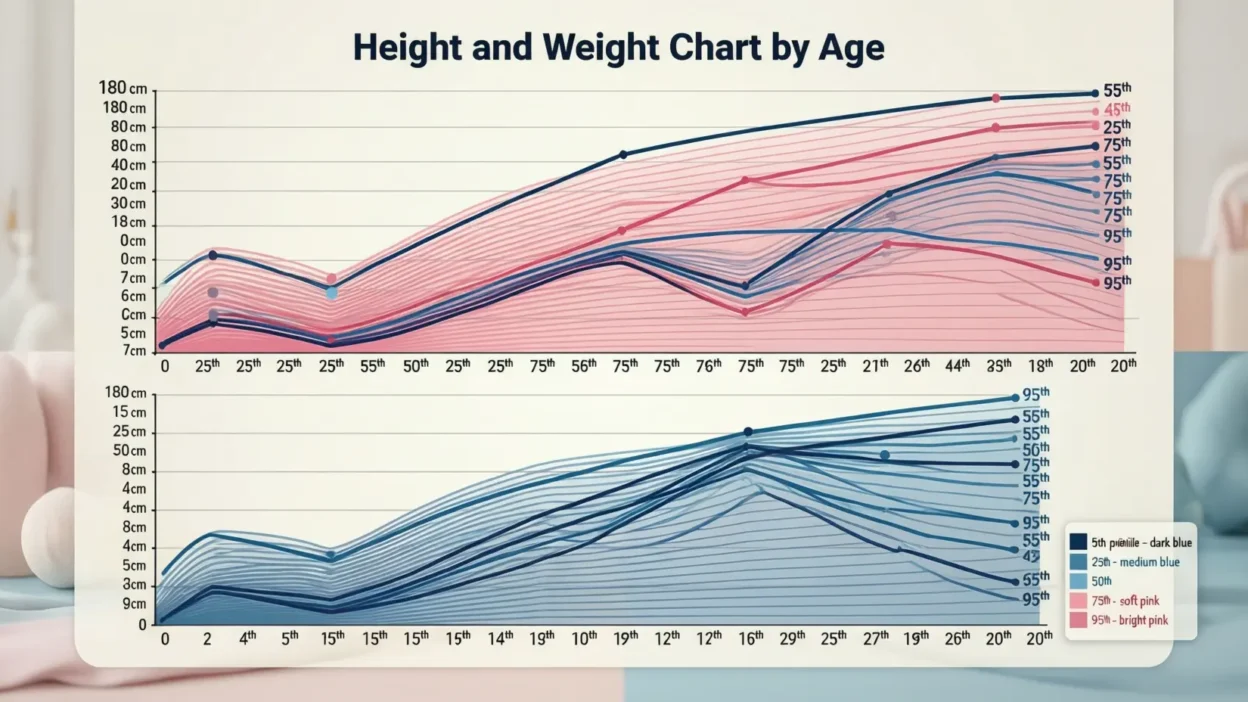
Understanding whether your height and weight are healthy for your age is a common concern for parents, teenagers, and adults alike.
A height and weight chart according to age serves as a simple yet powerful tool to compare body measurements with average growth standards.
These charts are widely used by healthcare professionals to track physical development, identify growth patterns, and spot potential health issues early.
From infancy to older adulthood, the human body goes through natural changes influenced by genetics, nutrition, hormones, and lifestyle habits.
Instead of relying on guesswork or unhealthy comparisons, age wise height and weight charts provide reliable reference ranges based on scientific data.
They help parents monitor their child’s growth, guide teens through puberty changes, and assist adults in maintaining a healthy weight.
In this article, you’ll find detailed height and weight charts by age, explanations of how to read them correctly, and practical tips for maintaining overall health at every life stage.
What Is a Height and Weight Chart?
A height and weight chart is a reference tool that shows the average or normal range of height and body weight for individuals at different ages. These charts are created using large-scale health and growth data collected from populations over many years. Doctors, nutritionists, and health organizations use them to understand how the human body typically grows and changes over time.
The main purpose of a height and weight chart according to age is to help people compare their measurements with standard growth patterns. For children and teenagers, these charts are especially important because the body grows rapidly during early life and adolescence. For adults, the charts help monitor weight stability and overall health as height usually remains constant while weight may fluctuate.
It is important to understand that these charts show average ranges, not perfect or ideal measurements. Being slightly above or below the chart does not automatically mean someone is unhealthy. Genetics, body structure, muscle mass, and lifestyle habits all influence a person’s height and weight. This is why healthcare professionals often use these charts alongside other tools such as BMI, growth percentiles, and medical history.
Height and weight charts are usually divided by age groups and sometimes by gender, as males and females grow differently. When used correctly, they provide valuable insight into growth trends, help detect early signs of undernutrition or obesity, and support healthier decision-making at every stage of life.
Why Height and Weight Vary by Age
Height and weight change as part of the natural growth and aging process. From birth through old age, the human body goes through different developmental stages, each affecting body size in unique ways. This is why age plays a crucial role in determining what is considered a normal or healthy height and weight.
During infancy and early childhood, growth happens rapidly. Babies gain weight quickly in the first year, while height increases steadily as bones lengthen. In childhood, growth becomes more gradual but consistent, supported by proper nutrition, physical activity, and sleep. Adolescence brings another major change, known as the growth spurt. Hormonal changes during puberty cause rapid increases in height and weight, especially in teenagers.
In adulthood, height usually stabilizes once bone growth stops. However, weight can change due to lifestyle factors such as diet, activity level, metabolism, and stress. As people age further, especially after 60, height may slightly decrease due to changes in bone density and posture, while weight may fluctuate because of muscle loss and slower metabolism.
Genetics also plays a significant role in determining how tall a person becomes and how their body stores weight. Environmental factors such as nutrition, chronic illness, and physical activity can either support healthy growth or limit it. Understanding why height and weight vary by age helps readers use age-wise charts correctly and avoid unrealistic expectations about body size.
Height and Weight Chart for Infants (0–2 Years)
The first two years of life are the most rapid growth period for a child. During this stage, infants experience significant changes in both height and weight, which is why regular monitoring is essential. A height and weight chart according to age for infants helps parents and healthcare providers track whether a baby is growing at a healthy rate.
Newborns typically lose a small amount of weight in the first few days after birth, but they regain it within two weeks. After that, weight gain becomes steady, especially during the first six months. On average, infants double their birth weight by around five months and triple it by their first birthday. Height also increases quickly as bones grow and muscles develop.
Growth charts for infants are usually measured using length instead of standing height. These charts also focus on percentiles, which show how a baby compares to others of the same age and gender. Falling within a normal percentile range usually indicates healthy growth. However, sudden drops or spikes in weight or length may require medical attention.
Nutrition plays a major role during this stage. Breast milk or formula provides essential nutrients needed for healthy growth, while sleep and overall health also affect development. It is important for parents to understand that every baby grows at their own pace. Small variations are normal, but consistent tracking using an age-wise height and weight chart helps ensure that an infant’s growth stays on a healthy path.
Height and Weight Chart for Children (2–12 Years)
Between the ages of two and twelve, children grow at a steadier and more predictable rate compared to infancy. A height and weight chart according to age for children helps parents and caregivers understand whether a child’s growth is progressing normally during these important developmental years.
During early childhood, children typically grow a few centimeters in height each year while gaining weight gradually. Growth patterns may vary, but consistency is key. Sudden weight gain or slowed height growth may indicate nutritional issues, lack of physical activity, or underlying health conditions. This is why pediatricians often track growth trends over time rather than focusing on a single measurement.
Genetics plays a major role, but environmental factors such as balanced nutrition, regular exercise, proper sleep, and emotional well-being also strongly influence growth.
Height and weight charts for children often include percentiles to compare a child’s measurements with peers of the same age and gender. Falling within the normal percentile range usually suggests healthy development. However, being in a higher or lower percentile does not automatically mean there is a problem, as long as growth remains steady over time.
Height and Weight Chart for Teenagers (13–19 Years)
The teenage years are marked by rapid physical changes due to puberty, making this stage one of the most important for monitoring growth. A height and weight chart according to age for teenagers helps track these changes and provides insight into whether development is occurring at a healthy pace.
During adolescence, teenagers experience growth spurts that can happen at different ages for different individuals. Girls typically begin puberty earlier than boys and often reach their adult height sooner. Boys, on the other hand, may grow taller later and experience greater increases in muscle mass. Because of these differences, height and weight charts for teenagers are often separated by gender.
Weight gain during this stage is normal and necessary as the body develops bones, muscles, and other tissues. However, rapid weight changes—either gain or loss—can sometimes indicate poor nutrition, stress, or health concerns. This is why it is important to view weight in relation to height, age, and overall growth patterns rather than focusing on numbers alone.
Lifestyle habits play a major role during adolescence. Balanced meals, regular physical activity, sufficient sleep, and emotional well-being all influence healthy growth. Comparing teens to friends or social media standards can be misleading, as everyone grows at a different pace. Using an age-wise height and weight chart allows teenagers and parents to understand growth trends realistically and promotes a healthier body image during this critical stage of development.
Height and Weight Chart for Adults (20–59 Years)
In adulthood, height usually remains stable because bone growth has stopped. However, weight can change significantly due to lifestyle, metabolism, and health factors. A height and weight chart according to age for adults helps individuals understand whether their body weight falls within a healthy range as they progress through different adult life stages.
During early adulthood, many people maintain a relatively steady weight. As age increases, metabolism may slow down, making weight gain more common—especially if physical activity decreases. Stress, work routines, dietary habits, and sleep patterns also play an important role in weight changes during this period.
Unlike children and teenagers, adult height and weight charts often work best when combined with Body Mass Index (BMI). BMI helps assess whether weight is appropriate for height, offering a clearer picture of potential health risks such as obesity, diabetes, and heart disease. However, BMI does not account for muscle mass, so athletes or very active individuals may fall outside typical ranges while still being healthy.
Weight fluctuations in adulthood should be monitored carefully. Sudden or unexplained weight gain or loss may signal underlying medical conditions and should not be ignored. Regular self-monitoring, healthy eating habits, and consistent physical activity are key to maintaining a stable and healthy weight.
Height and Weight Changes in Older Adults (60+ Years)
As people enter their senior years, the body naturally undergoes changes that affect both height and weight. A height and weight chart according to age for older adults helps track these changes and provides insight into maintaining health during aging.
Height often decreases slightly with age due to bone density loss, compression of the spinal discs, and changes in posture. Even a few centimeters of height loss can affect how weight is interpreted on standard charts. Weight fluctuations are also common. Older adults may lose muscle mass and gain fat, which can influence overall body composition and health risks. Maintaining an appropriate balance between muscle and fat is important for mobility, strength, and metabolic health.
Nutrition and physical activity play a vital role in healthy aging. A diet rich in protein, calcium, and essential vitamins supports muscle and bone health. Regular exercise, including strength training and aerobic activity, helps maintain a healthy weight and prevents excessive fat accumulation.
Older adults should use height and weight charts as guidelines rather than strict rules. Any sudden or unusual changes in weight or height should be discussed with a healthcare professional.
Height and Weight Chart by Gender
Height and weight charts often differ for males and females because biological and hormonal factors influence growth patterns differently. Understanding these differences is essential when using age-wise charts to monitor health accurately.
Girls usually enter puberty earlier, which leads to earlier growth spurts in height and weight. Boys tend to experience their growth spurt later but often achieve greater height and muscle mass by adulthood. Because of this, separate charts for males and females provide a more precise reference for average growth and healthy weight ranges.
In adulthood, gender differences continue to influence weight distribution. Men often carry more muscle mass, while women may naturally have a higher percentage of body fat. These differences affect how height and weight relate to overall health. Therefore, comparing a man’s weight to a female chart or vice versa can lead to inaccurate conclusions.
Using gender-specific charts also helps healthcare providers identify potential health issues more accurately. For example, rapid weight gain in women might indicate hormonal changes, while in men, it could reflect lifestyle factors or metabolic changes. Parents can also use gender-specific charts to track children’s growth more precisely and avoid unnecessary concerns.
Understanding BMI and Its Role
While height and weight charts provide a helpful reference for tracking growth and health, combining them with Body Mass Index (BMI) gives a clearer picture of overall wellness. For adults, it is a widely used indicator to assess health risks related to body weight.
BMI is calculated by dividing a person’s weight in kilograms by the square of their height in meters. For children and teenagers, BMI percentiles are used instead, which consider age and gender to assess whether growth is within a healthy range.
Although BMI is a useful tool, it has limitations. Similarly, it does not account for bone density or distribution of fat. Therefore, BMI should be used alongside height and weight charts, physical activity levels, diet, and other health indicators for a complete assessment.
Understanding BMI in conjunction with age-wise height and weight charts allows individuals and parents to monitor growth and weight trends more accurately. This approach helps detect potential health risks early, encourages healthier lifestyle choices, and supports long-term wellness for people of all ages.
Factors That Affect Height and Weight
Height and weight are influenced by a combination of genetic, environmental, and lifestyle factors. Understanding these factors helps individuals interpret age-wise charts more accurately and make informed decisions for health and growth.
Genetics plays a major role in determining an individual’s potential height and natural body composition. Children often inherit traits from their parents, including growth patterns, bone structure, and metabolism. However, genetics alone does not determine final height and weight; environmental and lifestyle factors are equally important.
Nutrition is critical at every stage of life. Adequate intake of protein, vitamins, minerals, and calories supports proper growth in children and helps adults maintain healthy weight and muscle mass. Malnutrition or poor dietary habits can stunt growth, increase the risk of underweight, or contribute to obesity.
Physical activity also significantly affects height and weight. Regular exercise promotes muscle development, strengthens bones, and helps maintain a healthy weight. Sedentary behavior, on the other hand, can lead to weight gain, poor posture, and slower growth in children.
Sleep and overall health are additional factors. Growth hormone is released during sleep, especially in children and teenagers. Chronic illnesses, hormonal imbalances, or certain medications can disrupt normal growth and weight patterns.
How to Use a Height and Weight Chart Correctly
Height and weight charts are valuable tools, but using them correctly is essential for accurate interpretation. Whether you are a parent tracking your child’s growth or an adult monitoring your health, following a proper approach ensures meaningful results.
First, always measure height and weight accurately. For children, use a stadiometer or measuring tape for height, and a calibrated scale for weight. Record measurements consistently at the same time of day, preferably without heavy clothing or shoes, to minimize variations. For adults, measuring once a week is sufficient to track trends rather than daily fluctuations.
Next, identify the age and gender-specific chart applicable to the individual. Children and teenagers require percentile charts, which compare growth to peers of the same age and gender. Adults can use BMI and general height-weight tables as a reference. Plotting measurements on the chart regularly helps track growth patterns over time instead of relying on a single reading.
It is important to interpret charts as guidelines, not strict rules. Falling slightly above or below average is normal, as individual growth rates vary due to genetics, nutrition, and lifestyle. Sudden or consistent deviations from the chart, however, may indicate underlying health concerns and should prompt consultation with a healthcare professional.
When to See a Doctor
While height and weight charts are excellent tools for monitoring growth, there are times when professional medical advice is necessary. Understanding when to consult a doctor ensures early detection of potential health issues and proper intervention.
For children, growth delays or unusual patterns are common reasons for concern. If a child’s height or weight consistently falls below the normal percentile range, or if there is a sudden drop in growth trajectory, it may indicate nutritional deficiencies, hormonal imbalances, or other underlying medical conditions. Similarly, excessively rapid weight gain can be a sign of obesity or metabolic disorders. Regular check-ups with a pediatrician allow parents to address these concerns early.
For teenagers, rapid or uneven growth during puberty may sometimes require medical evaluation, especially if accompanied by other symptoms such as delayed puberty, fatigue, or abnormal weight changes. For adults, sudden weight gain or loss without changes in diet or activity levels could indicate metabolic disorders, thyroid issues, or other health complications.
Older adults should also monitor weight changes closely. Unexplained weight loss can signal malnutrition, chronic illness, or digestive problems, while unexpected weight gain may increase the risk of heart disease, diabetes, and joint issues.
Ultimately, height and weight charts are guidelines, not diagnostic tools. Regular monitoring helps identify trends, but consulting a doctor is essential whenever growth or weight patterns are abnormal, sudden, or persistent. Early intervention can improve health outcomes and support overall well-being at every stage of life.
Myths and Misconceptions About Height and Weight
There are many myths surrounding height and weight that can cause unnecessary worry or unhealthy habits. Understanding these misconceptions is crucial for interpreting age-wise charts correctly and promoting realistic expectations about growth and body weight.
One common myth is the “one size fits all” belief, where people think there is a single ideal height or weight for every age. In reality, growth patterns vary widely due to genetics, nutrition, lifestyle, and gender. Age-wise charts show ranges, not fixed numbers, and small deviations are completely normal.
Another misconception is that comparing growth to peers is always accurate. Children and teens grow at different rates, so being taller or shorter than friends does not automatically indicate a problem. Similarly, adults often compare themselves to others, but body composition, muscle mass, and metabolism differ from person to person.
Some believe that weight alone determines health, ignoring other factors like muscle mass, bone density, and physical fitness. A person may fall within a “normal” weight range but still have poor nutrition or low physical activity. Conversely, someone outside the average range may be perfectly healthy.
Social media and advertisements also contribute to unrealistic expectations about height and weight. Images are often edited, and trends can create pressure to conform to idealized body types.
Tips for Maintaining Healthy Height and Weight
Maintaining a healthy height and weight requires a combination of good nutrition, regular physical activity, and overall wellness habits. Age-wise height and weight charts are useful for monitoring growth trends, but healthy lifestyle choices are what ultimately support proper development and weight management.
Balanced nutrition is key at every stage of life. For children and teenagers, diets rich in protein, calcium, iron, and vitamins support bone and muscle growth. Limiting processed foods, sugary drinks, and excessive salt helps prevent health issues such as obesity, high blood pressure, and diabetes.
Regular exercise promotes healthy growth in children and helps adults maintain strength, endurance, and metabolism. Activities like walking, swimming, cycling, and strength training are beneficial for all age groups. Encouraging outdoor play in children and teenagers also supports proper posture and bone development.
Adequate sleep is often overlooked but crucial. Growth hormone is released during sleep, especially in children and teens, and adults need sufficient rest to regulate metabolism and maintain energy.
Monitoring progress using height and weight charts helps identify trends and potential issues early. Parents should track children’s growth periodically, while adults can monitor weight changes alongside lifestyle habits.
FAQs
Using a height and weight chart according to age often raises common questions. Here are some frequently asked questions and their answers to help readers understand and apply these charts effectively.
1. What is the ideal height and weight for my age?
There isn’t a single “ideal” height or weight. Charts provide average ranges, and small deviations are normal. Genetics, nutrition, and lifestyle influence individual growth.
2. Can diet increase height?
Nutrition supports proper growth but cannot change genetic potential. A balanced diet with enough protein, vitamins, and minerals ensures optimal height development in children and teens.
3. How accurate are these charts?
Height and weight charts are based on large population studies and provide reliable reference ranges. However, they should be used as guidelines, not strict rules, because individual growth varies.
4. How often should I measure height and weight?
For children, measurements every 3–6 months are recommended to monitor growth trends. For adults, checking weight monthly is sufficient, while height remains mostly stable.
5. What if my measurements fall outside the normal range?
Falling above or below the average does not always indicate a problem. Persistent or sudden deviations should be discussed with a healthcare professional to rule out underlying health concerns.
Conclusion
Height and weight charts according to age are essential tools for understanding growth patterns and maintaining overall health.
From infancy to older adulthood, these charts provide reference ranges that help track development, identify potential health issues, and guide lifestyle choices. While charts offer valuable insights, it is important to remember that they are guidelines, not strict rules.
Genetics, nutrition, physical activity, and sleep all influence individual growth and body composition, meaning small deviations from the chart are normal.
For children and teenagers, age-wise charts assist parents in monitoring proper growth and spotting unusual patterns early.
Adults can use them to maintain a healthy weight, monitor trends, and adjust lifestyle habits to prevent weight-related health problems.
Older adults benefit by tracking changes in weight and body composition to support bone and muscle health.
Combining charts with tools like BMI and regular medical checkups ensures a comprehensive approach to health.
Ultimately, maintaining a balanced diet, staying physically active, getting sufficient sleep, and regularly monitoring height and weight can help individuals of all ages achieve healthy growth and weight management.
By understanding and using these charts wisely, readers can take control of their health, make informed decisions, and promote lifelong wellness.
Height and weight charts empower individuals to track progress, identify trends, and cultivate habits that support a healthier, happier life.

Amina Khalid is a registered clinical psychologist and certified Behaviour Support Practitioner based in Brisbane, Australia. With a Doctorate in Clinical Psychology and more than a decade of experience supporting families, caregivers, and individuals with complex behavioural needs, she is known for her compassionate approach and evidence‑based practice. Amina also lectures in clinical and counselling psychology and specializes in psychometric assessment and capacity‑building interventions for children and adults.