

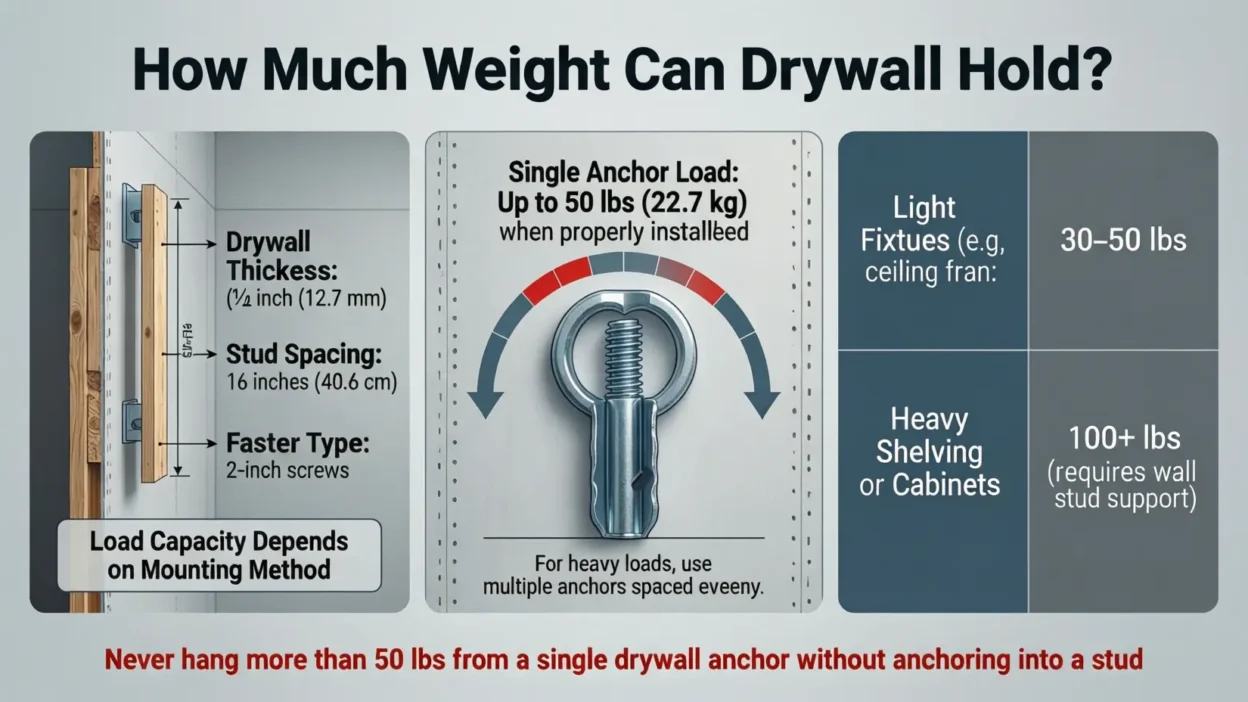
If you’ve ever tried hanging a heavy mirror, shelf, or TV on your wall, you might have wondered: how much weight can drywall hold?
Drywall is one of the most common wall materials in homes, but it’s not as strong as solid wood or concrete.
Understanding its weight limits is essential to avoid holes, cracks, or even dangerous accidents.
The truth is, drywall alone can only support light objects without additional support, and the type of anchors, screws, or studs you use makes a big difference.
In this article, we’ll break down drywall weight capacity, explore how different thicknesses and anchors affect strength, and provide practical tips for safely hanging heavy items.
If you’re a DIY enthusiast or just trying to decorate your home, knowing these limits can save you time, money, and frustration. Let’s dive in and discover how to hang your items safely and securely.
Understanding Drywall and Its Weight Capacity
Drywall, also known as gypsum board or plasterboard, is the most common material used for interior walls and ceilings in homes and offices. It is made of a gypsum core sandwiched between two layers of paper, which makes it lightweight and easy to install. While drywall is convenient and affordable, it’s important to understand that it is not designed to hold heavy loads on its own.
The weight capacity of drywall depends on several factors, including thickness, type of fasteners, and whether the item is mounted on a stud. Standard drywall thickness is usually 1/2 inch, which is strong enough to support lightweight items like small picture frames or decorations. Thicker drywall, like 5/8 inch, can handle slightly heavier objects, but still requires proper anchors or stud support for anything substantial.
Drywall by itself is weak because it can crumble or pull away from screws under heavy weight. That’s why understanding the difference between drywall alone, drywall with anchors, and drywall mounted on studs is critical. By using the right installation method, you can safely hang mirrors, shelves, TVs, or cabinets without damaging the wall.
In the next sections, we’ll explore the factors that affect drywall weight capacity, how much weight drywall can hold without studs, and the best techniques for safely mounting heavier items. Knowing these details ensures your walls remain strong and your belongings stay secure.
Factors That Affect Drywall Weight Capacity
Several factors determine how much weight drywall can safely hold, and understanding them is key to preventing wall damage. The first and most obvious factor is drywall thickness. Standard 1/2-inch drywall is the most common in homes, but it can only support light items without additional reinforcement. Thicker drywall, like 5/8-inch panels, is stronger and better suited for heavier items, though proper installation is still crucial.
Another major factor is stud placement. Studs are the vertical wooden or metal beams behind drywall, usually spaced 16 to 24 inches apart. Mounting items directly into studs dramatically increases weight capacity because the screws or bolts are anchored into solid support rather than the drywall itself.
The type and quality of anchors also make a big difference. Plastic expansion anchors, toggle bolts, and molly bolts all have different weight ratings. Choosing the right one for your wall and item ensures safety and prevents the drywall from crumbling.
Wall condition plays a role too. Old, damaged, or water-affected drywall is much weaker and may fail even with proper anchors. Environmental factors like humidity can weaken the gypsum core over time.
Finally, the weight distribution of the item matters. A long shelf or wide cabinet distributes weight over a larger area, reducing stress on a single point, whereas a small, concentrated load puts more pressure on the drywall.
Weight Limits Without Studs
Hanging items on drywall without using studs is common, but it comes with strict weight limitations. Drywall alone is not very strong, and putting too much weight on it can cause cracking, crumbling, or even holes. The amount of weight drywall can hold without studs depends heavily on the type of anchor you use.
For standard 1/2-inch drywall, lightweight items like small picture frames, clocks, or decorative wall art are usually safe. Generally, items up to 5–10 pounds can be hung with simple plastic expansion anchors or small screws. If you increase the weight beyond this range, the drywall can fail unless stronger anchors are used.
Medium-weight items, such as small shelves, mirrors, or lightweight wall cabinets, usually require toggle bolts or molly bolts. These anchors can support weights from 20 to 50 pounds on 1/2-inch drywall, depending on the wall condition and proper installation. Always check the manufacturer’s weight rating before mounting anything.
It’s important to note that weight limits are even higher with thicker drywall, such as 5/8-inch panels, but drywall without studs should still only handle moderate weights. For heavy objects like large mirrors, TVs, or tall cabinets, mounting directly into studs is necessary to avoid damage.
In summary, drywall alone can hold small, light items safely, but as the weight increases, using the right anchors becomes critical. Always distribute weight evenly and avoid hanging anything heavy on drywall without adequate support.
Weight Limits With Anchors
Using anchors can significantly increase the weight drywall can support, making it possible to hang heavier items safely. The type of anchor you choose plays a major role in determining the weight capacity.
Plastic expansion anchors are the most basic and are suitable for lightweight items, such as small pictures or decorative pieces. They typically hold up to 10–15 pounds in 1/2-inch drywall. While easy to install, they are not ideal for heavy objects.
Molly bolts are metal anchors that expand behind the drywall when tightened. These are stronger than plastic anchors and can support 25–50 pounds depending on wall thickness and installation quality. They are great for medium-weight shelves, mirrors, or small cabinets.
Toggle bolts are the strongest type of drywall anchor. They use a spring-loaded mechanism that spreads the load across a larger area behind the wall. Toggle bolts can support 50–100 pounds or more, making them suitable for heavier mirrors, large shelves, or small TVs.
It’s important to follow the manufacturer’s instructions for anchor installation and avoid exceeding the recommended weight. Also, consider weight distribution: spreading the load across multiple anchors reduces stress on a single point, which prevents drywall from cracking or pulling out.
By selecting the appropriate anchor and installing it correctly, you can safely hang a wide variety of items without relying solely on studs. Anchors make drywall more versatile, but it’s always better to mount extremely heavy objects into studs whenever possible.
Weight Limits When Mounted on Studs
Mounting items directly into studs is the safest way to hang heavy objects on drywall. Studs are the vertical wooden or metal beams behind the drywall that provide solid support. By attaching screws or bolts into a stud, the wall can safely carry significantly more weight than drywall alone or with anchors.
For standard 1/2-inch drywall, a single screw into a wooden stud can typically hold 50–100 pounds, depending on the screw length and type. This makes it possible to hang large mirrors, heavy shelves, cabinets, and flat-screen TVs securely. Using multiple screws or bolts across two or more studs can increase the total weight capacity and evenly distribute the load.
To ensure proper support, it’s important to locate studs accurately. A stud finder is the easiest tool, but you can also tap the wall or measure from outlets and corners, where studs are usually positioned 16 or 24 inches apart. Make sure the screws are long enough to penetrate the drywall and anchor deeply into the stud—generally at least 1.5 to 2 inches of penetration.
While anchors can provide some support, nothing beats the strength of a stud for heavy items. Combining stud mounting with anchors can offer extra safety for extremely heavy loads, but for most household needs, screwing directly into studs is sufficient. Proper installation ensures that your wall stays intact and your items remain safely mounted without risk of falling or damaging the drywall.
Choosing the Right Anchor for Heavy Items
Selecting the right anchor is crucial when hanging heavy items on drywall. The anchor you choose determines how much weight the wall can safely hold and ensures your items stay securely mounted.
For lightweight items like small picture frames or wall art, plastic expansion anchors are usually sufficient. They are easy to install and can support up to 10–15 pounds in standard 1/2-inch drywall.
For medium-weight objects, such as shelves, mirrors, or small cabinets, molly bolts are a better option. These metal anchors expand behind the drywall, providing extra support. They can typically hold 25–50 pounds, depending on the wall and proper installation.
When hanging heavy items like large mirrors, flat-screen TVs, or cabinets, toggle bolts are the strongest choice. Their spring-loaded wings distribute the weight across a wider area behind the wall, allowing them to support 50–100 pounds or more in 1/2-inch drywall.
Other tips for choosing the right anchor include:
- Check the manufacturer’s weight rating and don’t exceed it.
- Consider the type of wall: some anchors work better in thicker drywall, while others may fail in old or weak walls.
- Distribute weight evenly using multiple anchors when possible.
- Combine anchors with studs for extremely heavy items to maximize safety.
By selecting the proper anchor and following installation instructions carefully, you can hang heavier objects confidently without damaging your drywall. Proper preparation ensures your items remain secure and your wall stays intact.
DIY Tips for Hanging Heavy Objects Safely
Hanging heavy items on drywall requires careful planning and the right techniques to avoid damage or accidents. Following a few simple DIY tips can make the process safe and stress-free.
1. Locate Studs Accurately:
Use a stud finder to pinpoint the vertical studs behind your drywall. Studs provide the strongest support, and mounting screws or bolts directly into them ensures heavy objects stay secure.
2. Choose the Right Anchors:
For items that cannot align with studs, select appropriate anchors based on weight. Plastic anchors are fine for light items, molly bolts for medium-weight objects, and toggle bolts for heavy items. Always check the anchor’s weight rating before installation.
3. Use Proper Tools:
Essential tools include a drill, level, screwdriver, measuring tape, and stud finder. Using the right tools ensures precise placement and reduces the risk of mistakes.
4. Distribute Weight Evenly:
For shelves or large cabinets, use multiple screws or anchors to spread the weight across several points. This reduces stress on any single anchor or screw.
5. Measure and Level:
Always mark where screws or anchors go, and double-check with a level. Even slightly misaligned mounting can cause strain on anchors or studs.
6. Safety Precautions:
Wear gloves and eye protection, and avoid overloading your wall. Start with lighter items if you’re unsure and gradually increase weight once you’re confident in your installation.
Common Mistakes and How to Avoid Them
When hanging items on drywall, even small mistakes can lead to wall damage, broken anchors, or falling objects. Being aware of common pitfalls helps you avoid costly repairs and ensures your items stay secure.
1. Overestimating Drywall Strength:
One of the most frequent mistakes is assuming drywall alone can hold heavy items. Without studs or proper anchors, even moderate weights can cause cracks or holes. Always check weight limits and use appropriate support.
2. Using the Wrong Anchor:
Not all anchors are created equal. Using a plastic anchor for a heavy shelf or mirror can result in failure. Match your anchor to the weight and type of wall for reliable support.
3. Ignoring Stud Placement:
Mounting screws too far from studs reduces the wall’s holding power. Locate studs accurately and use them whenever possible, especially for heavy objects.
4. Concentrating Weight on a Small Area: Hanging a long shelf or heavy object on a single point stresses the drywall. Distribute weight using multiple screws or anchors to prevent pulling or sagging.
5. Mounting Too Close to Edges or Corners:
Drywall is weaker near edges, corners, or seams. Avoid placing heavy items in these areas unless you can anchor into studs.
6. Improper Installation:
Over-tightening screws or not inserting anchors fully can weaken support. Follow manufacturer instructions carefully for best results.
FAQs
Understanding drywall weight limits can raise many questions for homeowners and DIY enthusiasts. Here are some of the most common questions and answers to help you hang items safely.
1. How much weight can 1/2-inch drywall hold?
Standard 1/2-inch drywall can safely support small, lightweight items like picture frames or clocks without anchors—usually up to 5–10 pounds. Using proper anchors can increase this to 20–50 pounds depending on the type.
2. Can I hang a TV on drywall without studs?
It’s not recommended. TVs are heavy and need solid support. If you must use drywall alone, toggle bolts are necessary, but the safest option is to mount directly into studs.
3. What’s the strongest type of drywall anchor?
Toggle bolts are the strongest for drywall, capable of supporting 50–100 pounds or more. For extreme weight, combining toggle bolts with stud mounting provides maximum security.
4. How do I know if my drywall is too weak?
Check for signs like crumbling, water damage, or sagging. Old or damaged drywall may fail even with proper anchors, so consider replacing it before hanging heavy items.
5. Can drywall hold a bookshelf full of books?
Only if the shelf is mounted directly into studs or uses strong anchors like toggle bolts. Spreading the load across multiple supports is key to prevent wall damage.
Conclusion
Knowing how much weight drywall can hold is essential for anyone looking to hang items safely at home.
Drywall is a versatile and widely used wall material, but it has limitations. Without proper support, even moderate weights can cause cracks, holes, or complete failure.
By understanding these limits, you can make informed decisions about what your walls can safely handle.
The key factors that affect drywall weight capacity include thickness, wall condition, stud placement, type of anchors, and weight distribution.
Standard 1/2-inch drywall can hold lightweight objects alone, while medium-weight items require anchors like molly bolts or toggle bolts.
For heavy objects such as large mirrors, shelves, or TVs, mounting directly into studs is always the safest option. Using multiple screws or anchors helps distribute weight evenly and prevents concentrated stress on the drywall.
Choosing the right anchor is equally important. Plastic anchors work for small decorations, molly bolts for medium-weight items, and toggle bolts for heavy objects.
Following installation instructions, using proper tools, and taking safety precautions ensures that your walls remain intact and your items stay securely mounted.

Rafael Domínguez Gamas (born February 14, 1883 in Cárdenas, Tabasco; died January 23, 1959 in Veracruz) was a prominent Mexican lawyer, educator, journalist, writer, and academic. He studied law at the Instituto Juárez and also worked as a professor there. Early in his career he directed schools in various towns in Tabasco and contributed frequently to publications such as Alba, El Renacimiento, and El Eco de Tabasco. In 1914 he moved to Veracruz, where he worked with the journal El Dictamen. He was later elected a corresponding member of the Academia Mexicana de la Lengua for his contributions to Mexican literature and language studies. Domínguez authored numerous books and essays including Azul como tus ojos (1925) and Diccionario general de gentilicios (1948).