
If you’ve ever followed American politics or scrolled through the news, you’ve likely come across the term GOP.
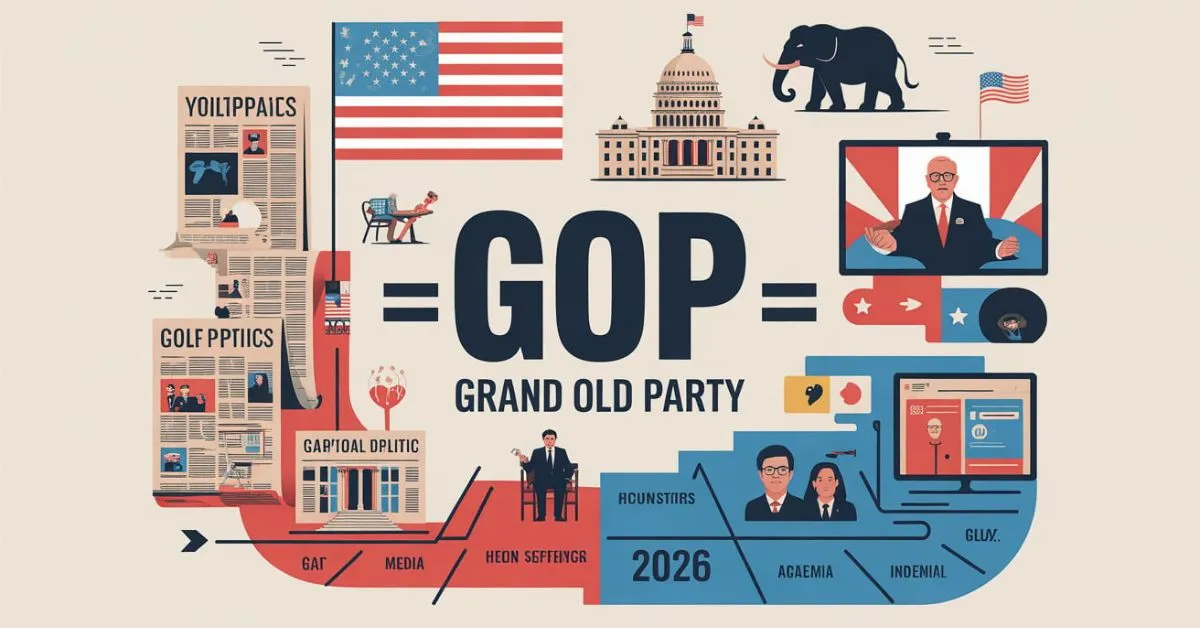
But what does GOP stand for, and why is it so commonly used? Simply put, GOP is an acronym for the “Grand Old Party,” which is a popular nickname for the Republican Party of the United States.
While the term is widely recognized in political discussions, many people aren’t aware of its origin, history, or significance in shaping U.S. politics.
Understanding the meaning of GOP is more than just decoding a political abbreviation it gives insight into the ideologies, policies, and influence of one of the two major political parties in America.
In this article, we will explore the history of the GOP, how it differs from the formal Republican Party, its role in modern politics, and why this acronym remains a key part of American political discourse.
The Meaning of GOP
The acronym GOP stands for “Grand Old Party”, a nickname for the Republican Party of the United States. It is one of the most recognized political acronyms in America and is often used interchangeably with the full party name in news articles, political debates, and social media discussions. While the term may seem casual, it carries historical significance and reflects the long-standing presence of the Republican Party in American politics.
The Republican Party, commonly called the GOP, is one of the two major political parties in the United States, alongside the Democratic Party. The acronym helps simplify references to the party in headlines, political commentary, and everyday conversations. For example, you might read headlines like “GOP leaders propose new economic plan” or “The GOP faces challenges in upcoming elections,” which clearly refer to the Republican Party.
Understanding the meaning of GOP is essential for anyone interested in American politics. The term not only identifies a political party but also conveys the party’s historical legacy and ideological stance. The GOP has played a significant role in shaping U.S. policies, governance, and elections since its founding in the mid-19th century. Recognizing this acronym allows readers to follow political discussions more accurately and gain insights into the dynamics of the U.S. political landscape.
History and Origin of GOP
The term GOP, which stands for Grand Old Party, has a long history that dates back to the 19th century. The Republican Party itself was founded in 1854, primarily as an anti-slavery political movement. Over time, it grew into one of the two dominant political parties in the United States. The nickname “Grand Old Party” began appearing in the late 1800s, reflecting both respect for the party’s achievements and its status as a major political force.
The first documented use of GOP as an abbreviation appeared in newspapers during the post-Civil War era. By the early 20th century, the term had become widely recognized, and politicians, journalists, and citizens frequently used it to refer to the Republican Party. While the phrase “Grand Old Party” suggests a sense of tradition and stability, it also became a convenient shorthand, especially in headlines where space was limited.
The nickname has endured because it combines historical reverence with simplicity. Despite the evolution of the Republican Party’s policies and leadership over the decades, the term GOP remains a key identifier. It evokes the party’s long-standing presence in American politics, from Abraham Lincoln, the party’s first president, to contemporary Republican leaders. Today, the GOP is not just a historical label it is a living part of U.S. political discourse, appearing in news media, political campaigns, and everyday conversations.
GOP vs Republican Party
Many people wonder if GOP and the Republican Party are the same, and the answer is yes they refer to the same political organization. The difference lies mainly in usage and context.
The term GOP is especially useful for headlines or social media posts, where brevity is important. For example, news outlets may write “GOP proposes new tax reform” instead of “The Republican Party proposes new tax reform.”
Despite being a nickname, GOP has become nearly synonymous with the Republican Party over the years. Its widespread recognition ensures that readers immediately understand which party is being referred to, regardless of whether the full name is used. Politicians and public figures also use GOP in speeches and interviews, making it a standard part of American political language.
Understanding the difference between GOP and Republican Party is important for anyone following U.S. politics. While both terms point to the same party, recognizing the casual versus formal usage can help readers interpret news articles, political debates, and social media posts more accurately.
Political Significance of GOP
The GOP, or Grand Old Party, plays a central role in American politics. As one of the two major political parties in the United States, the Republican Party influences government policies, elections, and public debates at both national and state levels. Its decisions and leadership shape the direction of the country, making the GOP a key player in U.S. political life.
Over the years, it has been home to many influential leaders, including Abraham Lincoln, Theodore Roosevelt, Ronald Reagan, and more recent presidents like George W. Bush and Donald Trump. Each of these figures has left a lasting impact on both the party and the country, further cementing the GOP’s role in shaping American history.
The GOP’s influence extends beyond presidential elections. It controls seats in Congress, governs many states, and impacts judicial appointments, making its political decisions significant for legislation, public policy, and civic life. Media coverage often highlights the GOP’s proposals and strategies, as they affect millions of Americans.
Understanding the political significance of the GOP is essential for anyone following U.S. politics. Recognizing the party’s ideologies, goals, and historical influence provides context to current political debates and election outcomes. Whether in news reports, political campaigns, or everyday discussions, the GOP remains a powerful and influential force in shaping the nation’s future.
Common Misunderstandings About GOP
Despite being one of the most recognized acronyms in American politics, GOP is often misunderstood. A common misconception is that GOP refers to a separate political party or organization. In reality, GOP is simply a nickname for the Republican Party, and both terms refer to the same political entity. Understanding this distinction is important for following news, debates, and political discussions accurately.
Another misunderstanding is related to its meaning. Some people assume GOP stands for a modern slogan or program, rather than the historical term “Grand Old Party.” Knowing its full form provides context about the party’s long-standing history and influence in the United States.
Beginners or international readers may also confuse GOP with acronyms from other fields, such as business or technology. Its usage in news headlines, speeches, and social media consistently refers to the party, making it crucial to recognize this context.
Finally, some think the GOP represents a single ideology or viewpoint. Understanding these nuances helps readers interpret political news more accurately.
By clarifying these common misunderstandings, readers can confidently recognize references to the GOP and better comprehend political conversations, articles, and debates, avoiding confusion over terminology and meaning.
GOP in Modern Media and Culture
The acronym GOP has become a staple in modern media and culture, appearing frequently in news reports, social media posts, and political commentary. For example, news outlets might run a headline like “GOP Leaders Announce New Economic Plan,” immediately signaling to readers that the Republican Party is the focus of the story.
Social media has further amplified the usage of GOP. Hashtags like #GOP, #GOPDebate, or #GOPElection allow users to engage in conversations about Republican policies, debates, and election outcomes. The term has even found its way into memes, satirical content, and pop culture references, demonstrating its widespread recognition beyond formal political contexts.
The GOP’s presence in media also reflects its influence in shaping public opinion. Coverage of GOP proposals, campaign strategies, and election results informs citizens and drives political discourse. Understanding these references helps readers accurately interpret news articles, opinion pieces, and online discussions.
Moreover, cultural references to the GOP often emphasize the party’s history, ideology, or leadership. Recognizing the term in media and culture allows readers to navigate political content more effectively, whether they are following elections, analyzing policies, or simply staying informed about American politics.
Why Understanding GOP Matters
Understanding the term GOP is more than just knowing a political acronym it is a key part of becoming politically literate in the United States. As one of the two major political parties, the Republican Party has a significant influence on government policies, elections, and public discourse. Recognizing what GOP stands for helps readers interpret news articles, social media discussions, and political debates accurately.
Political literacy allows citizens to make informed decisions during elections and understand the motivations behind policies and legislation. When people know that GOP refers to the Republican Party, they can better grasp the party’s positions on issues like taxes, healthcare, national defense, and economic policies. This knowledge also enables more meaningful participation in discussions, both online and offline.
Additionally, understanding GOP helps avoid confusion with other acronyms or political entities. It clarifies references in headlines, news stories, and even academic discussions, making political content easier to follow for beginners and experienced readers alike.
Finally, knowing the historical and cultural significance of the GOP provides context about the evolution of American politics. The Republican Party, often called the Grand Old Party, has shaped the nation’s policies, leadership, and elections for over 150 years. By understanding GOP, readers gain insight not only into contemporary politics but also into the historical forces that continue to influence the United States today.
Conclusion
In summary, GOP stands for “Grand Old Party”, a widely recognized nickname for the Republican Party of the United States.
While it is an acronym, it carries significant historical and political weight, reflecting the party’s long-standing role in shaping American politics.
From its founding in the mid-19th century to its influence in modern elections, the GOP has been central to U.S. political life, producing prominent leaders, shaping legislation, and influencing public policy.
Understanding the GOP is crucial for anyone following news, political debates, or social media discussions.
Recognizing that GOP and Republican Party are one and the same prevents confusion and allows readers to accurately interpret headlines, policy announcements, and political commentary.
Moreover, knowing the party’s history, ideology, and cultural presence provides valuable context for understanding the broader political landscape.
By learning what GOP stands for and its significance, readers can engage more confidently in political discussions and stay informed about one of America’s most influential political institutions.

Rafael Domínguez Gamas (born February 14, 1883 in Cárdenas, Tabasco; died January 23, 1959 in Veracruz) was a prominent Mexican lawyer, educator, journalist, writer, and academic. He studied law at the Instituto Juárez and also worked as a professor there. Early in his career he directed schools in various towns in Tabasco and contributed frequently to publications such as Alba, El Renacimiento, and El Eco de Tabasco. In 1914 he moved to Veracruz, where he worked with the journal El Dictamen. He was later elected a corresponding member of the Academia Mexicana de la Lengua for his contributions to Mexican literature and language studies. Domínguez authored numerous books and essays including Azul como tus ojos (1925) and Diccionario general de gentilicios (1948).