

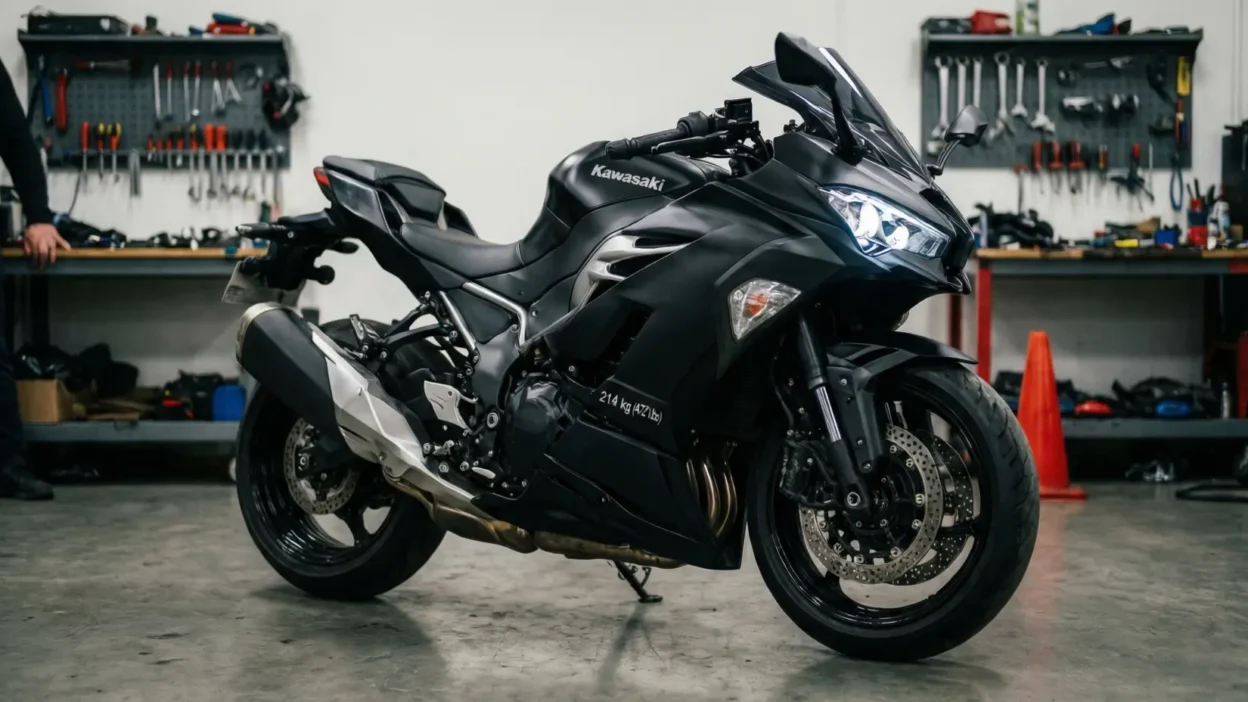
The Kawasaki Ninja 650 has long been a favorite among riders looking for a perfect blend of performance, style, and everyday usability.
One of the most important factors that influence how this middleweight sport bike handles is its weight.
Understanding the Ninja 650 weight – including its dry weight, curb weight, and payload capacity is crucial for both new and experienced riders.
The bike’s weight directly affects handling, acceleration, braking, and overall riding comfort, if you’re navigating city traffic or enjoying a weekend ride on open roads.
In this guide, we will break down every aspect of the Ninja 650 weight, compare it with competitors like the Yamaha MT-07 and Honda CBR650R, and share tips for managing its weight for optimal performance.
If you’re buying your first Ninja 650 or simply curious about its specs, this article will give you all the answers you need.
Kawasaki Ninja 650 Weight Specifications
When it comes to the Kawasaki Ninja 650, understanding its weight specifications is essential for both safety and performance. The bike comes with two main weight figures: dry weight and curb weight. The dry weight refers to the bike’s weight without fluids like fuel, oil, or coolant. For the latest Ninja 650 model, the dry weight is approximately 192 kg (423 lbs). On the other hand, the curb weight includes all fluids necessary for operation, and it sits around 193 kg (425 lbs). This small difference indicates that the Ninja 650 is well-balanced and easy to handle for a middleweight sport bike.
Another critical factor is the weight distribution between the front and rear wheels. Kawasaki has engineered the Ninja 650 with a nearly 50:50 weight balance, which enhances stability, improves cornering performance, and makes braking more predictable. For riders, this means smoother handling whether you’re weaving through city streets or taking tight turns on winding roads.
Payload capacity is another consideration. The Ninja 650 can safely carry a passenger and luggage, with a maximum recommended load of around 176 kg (388 lbs), including rider weight. This makes it suitable for everyday commuting and longer weekend rides. Knowing these weight specifications not only helps with handling the bike more efficiently but also ensures safe riding and better performance over time.
How Ninja 650 Weight Affects Handling and Performance
The weight of the Kawasaki Ninja 650 plays a crucial role in its handling and overall performance. For riders, understanding how weight impacts cornering, acceleration, and braking can make a significant difference in riding experience. With a curb weight of 193 kg (425 lbs), the Ninja 650 strikes a balance between stability and agility, making it suitable for both beginners and experienced riders.
When it comes to cornering and stability, the bike’s nearly 50:50 weight distribution ensures that it leans predictably into turns. Heavier bikes can sometimes feel sluggish, but the Ninja 650’s moderate weight allows smooth and controlled cornering, giving riders confidence on both city roads and twisty highways.
Acceleration and braking are also affected by weight. While a lighter bike may feel faster off the line, the Ninja 650’s engine power is perfectly matched to its weight, offering strong acceleration without feeling unwieldy. Similarly, braking performance is stable and reliable, as the weight is evenly distributed, reducing the risk of front or rear wheel lockup.
Maneuverability in different riding conditions is another benefit of the Ninja 650’s weight. In city traffic, it remains nimble enough to weave through tight spaces, while on highways, the weight provides stability at higher speeds. Riders will also notice that moderate weight reduces fatigue over long rides, as the bike feels balanced and controlled, even when carrying a passenger or luggage.
Ninja 650 Weight Comparison With Competitors
If you’re considering the Kawasaki Ninja 650, it’s helpful to see how its weight stacks up against similar middleweight sport bikes. Weight can influence handling, performance, and rider comfort, so comparing bikes gives a clear picture of what to expect.
The Yamaha MT-07 is a popular competitor in this category. It has a curb weight of approximately 184 kg (406 lbs), making it slightly lighter than the Ninja 650. Riders often find the MT-07 more agile in tight city traffic due to this lower weight. However, the Ninja 650’s slightly higher weight provides better stability on highways and during aggressive cornering.
The Honda CBR650R, another middleweight contender, comes in at around 207 kg (456 lbs) curb weight. This makes it heavier than the Ninja 650, which can feel more stable at high speeds but less nimble in urban conditions. Some riders report that the extra weight requires more effort during slow maneuvers or tight turns.
The Suzuki GSX650F is similar in size but has a curb weight of 215 kg (474 lbs), making it the heaviest among these competitors. While it offers stability and a solid feel on the road, riders may find it less forgiving in traffic or while parking.
Overall, the Ninja 650 strikes a balanced position: lighter than the CBR650R and GSX650F, but slightly heavier than the MT-07. Its well-engineered weight distribution ensures it feels agile, stable, and responsive, making it an excellent choice for both new and experienced riders.
Tips for Managing Ninja 650 Weight
While the Kawasaki Ninja 650 is designed for balance and stability, managing its weight effectively can make riding safer and more enjoyable. Here are some key tips for riders:
1. Consider Luggage and Accessories Carefully
Adding luggage, saddlebags, or aftermarket accessories increases the overall weight of the bike. To maintain optimal handling, avoid overloading and distribute weight evenly. Use lightweight luggage options and secure items properly to prevent shifting during rides.
2. Rider Positioning and Technique
Proper riding posture can help manage weight more efficiently. Keeping your body relaxed and leaning correctly into turns ensures that the bike remains stable and responsive. For city traffic, use smooth acceleration and braking to avoid feeling the bike’s mass during sudden stops or tight maneuvers.
3. Passenger Weight Management
When riding with a passenger, be mindful of the combined load. The Ninja 650 has a maximum payload of around 176 kg (388 lbs), including rider and passenger. Adjust suspension settings if needed and practice braking earlier, as extra weight can increase stopping distance.
4. Maintenance and Tire Pressure
Regular maintenance, including checking tire pressure, suspension, and brakes, ensures that the bike handles its weight properly. Underinflated tires or worn suspension can make even a moderately weighted bike feel unstable.
Real Rider Experiences About Ninja 650 Weight
Many riders who own the Kawasaki Ninja 650 often share that the bike’s weight feels just right for daily riding and weekend adventures. On forums and review sites, riders frequently highlight the balance between stability and agility as one of the Ninja 650’s biggest strengths.
For city commuting, many riders note that the Ninja 650’s 193 kg (425 lbs) curb weight feels manageable. It is easy to maneuver through traffic, stop at lights, and handle tight corners. Some beginners initially feel cautious about the bike’s weight, but most report that with a few rides, it quickly becomes intuitive to handle.
On long rides or highways, riders appreciate the bike’s stability. The moderate weight, combined with a well-distributed chassis, reduces wobbling at high speeds and makes lane changes smoother. Riders also mention that the bike feels planted during curves, giving them confidence even when carrying a passenger or small luggage.
Some riders have shared that adding accessories or extra luggage changes the handling slightly but is easily manageable with proper loading and posture adjustments. Others highlight that the Ninja 650’s weight is noticeable when parking or lifting the bike from a stand, but not overwhelming for an average rider.
Overall, real-world experiences consistently show that the Ninja 650 weight is practical, rider-friendly, and well-balanced. Whether navigating traffic, cruising highways, or enjoying a twisty backroad, riders find that understanding and working with the bike’s weight improves comfort, control, and overall riding enjoyment.
FAQs
When it comes to the Kawasaki Ninja 650, riders often have common questions about its weight and how it affects performance. Here are answers to the most frequently asked questions:
1. Is the Ninja 650 heavy for beginners?
While the Ninja 650 weighs around 193 kg (425 lbs) curb weight, it is considered moderate for a middleweight sport bike. Beginners may feel a little cautious at first, but its balanced weight distribution and manageable size make it a suitable option for new riders with proper training.
2. Does the bike’s weight affect fuel efficiency?
Yes, weight can influence fuel consumption. The Ninja 650’s moderate weight allows the engine to operate efficiently, and its fuel economy remains strong at around 20–25 km/l (47–59 mpg), depending on riding style and conditions.
3. Can the Ninja 650 be easily lifted or moved manually?
Most riders find it manageable to lift the bike from a stand or push it at low speeds. Its well-balanced weight and relatively low seat height make handling on the ground easier than heavier sport bikes.
4. How does passenger weight affect performance?
Carrying a passenger increases the total load and may slightly reduce acceleration and increase braking distance. The bike’s maximum payload is around 176 kg (388 lbs), including the rider, so staying within limits ensures safe handling.
5. Does weight impact acceleration or braking?
Yes, heavier loads slightly reduce acceleration and extend braking distance. However, the Ninja 650’s weight is moderate, so with proper technique, performance remains smooth and predictable.
Conclusion
The Kawasaki Ninja 650 weight is one of its defining features, offering a balanced combination of stability, handling, and performance.
With a curb weight of 193 kg (425 lbs) and a nearly 50:50 weight distribution, the bike is agile enough for city streets while remaining stable at higher speeds.
Understanding the bike’s dry weight, curb weight, and payload capacity is crucial for both new and experienced riders to optimize safety and performance.
Real-world rider experiences consistently show that the Ninja 650’s weight is manageable, whether commuting, taking weekend rides, or enjoying twisty roads.
While the bike feels slightly heavier than models like the Yamaha MT-07, it offers better stability and control compared to heavier competitors like the Honda CBR650R and Suzuki GSX650F.
Proper management of weight through techniques, luggage choices, and riding posture enhances the overall experience, making every ride smoother and more enjoyable.
For anyone considering the Ninja 650, knowing how weight impacts handling, braking, acceleration, and rider comfort can make a significant difference.
By following the tips shared in this guide and staying mindful of payload limits, riders can fully enjoy what this middleweight sport bike has to offer.

Amina Khalid is a registered clinical psychologist and certified Behaviour Support Practitioner based in Brisbane, Australia. With a Doctorate in Clinical Psychology and more than a decade of experience supporting families, caregivers, and individuals with complex behavioural needs, she is known for her compassionate approach and evidence‑based practice. Amina also lectures in clinical and counselling psychology and specializes in psychometric assessment and capacity‑building interventions for children and adults.