
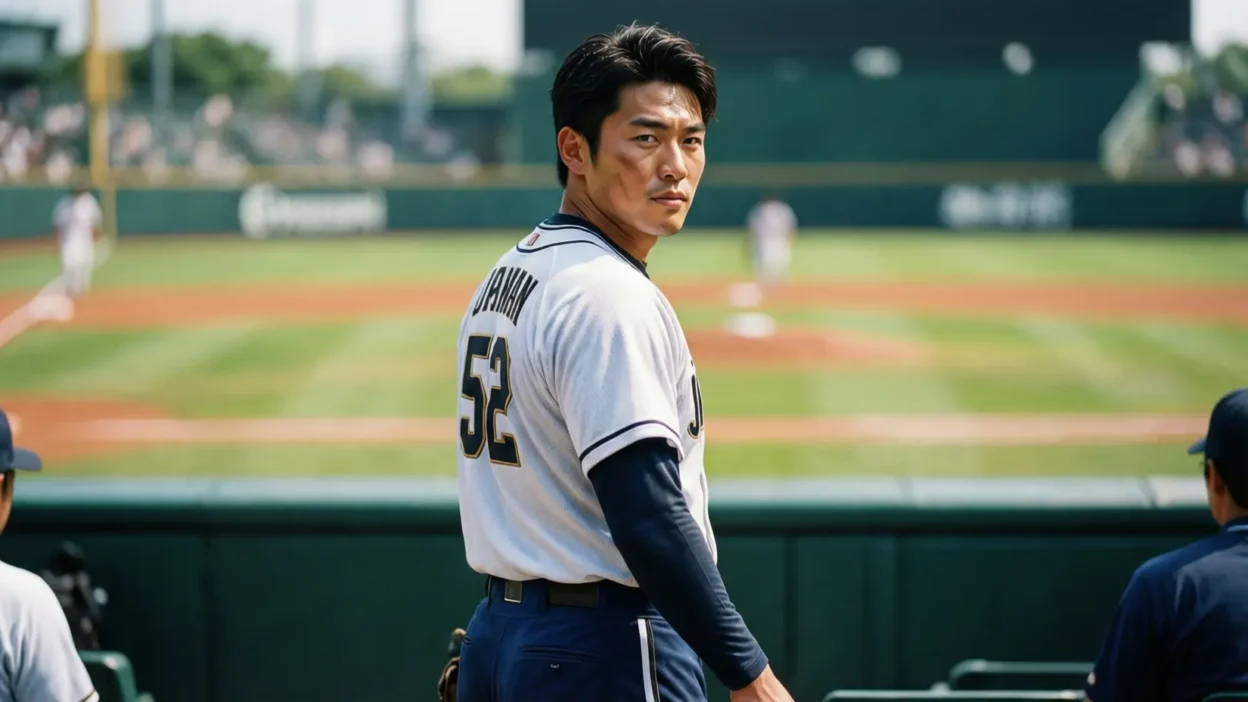
Shohei Ohtani is one of the most exciting and unique talents in Major League Baseball today. Known for his rare ability to excel as both a pitcher and a hitter, Ohtani has captivated fans and analysts alike.
However, beyond his extraordinary skills on the field, many wonder how his physical attributes—specifically his height and weight—contribute to his success.
Standing at 6’4″ and weighing 210 pounds, Ohtani’s build is not only impressive but plays a significant role in his two-way performance.
His combination of size, power, and agility allows him to dominate on the mound while crushing home runs at the plate.
This article delves into how Ohtani’s height and weight influence his remarkable career and help make him one of the most dominant players in baseball history.
By understanding his physical stats, we can gain insight into what makes Shohei Ohtani truly exceptional.
Who is Shohei Ohtani
Shohei Ohtani, often referred to as “The Japanese Babe Ruth,” is one of the most electrifying players in modern baseball. Born in Japan, Ohtani made his mark in the Nippon Professional Baseball (NPB) league before transitioning to Major League Baseball in 2018 with the Los Angeles Angels. Ohtani’s story is one of extraordinary versatility and determination, as he became the first player in over a century to play both as a pitcher and a position player regularly in the MLB.
What makes Ohtani truly unique is his ability to excel in both roles. As a pitcher, his fastball regularly reaches the upper 90s mph, and his slider is one of the best in the league. On the offensive side, Ohtani’s raw power and bat speed allow him to hit towering home runs, with his 2021 season being a prime example of his dual-threat capabilities. He finished that year with 46 home runs while also posting a 3.18 ERA on the mound, making history as the first player ever to be selected as both a starting pitcher and a designated hitter in the same All-Star Game.
Ohtani’s success is even more impressive considering the physical toll of playing two demanding positions at the highest level. His unique combination of skills, work ethic, and physical attributes have earned him the title of MLB’s most remarkable and exciting player in recent memory, and it’s these very attributes that we’ll explore further in this article.
Shohei Ohtani’s Height
Standing at 6’4″ (193 cm), Shohei Ohtani’s height is an impressive factor that contributes to his dominance on the field. In the world of Major League Baseball, where players come in a variety of shapes and sizes, Ohtani’s tall, athletic frame sets him apart, offering a unique blend of power and leverage. But how does his height influence his performance?
For pitchers, height plays a crucial role in mechanics. Ohtani’s taller frame gives him an extended stride and a higher release point when delivering pitches, which makes it more challenging for batters to pick up the ball and react. His long arms and legs help generate greater velocity on his fastball, often reaching 100 mph, and contribute to the effectiveness of his breaking pitches. Additionally, a higher release point makes it more difficult for hitters to judge the movement of his pitches, giving him an edge in the strike zone.
On the offensive side, Ohtani’s height gives him an advantage as a power hitter. Taller players tend to have a longer reach, which helps them make solid contact with high-pitched balls and generate more bat speed. This increased reach allows Ohtani to cover more of the strike zone, making him a constant threat at the plate. His height also contributes to his ability to hit for power, as it provides leverage during his swing, helping him launch long home runs with ease.
Overall, Shohei Ohtani’s height plays a significant role in both his pitching and hitting abilities, contributing to his success as a two-way player.
Shohei Ohtani’s Weight
At 210 pounds (95 kg), Shohei Ohtani carries a well-balanced and muscular build that serves him well in both his pitching and hitting duties. While his height provides a significant physical advantage, it’s his weight and body composition that truly enhance his performance on the field. Ohtani’s athletic physique allows him to handle the physical demands of playing both as a pitcher and a hitter, a rarity in modern baseball.
As a pitcher, Ohtani’s weight provides the necessary strength and power to generate velocity on his fastballs and control on his breaking pitches. A key aspect of successful pitching is the ability to maintain balance and durability throughout a long season, and Ohtani’s muscular build supports his endurance. The added muscle mass helps him power through tough innings and maintain velocity late into games, something that is crucial for a two-way player who doesn’t just pitch but also spends significant time at the plate.
When it comes to hitting, Ohtani’s weight contributes to his exceptional power. His muscle mass aids in generating bat speed, allowing him to crush high-velocity pitches and hit home runs consistently. The strength in his upper body, combined with his natural athleticism, gives him the leverage needed for powerful swings, making him a significant threat in the batter’s box. Ohtani’s weight is also an asset in terms of his stability and agility, allowing him to make explosive movements on the field while maintaining balance and control.
Overall, Shohei Ohtani’s weight complements his height, creating a well-rounded physique that boosts his performance as one of the most versatile players in the game today.
How Ohtani’s Height and Weight Contribute to His Dual-Role Performance
Shohei Ohtani’s ability to excel as both a pitcher and a hitter is a feat few baseball players can match, and his height and weight are crucial to making this dual-role success possible. Balancing the physical demands of pitching and hitting requires not only exceptional skill but also an exceptional body that can withstand the rigorous strain of both positions. Ohtani’s 6’4″, 210-pound frame provides him with the strength, flexibility, and durability necessary for such a remarkable achievement.
As a pitcher, Ohtani’s height and weight allow him to generate greater velocity on his fastball and precision on his breaking balls. The extra height gives him a higher release point, making it harder for batters to track the ball, while his solid build supports the force needed to throw with power and consistency. His ability to pitch at high velocities while still maintaining control is a product of his athletic frame, which enables him to generate power without sacrificing accuracy.
When it comes to hitting, Ohtani’s weight is an advantage in generating bat speed and power. His muscular build allows him to drive the ball with authority, producing home runs and extra-base hits with ease. The strength in his legs, core, and upper body supports his swing mechanics, allowing him to produce maximum power at the plate. His athleticism also gives him the agility and coordination needed for both pitching and hitting, making him one of the most complete players in the game.
In essence, Ohtani’s height and weight aren’t just numbers; they’re vital components of the physical prowess that allow him to thrive as a two-way player.
Impact of Ohtani’s Physical Attributes on His MLB Career
Shohei Ohtani’s height and weight have had a significant impact on his MLB career, allowing him to not only break records but also redefine the possibilities for two-way players in the modern era. His unique physical build has helped him overcome the challenges of being a dual-role player, proving that it’s not just about raw talent but how a player’s body can complement their skills. Ohtani’s physical attributes have allowed him to excel in ways few can replicate.
One of the biggest advantages of his height and weight is the power it gives him on both sides of the game. As a pitcher, Ohtani’s velocity and ability to maintain control over his pitches are directly related to his athletic frame. His height provides him with a better angle to deliver the ball, while his weight allows him to create the torque and strength necessary to generate fastballs that reach the upper 90s and beyond. His breaking balls are equally effective, with his physique helping him snap off devastating sliders and curveballs.
Offensively, Ohtani’s power as a hitter has been equally impressive. His weight, combined with his long wingspan, allows him to produce explosive bat speed, generating significant force during his swings. The combination of height and weight gives him the necessary leverage to send balls over the fence, making him a legitimate power hitter who can hit for both average and power.
Ohtani’s physical attributes have undoubtedly played a pivotal role in his meteoric rise and continued success as one of the most dominant and exciting players in the game today.
Comparison of Ohtani’s Physical Attributes to Other MLB Players
Shohei Ohtani’s physical attributes set him apart from the majority of Major League Baseball players, both in terms of size and versatility. When compared to other MLB players, his 6’4″, 210-pound frame is notably taller and more muscular than many pitchers and hitters, giving him a unique edge. But how does he stack up against other top players, especially those who are known for their physicality and dual roles?
In comparison to typical pitchers, Ohtani is on the taller side. Many successful MLB pitchers tend to stand around 6’0″ to 6’2″, but Ohtani’s 6’4″ height gives him an advantage with a higher release point, helping him get more leverage on his pitches. This height also allows for a longer stride, which is crucial for generating velocity and maintaining consistency. While many pitchers focus primarily on finesse, Ohtani’s height and muscle mass enable him to combine power with precision, making him a threat on the mound.
Looking at hitters, Ohtani’s height is relatively similar to power hitters like Aaron Judge (6’7″) or Giancarlo Stanton (6’6″), who rely on their tall, strong frames to generate power. However, Ohtani’s ability to succeed as both a pitcher and a hitter with the same physical build makes him an anomaly. His frame allows him to perform at an elite level in two demanding roles, something no other MLB player has managed to do as seamlessly as Ohtani.
How Ohtani Maintains His Physique: Training and Conditioning
Maintaining the physical condition that allows Shohei Ohtani to perform at the highest level in both pitching and hitting requires a rigorous and specialized training regimen. Ohtani’s ability to balance the demands of two demanding positions—pitching and hitting—requires a comprehensive approach to fitness, strength, and recovery.
Ohtani’s training focuses on a mix of traditional strength training, agility work, and injury prevention. As a pitcher, his training includes exercises to improve his shoulder strength, flexibility, and pitching mechanics. He often works on rotational exercises to strengthen his core and legs, which are essential for generating power in both his fastballs and his swing. By developing a powerful lower body, Ohtani ensures he can maintain balance and stability during his wind-up, as well as generate force through his lower half when hitting.
For his hitting, Ohtani focuses on explosive movements to maximize bat speed and power. His training regimen includes exercises that enhance hand-eye coordination, bat speed, and upper body strength, which are critical for producing home runs and driving the ball with authority. Core stability exercises also play a major role in maintaining balance during his swings, ensuring he can make contact and power the ball out of the park consistently.
In addition to strength training, Ohtani incorporates mobility exercises to keep his body limber and prevent injuries. Given the physical toll of playing two demanding roles, recovery practices such as stretching, massage therapy, and rest are integral to keeping Ohtani’s body in top condition.
The Role of Ohtani’s Height and Weight in Injury Prevention
One of the most impressive aspects of Shohei Ohtani’s career is his ability to stay relatively injury-free despite the physical demands of playing both as a pitcher and a hitter. His height and weight not only contribute to his strength and performance but also play an essential role in injury prevention. The way his body is built helps him absorb the impact of both pitching and hitting while maintaining durability over the long MLB season.
Ohtani’s height of 6’4″ and weight of 210 pounds give him a well-balanced, sturdy frame, which helps distribute the physical stress of pitching. A taller frame offers greater leverage when throwing, but it also requires a solid foundation to avoid injuries like shoulder or elbow issues, which are common among pitchers. His muscle mass plays a protective role, helping to absorb the forces generated during a fastball delivery and reducing the risk of joint stress. The strength in his legs and core also helps with stability, supporting his body during the rotational movements required for both pitching and batting.
For hitting, Ohtani’s weight provides additional stability, especially when he makes contact with fast pitches. His strong lower body allows him to absorb the impact of powerful swings without overloading his upper body or risking strain. The combination of his height and weight allows for a more fluid, controlled swing, reducing the chance of injury from improper mechanics.
Ohtani’s body structure, coupled with his training and recovery routines, has allowed him to stay healthy and continue performing at an elite level while managing the physical strain of his dual role.
Shohei Ohtani’s Impact on Baseball’s Evolution: A Physical Marvel
Shohei Ohtani’s physical attributes—his height, weight, and overall build—have not only contributed to his personal success but also influenced the trajectory of baseball, redefining what is possible for modern athletes. Historically, players in Major League Baseball have been asked to specialize in either pitching or hitting, but Ohtani’s success as both a dominant pitcher and a power hitter has shattered that mold. His physical makeup allows him to do what was once thought impossible: excel in two of the most physically demanding positions in the game simultaneously.
Ohtani’s unique combination of height (6’4″) and weight (210 pounds) has made him a physical anomaly in the MLB, and this has sparked discussions about the future of baseball. As more players look to replicate his success, his physicality has shown that size and strength can be leveraged in a way that maximizes athletic potential across multiple skill sets. His body type not only supports his dual role but also sets a new standard for the kind of athleticism required to be effective on both sides of the game.
Beyond his physical attributes, Ohtani’s approach to conditioning, recovery, and injury prevention also highlights how the modern athlete can push the boundaries of traditional baseball roles. He has become an inspiration for future generations of players, showing that with the right physical tools and mental fortitude, the dual-threat player is not just a novelty but a legitimate path forward in the sport’s evolution.
Shohei Ohtani’s Legacy: A Player Ahead of His Time
As Shohei Ohtani continues to break records and captivate baseball fans worldwide, his physical attributes—his height, weight, and athleticism—are integral to his legacy. He’s a player whose combination of size, strength, and versatility is simply unmatched, and his impact on the game is likely to be felt for generations. Ohtani has proven that being a two-way player in modern baseball is not only possible but also wildly successful, and this will likely inspire future athletes to embrace multi-dimensional roles.
Ohtani’s legacy isn’t just about his on-field accomplishments, though. His physical attributes serve as a symbol of what’s possible when athletes embrace a more holistic approach to their development. While his 6’4″, 210-pound frame allows him to dominate on the mound and at the plate, it’s his commitment to training, conditioning, and recovery that sets him apart. His ability to maintain such a high level of performance in both roles is a testament to his physical preparation and mental toughness.
Looking ahead, Ohtani’s legacy will be defined not only by his records and achievements but by how he’s transformed the expectations for future baseball players. Younger athletes who aspire to play at the highest level may now see dual roles as a viable pathway, especially if they are fortunate enough to have the physical attributes that support such versatility. Shohei Ohtani is truly a player ahead of his time, and his lasting influence will shape the game for years to come.
The Future of Dual-Role Players in Baseball: Inspired by Ohtani’s Physical Model
Shohei Ohtani’s success has created a ripple effect throughout baseball, making many wonder if the future of the sport could include more players following in his footsteps. Ohtani’s combination of height, weight, and elite athleticism has shown that it is possible to excel as both a pitcher and a hitter, raising questions about the potential for other players to take on dual roles in the future. As baseball continues to evolve, his physical blueprint could inspire a new generation of athletes to attempt what was once considered a rarity in the sport.
While the demands of pitching and hitting are physically taxing, Ohtani’s success has demonstrated that players who are built for versatility can push the boundaries. His frame—standing at 6’4″ and weighing 210 pounds—gives him the necessary strength and endurance to thrive in both roles. As more training techniques and sports science advance, younger athletes may increasingly develop to take on dual roles, with specialized conditioning regimens tailored to meet the needs of both pitching and hitting.
Ohtani’s influence is already being felt at the youth level, as younger athletes aim to mimic his approach to training and conditioning. High school and college players who excel in multiple areas now see that there is a legitimate path to the major leagues as a two-way player. The physical demands of such a career, though substantial, are now being redefined, and Shohei Ohtani’s legacy will continue to shape the future of baseball for years to come.
Shohei Ohtani’s Height and Weight: A Competitive Advantage in MLB
Shohei Ohtani’s remarkable height and weight offer him a competitive advantage that extends beyond his physical presence on the field. His combination of size, strength, and athleticism allows him to excel in the physically demanding roles of both a pitcher and a hitter, but it also provides him with an edge over opponents in terms of durability and performance consistency. Ohtani’s stature helps him deliver fastballs with velocity while maintaining control, and it also enables him to generate significant power when swinging the bat.
The advantage of Ohtani’s height lies in his ability to throw from a higher release point, which makes it more difficult for hitters to track his pitches. A taller pitcher can create a downward trajectory with their fastballs, making them harder to hit. Furthermore, Ohtani’s long wingspan allows him to generate more leverage in his pitching mechanics, which results in faster throws with more spin and movement on the ball. The added height also helps him in terms of recovery between outings, as it allows for a more balanced posture during his wind-up and reduces strain on his body.
As a hitter, Ohtani’s height and weight give him the muscle mass necessary to drive the ball with power. His solid build aids in generating bat speed and strength, which allows him to clear the fence with ease. His physique makes him a constant threat at the plate, as he is able to hit with both power and consistency, a rare combination in any player.
The Mental Game: How Ohtani’s Physical Attributes Enhance His Mental Toughness
While Shohei Ohtani’s physical attributes—his height and weight—are undoubtedly impressive, it is his mental fortitude that truly sets him apart as one of the best players in Major League Baseball. The demands of being both a pitcher and a hitter are enormous, and his ability to perform at an elite level in both areas requires more than just physical strength. Ohtani’s physicality enhances his mental toughness, allowing him to face challenges that few athletes could handle.
One key aspect of Ohtani’s mental game is his ability to compartmentalize the two roles he plays. As a pitcher, he must focus on strategy, precision, and control, while as a hitter, he needs to be aggressive, patient, and flexible. His physical attributes give him the confidence to tackle both roles with a clear mind. Knowing that his body is capable of handling the demands of pitching and hitting allows Ohtani to stay calm under pressure, whether he’s on the mound facing a batter or in the batter’s box with two outs.
Ohtani’s size also contributes to his resilience. His 6’4″ frame and 210-pound build help him absorb the mental and physical strain of pitching multiple innings or hitting several home runs in a single game. His strength gives him the stamina needed to play both roles over an extended period without losing focus or energy. This unique combination of physical conditioning and mental strength allows Ohtani to push through adversity and thrive in high-pressure situations, elevating his game to an extraordinary level.
Shohei Ohtani’s Height and Weight: A Blueprint for Future Athletes
Shohei Ohtani’s incredible success as a two-way player in Major League Baseball has not only redefined the standards for what is possible on the field but also created a new benchmark for aspiring athletes. His 6’4″, 210-pound physique provides a physical blueprint for future players, showing that size, strength, and agility can be combined to excel in multiple aspects of the game. Ohtani’s unique physical attributes are part of what has made him a generational talent, and his influence is likely to be felt for years to come.
Ohtani’s height and weight allow him to dominate on both sides of the ball, something that hasn’t been seen at this level in decades. His ability to throw fastballs in the high 90s as a pitcher while maintaining the agility to hit towering home runs as a hitter is a rarity in modern baseball. This has led young athletes to reconsider the limitations of focusing solely on one role in baseball, inspiring a new wave of multi-dimensional players.
As more players strive to replicate Ohtani’s dual-threat abilities, coaches and trainers will begin to adapt their training regimens to reflect the demands of being both a pitcher and a hitter. The focus will shift toward developing athletes who are physically equipped to handle the rigors of dual roles, using Ohtani’s build and approach as a guide. In this way, Ohtani’s impact will shape the future of baseball, influencing not just how the game is played but how it is trained for years to come.
Shohei Ohtani’s Impact on the Global Baseball Landscape
Shohei Ohtani’s physical attributes—his 6’4″, 210-pound frame—are just the tip of the iceberg when it comes to his impact on the global baseball scene. Ohtani has transcended his physical presence and become a symbol of the new wave of baseball talent that prioritizes versatility, adaptability, and exceptional athleticism. His success has not only captivated Major League Baseball fans in North America but has also made him a global icon, particularly in Japan, where he is revered as a sports hero.
Ohtani’s ability to play both pitcher and hitter at an elite level has captured the attention of baseball fans worldwide, especially in countries where the sport is still growing. His physicality has demonstrated that players can evolve into multi-dimensional threats, challenging traditional notions of specialization in baseball. This, in turn, is influencing how younger generations of players view their potential and careers.
In Japan, where Ohtani’s journey from high school to MLB superstardom is well-known, he serves as a beacon of inspiration for young athletes. His height and weight, combined with his incredible work ethic, have made him a role model for aspiring baseball players who dream of playing professionally. Outside of Japan, Ohtani’s global impact is equally profound, as he has become a poster child for the future of baseball—one where the boundaries of traditional roles are continually being pushed.
Shohei Ohtani’s Role as a Physical Ambassador for MLB
Shohei Ohtani’s physical attributes, particularly his height and weight, have not only contributed to his success but have also positioned him as a key ambassador for Major League Baseball. As the game continues to evolve in terms of talent, training, and global reach, Ohtani serves as the embodiment of the future of the sport. His success as both a pitcher and a hitter has allowed him to redefine what it means to be a modern athlete, and his physical gifts are a significant part of that narrative.
Ohtani’s 6’4″, 210-pound frame is a clear example of the ideal baseball athlete in today’s game. His size allows him to generate impressive velocity on the mound while maintaining excellent control, and it also gives him the strength to produce power at the plate. As a two-way player, he pushes the boundaries of traditional specialization in baseball, showing that it’s possible for athletes to be effective in multiple roles simultaneously.
His global visibility has helped elevate the profile of MLB around the world, particularly in countries where baseball is less established. Ohtani’s unique skill set and physical attributes have captured the attention of baseball fans everywhere, helping to grow the game internationally. In countries like Japan, Ohtani is not just an MLB player but a symbol of possibility and hard work. His success encourages young athletes to pursue their dreams and shows them that their physical potential can be leveraged to achieve greatness in multiple aspects of the game.
Shohei Ohtani’s Height and Weight: The Foundation of His Endurance
Shohei Ohtani’s physical frame—standing 6’4″ and weighing 210 pounds—is not just a key factor in his immediate success; it also plays a critical role in his remarkable endurance as a dual-threat player. The demands of playing both as a pitcher and a hitter require extraordinary stamina and resilience, and Ohtani’s size and physical conditioning have enabled him to excel without succumbing to the physical toll typically associated with such a demanding role.
As a pitcher, Ohtani’s height allows him to deliver pitches with greater velocity and movement, as his longer limbs provide added leverage. But perhaps even more impressive is his ability to withstand the rigors of a long season, which includes pitching on multiple occasions while maintaining his batting role. This dual responsibility requires not just physical strength, but also superior endurance, and Ohtani’s robust frame helps him recover quickly between appearances. His ability to maintain peak performance across both positions—without showing signs of fatigue—sets him apart as one of the most durable players in modern baseball.
Furthermore, Ohtani’s build helps with his recovery. His athletic conditioning allows him to bounce back from physical exertion faster than most players, and his weight and size help support his body throughout long games and extended seasons. While many players in the MLB struggle to stay consistent over a full 162-game schedule, Ohtani’s size and physical makeup allow him to remain a consistent force both at the plate and on the mound.
Shohei Ohtani’s Training and Conditioning: Maximizing Physical Potential
Shohei Ohtani’s exceptional physical attributes—standing 6’4″ and weighing 210 pounds—are the result of a meticulous and comprehensive training regimen that emphasizes both strength and agility. As a two-way player, Ohtani’s approach to conditioning is unlike that of most athletes in Major League Baseball. His training is designed to ensure that his body can handle the dual demands of pitching and hitting at an elite level, and his success is a direct reflection of his commitment to maximizing his physical potential.
One of the key aspects of Ohtani’s training is his focus on maintaining balance. His workouts emphasize both power and explosiveness, with exercises that improve his core strength, leg stability, and shoulder durability. For pitching, this means enhancing his ability to generate velocity while maintaining control and precision. For hitting, it means maximizing bat speed, flexibility, and power. His conditioning program includes a mix of weight training, agility drills, and plyometrics to ensure that he is both strong and nimble.
Ohtani also pays special attention to his recovery. Given the physical toll of playing two positions, recovery is vital to his performance. His program includes regular rest, massage therapy, and targeted stretching routines that help his body stay in peak condition throughout the long MLB season. This recovery protocol is essential for maintaining his stamina and allowing him to perform at an elite level, game after game, in both pitching and hitting roles.
Shohei Ohtani’s Physical Attributes and Their Influence on Baseball Scouting
Shohei Ohtani’s unique combination of height, weight, and athleticism has forever altered the way scouts evaluate players in baseball. Traditionally, scouts have focused on specialized skills—either pitching or hitting—but Ohtani’s rise as a two-way player has broadened the scope of scouting in the sport. His ability to dominate both on the mound and at the plate has forced MLB scouts to reassess their criteria for identifying potential stars, emphasizing physical versatility in addition to specific skills.
Ohtani’s 6’4″, 210-pound frame provides a striking example of what a modern baseball player can achieve with the right mix of size, strength, and athleticism. For scouts, this opens up new avenues for evaluation. Instead of simply categorizing players based on whether they are pitchers or position players, they now consider athletes who may possess the potential to excel in multiple roles. Ohtani’s success encourages scouts to look for more versatile athletes—players who not only have the ability to pitch with velocity and control but who also have the physicality to hit for power and make an impact offensively.
As baseball evolves, scouts are likely to focus more on overall athleticism rather than pigeonholing players into specialized positions. Ohtani has shown that a player’s physical attributes—such as height, weight, and strength—can serve as a foundation for success in multiple roles. This shift in scouting priorities could lead to an influx of two-way players in the future, further redefining the game’s traditional boundaries.
Frequently Asked Questions
1. How tall is Shohei Ohtani?
Shohei Ohtani stands at an impressive 6’4″ (193 cm). His height gives him a physical advantage both on the mound and at the plate, helping him generate greater leverage and power.
2. What is Shohei Ohtani’s weight?
Ohtani weighs around 210 pounds (95 kg). This weight allows him to maintain a solid, athletic build that supports his dual role as both a pitcher and a hitter. His strength is key to his ability to generate power as a batter while maintaining velocity and control as a pitcher.
3. Does Ohtani’s height help him as a pitcher?
Yes, Ohtani’s height plays a significant role in his success as a pitcher. A taller frame allows him to release the ball from a higher point, making it more challenging for batters to track his pitches. It also helps him generate more downward movement on fastballs, increasing his effectiveness.
4. How does Ohtani’s weight benefit him as a hitter?
His 210-pound weight provides Ohtani with the muscle mass needed to hit for power. The strength he derives from his frame allows him to drive the ball further, hitting home runs with regularity. His solid build also helps with bat speed and consistency.
5. Does Ohtani’s physical build make him more durable?
Yes, Ohtani’s combination of height, weight, and conditioning allows him to endure the physical demands of playing both as a pitcher and a hitter. His physical resilience enables him to perform at a high level throughout a full MLB season.
Conclusion:
Shohei Ohtani’s extraordinary physical attributes—his 6’4″ height and 210-pound frame—are central to his success as a two-way player in Major League Baseball.
These attributes not only set him apart as an athlete but have also reshaped the way we think about what is possible in the game.
Ohtani’s unique ability to dominate both as a pitcher and a hitter is a testament to the power of his physical conditioning, mental toughness, and athleticism.
His size and strength have allowed him to handle the demands of an unprecedented dual role, while his agility and endurance keep him performing at an elite level across both disciplines.
As Ohtani continues to break records and captivate fans worldwide, his physical makeup will remain a key factor in his enduring success.
His influence on the sport is far-reaching, inspiring future generations of athletes to push the boundaries of what they can achieve physically.
Ohtani’s success encourages a more holistic view of baseball training, emphasizing versatility, endurance, and the importance of developing multiple skills rather than limiting athletes to one specific role.
In the years to come, Shohei Ohtani’s impact will be felt not only in his remarkable performances on the field but also in the way the next wave of baseball talent is developed.
His legacy is not just one of physical prowess but of redefining the possibilities for what a player can achieve in modern baseball.

Elena Moretti is a highly accomplished Italian business executive and Country Business Unit Head for Building Products at Siemens S.p.A., known for her expertise in leadership, digital transformation, smart buildings, and strategic business growth. With a degree in Business Administration from Bocconi University, Moretti has built a distinguished career spanning finance, operations, and executive management in complex engineering‑driven industries.