

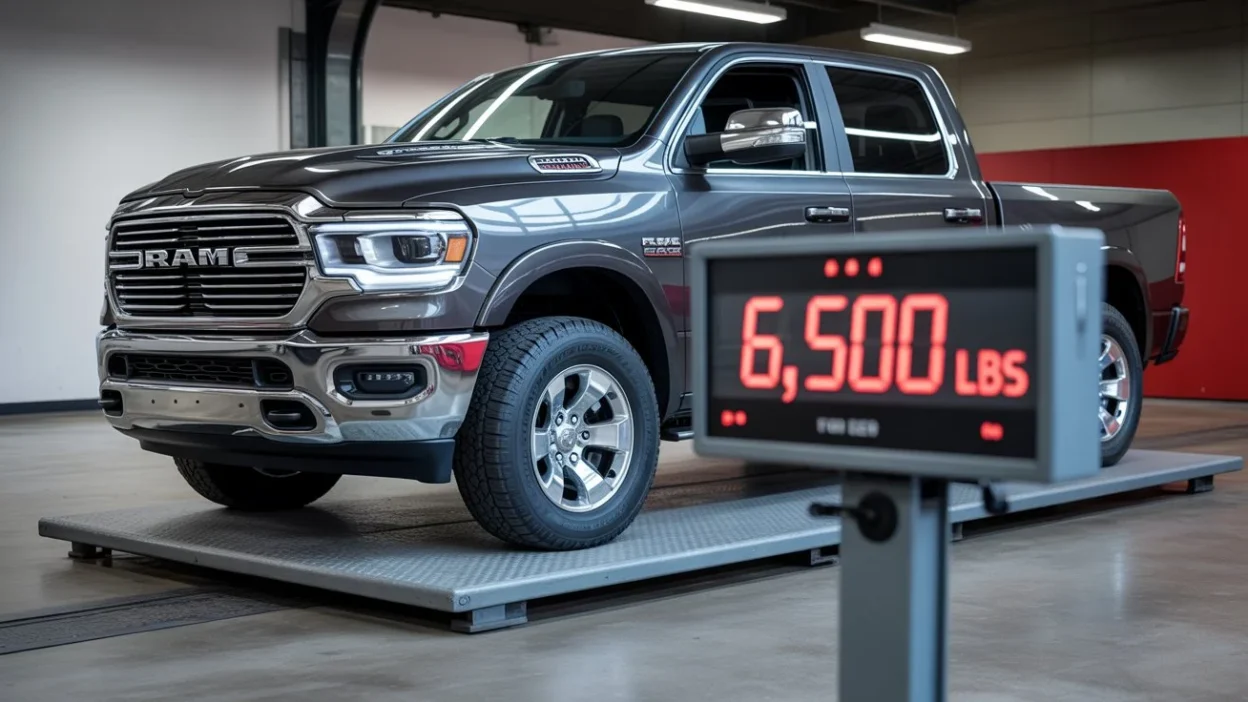
When it comes to full-size pickup trucks, the Ram 1500 stands out for its power, versatility, and comfort.
But before buying or towing with this truck, knowing its weight is crucial. The weight of a Ram 1500 affects everything from fuel efficiency and handling to payload capacity and towing performance.
With multiple trims, cab styles, engine options, and drivetrain configurations, the Ram 1500 curb weight can vary significantly, making it important for buyers to understand the differences.
In this article, we’ll break down the Ram 1500’s weight, including curb weight, gross vehicle weight (GVWR), payload, and towing capacity.
We’ll also explore how engine type, cab configuration, and optional equipment impact weight, and compare it with competitors.
If you’re planning to haul heavy loads, tow a trailer, or simply want a better understanding of your truck, this guide will give you all the numbers and insights you need.
Understanding Vehicle Weight Terminology
Before diving into the specific numbers for the Ram 1500 weight, it’s important to understand the key terms used to describe a truck’s weight. These terms are essential for buyers, truck owners, and anyone planning to tow or haul heavy loads.
1. Curb Weight:
Curb weight is the weight of the truck with all standard equipment, fluids like oil and fuel, but without passengers or cargo. For the Ram 1500, curb weight can range depending on trim, engine, cab style, and drivetrain. Knowing the curb weight helps estimate fuel efficiency and handling.
2. Gross Vehicle Weight (GVW/GVWR):
Gross Vehicle Weight or Gross Vehicle Weight Rating (GVWR) refers to the maximum weight the truck can safely carry, including passengers, cargo, and optional equipment. Exceeding this weight can compromise safety and affect warranty coverage.
3. Payload Capacity:
Payload capacity is the maximum weight of cargo and passengers the truck can carry. For example, a Ram 1500 with a higher payload rating is ideal for heavy-duty work like hauling construction materials or recreational gear.
4. Towing Capacity:
Towing capacity is the maximum weight the truck can safely tow behind it. This is affected by engine size, drivetrain, and overall truck weight. Understanding towing capacity ensures you can safely pull trailers, boats, or campers.
Ram 1500 Curb Weight
The curb weight of a Ram 1500 is one of the most important numbers for anyone considering this full-size pickup. It represents the truck’s weight with standard equipment and fluids, but without passengers or cargo. The curb weight varies widely depending on the trim level, cab style, engine type, and drivetrain configuration.
For the 2025 Ram 1500, the curb weight generally ranges from 4,900 pounds to over 5,600 pounds. The Tradesman, which is the base trim, tends to be the lightest, usually weighing around 4,900–5,100 pounds. Moving up to the Big Horn or Laramie trims, the weight increases due to additional features, luxury options, and heavier interior materials. These trims typically weigh between 5,200–5,400 pounds.
The Rebel and Limited trims are at the higher end of the scale, often exceeding 5,500 pounds, thanks to advanced off-road equipment, larger wheels, and premium packages. Cab styles also make a difference. A regular cab is lighter, while crew cab and mega cab versions add significant weight due to extra seating and extended frames.
Finally, drivetrain matters: a 4WD Ram 1500 weighs more than its 2WD counterpart because of the additional transfer case and heavier axle components. Understanding the curb weight is essential for calculating payload, towing limits, and fuel efficiency, helping you choose the trim that fits your needs best.
Gross Vehicle Weight (GVW) and Payload
When considering a Ram 1500, understanding its Gross Vehicle Weight (GVW) and payload capacity is essential, especially if you plan to haul heavy loads or tow trailers.
Gross Vehicle Weight (GVW), also known as Gross Vehicle Weight Rating (GVWR), is the maximum weight your truck can safely carry, including passengers, cargo, and optional equipment. For the 2025 Ram 1500, the GVWR typically ranges from 6,100 pounds to 7,200 pounds, depending on the trim, engine, and cab configuration. Exceeding this weight can compromise safety, reduce handling performance, and even affect warranty coverage.
Payload capacity is the portion of GVWR that accounts for cargo and passengers. For example, a Tradesman trim might have a payload capacity of 1,500 pounds, while a Limited trim could carry around 1,300 pounds. Crew cabs generally have lower payload than regular cabs due to the added weight of extra seating and extended frames. Payload also varies slightly between 2WD and 4WD models, with 2WD trucks often able to carry slightly more.
Understanding GVW and payload is crucial for anyone who uses the Ram 1500 for work or recreation. Whether you’re hauling construction materials, off-road gear, or towing a trailer, staying within these limits ensures safety and protects the truck’s performance. Always check the specific GVWR and payload rating for your model and configuration before loading or towing.
How Engine and Drivetrain Affect Weight
The engine type and drivetrain of a Ram 1500 significantly influence its overall weight. Different engines have varying sizes, components, and materials, which directly impact the truck’s curb weight, payload, and towing capacity.
For the 2025 Ram 1500, there are several engine options:
- 3.6L V6 – The lightest option, ideal for those prioritizing fuel efficiency. It adds less weight than the V8 engines, making it easier to maximize payload and towing within GVWR limits.
- 5.7L HEMI V8 – Heavier than the V6 but offers significantly more horsepower and torque. The extra weight slightly reduces payload but increases towing capabilities.
- 3.0L EcoDiesel V6 – Diesel engines are usually heavier due to reinforced components and larger fuel systems, which affects curb weight but provides better torque for towing.
- 6.2L Supercharged V8 (if available in special trims) – The heaviest engine, designed for maximum performance, but it adds hundreds of pounds to the overall truck weight.
The drivetrain also matters:
- 2WD models are lighter because they lack the extra components required for four-wheel drive.
- 4WD models add weight through the transfer case, extra driveshafts, and heavier axles, reducing payload slightly but improving off-road capability.
Cab size and bed length further affect weight. A crew cab or mega cab adds weight compared to a regular cab due to the extended frame and additional seating. Knowing how engine and drivetrain choices impact the Ram 1500 weight helps buyers select the configuration that balances performance, payload, and towing according to their needs.
Towing and Weight Considerations
The Ram 1500 weight directly affects its towing capabilities. Understanding how curb weight, GVWR, and payload interact with towing limits is essential for anyone planning to haul trailers, boats, or heavy equipment.
The 2025 Ram 1500 offers impressive towing capacities, ranging from 8,000 to 12,750 pounds, depending on engine, cab style, bed length, and drivetrain. Lighter trims with the 3.6L V6 engine and 2WD drivetrain are ideal for moderate towing needs, while the 5.7L HEMI V8 or 3.0L EcoDiesel V6 models provide higher towing capacity for heavier loads. Crew cab and 4WD configurations, while slightly heavier, can handle larger trailers due to reinforced suspension and towing packages.
When towing, it’s important to account for tongue weight and the weight of passengers and cargo inside the truck. Exceeding GVWR or payload limits can strain the engine, brakes, and suspension, reducing safety and performance. Installing the correct hitch type and ensuring proper weight distribution is also crucial.
Additionally, optional equipment like bed liners, heavy-duty tires, or off-road packages can add hundreds of pounds, slightly reducing maximum towing capacity. Always consult the Ram 1500 towing guide or the manufacturer’s specifications for your specific trim and configuration. By understanding how weight affects towing, you can safely maximize your truck’s performance and ensure a smooth and secure towing experience.
Optional Equipment & Accessories Impact on Weight
The Ram 1500 weight isn’t just determined by the engine, cab, or drivetrain—it’s also influenced by optional equipment and accessories. Many buyers add features or packages that can significantly increase the truck’s overall weight, affecting payload capacity, towing limits, and fuel efficiency.
Factory-installed options can add hundreds of pounds. For example, premium audio systems, larger wheels, off-road suspension packages, and safety features all contribute extra weight. The Rebel trim, known for its off-road capabilities, comes with reinforced bumpers, skid plates, and heavier tires, which increase the curb weight compared to standard trims. Even luxury options in the Limited trim, like leather interiors, sunroofs, or advanced infotainment systems, add weight.
Aftermarket modifications also play a role. Lift kits, roof racks, toolboxes, bed liners, and larger tires can add anywhere from 50 to 500 pounds depending on the components. While these upgrades improve functionality or appearance, they slightly reduce payload and towing capacity, making it essential to calculate the total added weight.
Even something as simple as a full fuel tank or fluids can add noticeable weight. For instance, a full 26-gallon fuel tank adds roughly 150 pounds, which must be considered when approaching GVWR or towing limits.
Ram 1500 vs Competitors
When evaluating the Ram 1500 weight, it’s helpful to compare it with other full-size pickups to understand how it stacks up in terms of payload, towing, and overall performance. Major competitors include the Ford F-150, Chevrolet Silverado 1500, GMC Sierra 1500, and Toyota Tundra.
The Ram 1500 curb weight typically ranges from 4,900 to 5,600 pounds, depending on trim and configuration. In comparison, the Ford F-150 ranges from about 4,500 to 5,600 pounds, making it slightly lighter at the base level but comparable in higher trims. The Chevrolet Silverado 1500 and GMC Sierra 1500 usually weigh between 4,800 and 5,700 pounds, similar to the Ram 1500, while the Toyota Tundra ranges from 5,000 to 5,800 pounds, generally heavier due to its robust frame.
Payload and towing capacities are closely linked to weight. The Ram 1500 often matches or exceeds competitors in payload capacity, especially in Tradesman and Big Horn trims. Its towing capacity, up to 12,750 pounds, is competitive with the Ford F-150’s maximum of 14,000 pounds and the Silverado 1500’s 13,300 pounds, giving Ram a strong edge for heavy-duty towing with the right engine and configuration.
Weight also impacts fuel efficiency, ride comfort, and off-road performance. The Ram 1500, with its combination of light aluminum components and smart engineering, strikes a balance between strength and efficiency, making it a versatile choice for buyers. Comparing weights across trucks helps buyers choose the best model for towing, hauling, and daily driving needs.
Tips for Buyers
When purchasing a Ram 1500, understanding the truck’s weight is essential for making an informed decision. The right combination of trim, engine, cab style, and optional equipment ensures the truck meets your towing, hauling, and daily driving needs while staying within safe weight limits.
First, consider your intended use. If you frequently tow trailers, boats, or campers, focus on models with higher towing capacity, such as the 5.7L HEMI V8 or 3.0L EcoDiesel trims. Crew cabs and 4WD models are slightly heavier, which can affect payload, so calculate the total weight of passengers and cargo before deciding.
Next, think about payload requirements. Tradesman and Big Horn trims typically offer the highest payload capacities, making them ideal for work trucks. Optional packages, aftermarket accessories, and even full fuel tanks add weight, so always subtract these from your payload limit to avoid exceeding GVWR.
Additionally, consider drivetrain and cab configuration. While 2WD trucks are lighter and more fuel-efficient, 4WD models provide better off-road performance but increase curb weight. Cab size matters too—regular cabs weigh less than crew or mega cabs, affecting both payload and fuel economy.
Finally, check manufacturer specifications and use weight calculators when planning towing or hauling. By carefully evaluating Ram 1500 weight, payload, and towing capacity, buyers can select the trim and configuration that fits their lifestyle, ensuring safety, performance, and efficiency on the road.
FAQ
1. How much does a Ram 1500 weigh?
The curb weight of a 2025 Ram 1500 ranges from 4,900 to 5,600 pounds, depending on the trim, cab style, engine, and drivetrain. 2WD and base trims are lighter, while 4WD and higher trims like Rebel or Limited are heavier.
2. What is the Ram 1500’s payload capacity?
Payload varies by trim and configuration, typically between 1,200 and 1,500 pounds. Regular cabs generally carry more than crew or mega cabs due to lower curb weight. Optional equipment can slightly reduce payload.
3. How does engine choice affect weight?
Smaller engines like the 3.6L V6 weigh less, improving payload and fuel efficiency. Larger engines such as the 5.7L HEMI V8 or 3.0L EcoDiesel add weight but increase towing capacity. Heavy-duty or supercharged engines further increase curb weight.
4. Does 4WD make the Ram 1500 heavier?
Yes, a 4WD Ram 1500 is heavier than a 2WD model due to additional components like the transfer case, heavier axles, and extra driveshafts. This slightly reduces payload but enhances off-road performance.
5. How does Ram 1500 weight compare to competitors?
The Ram 1500’s weight is comparable to other full-size pickups like the Ford F-150, Chevrolet Silverado 1500, GMC Sierra 1500, and Toyota Tundra, with base models being lighter and premium trims heavier. Its combination of strong payload, towing capacity, and ride comfort makes it a versatile choice.
Conclusion
Understanding the Ram 1500 weight is essential for anyone considering this versatile full-size pickup.
From curb weight and gross vehicle weight (GVWR) to payload and towing capacity, knowing these numbers ensures safety, performance, and efficiency.
The 2025 Ram 1500 offers a range of trims, cab styles, and engine options, meaning the weight can vary significantly depending on your configuration.
Choosing the right combination of engine, drivetrain, and cab size is key. Smaller engines and 2WD models are lighter and provide better fuel efficiency, while V8 or diesel engines and 4WD models increase weight but boost towing and off-road capabilities.
Optional equipment, accessories, and aftermarket modifications also impact the truck’s overall weight, so buyers should account for these when calculating payload and towing limits.
Comparing the Ram 1500 to competitors like the Ford F-150, Chevrolet Silverado 1500, and Toyota Tundra shows it strikes a balance between strength, comfort, and capability.
Its well-engineered design allows for high payload and towing capacity without compromising ride quality.
Ultimately, understanding the Ram 1500’s weight allows buyers to select the ideal configuration for their needs, whether it’s hauling, towing, off-roading, or daily driving.
By staying within recommended weight limits, you ensure safety, preserve performance, and get the most out of your truck investment.

Elena Moretti is a highly accomplished Italian business executive and Country Business Unit Head for Building Products at Siemens S.p.A., known for her expertise in leadership, digital transformation, smart buildings, and strategic business growth. With a degree in Business Administration from Bocconi University, Moretti has built a distinguished career spanning finance, operations, and executive management in complex engineering‑driven industries.