

You’ve probably heard the term “recession” in news headlines or financial reports, but what does it really mean?
At its core, a recession is a period when the economy slows down, marked by a decline in business activity, consumer spending, and overall production.
Economists often define it as two consecutive quarters of negative GDP growth, but its effects reach far beyond numbers. For individuals, a recession can mean job uncertainty, reduced income, and tighter budgets.
For businesses, it can trigger lower profits, layoffs, and cautious investment strategies.
Understanding what a recession entails isn’t just for economists it’s crucial for anyone who wants to make informed financial decisions, protect their savings, and plan for the future.
In this article, we’ll break down the meaning of recession, explore its causes, signs, and impacts, and provide practical advice on how to navigate these challenging economic periods.
What is a Recession?
A recession is more than just a buzzword in financial news it’s a measurable economic event that affects everyday life. Economists typically define a recession as a significant decline in economic activity across the economy, lasting more than a few months. One common technical definition is two consecutive quarters of negative GDP growth, but experts also consider factors like declining employment, reduced industrial production, and lower consumer spending.
Recessions are a natural part of the economic cycle, which alternates between periods of expansion and contraction. While expansions bring rising incomes, job growth, and business profits, contractions slow down economic activity, causing widespread uncertainty. It’s important to note that a recession is different from a depression. While a recession indicates a temporary slowdown, a depression is a prolonged and severe economic downturn, like the Great Depression of the 1930s.
The impact of a recession can be felt in many ways. Businesses may reduce investment, lay off workers, or even close entirely. Households often cut back on spending, delay major purchases, and focus on saving. Governments and central banks usually step in with fiscal and monetary policies to stabilize the economy.
Understanding the definition of a recession helps us see the bigger picture: it’s not just about GDP numbers it’s about how shifts in economic activity affect jobs, incomes, and financial security. By recognizing what a recession is, individuals and businesses can prepare and respond proactively rather than react in panic.
Causes of a Recession
Recessions don’t happen overnight they usually result from a combination of economic factors, both internal and external. Understanding the causes can help individuals and businesses anticipate challenges and plan accordingly.
1. Internal Causes:
One major cause is a decline in consumer spending, which drives a significant portion of economic activity. When people spend less, businesses earn less, leading to reduced production and sometimes layoffs. Another internal factor is a slowdown in business investments. Companies may cut back on expanding operations, hiring, or launching new projects during uncertain times, which further weakens economic growth. High levels of inflation or deflation can also trigger a recession, as rapidly rising prices reduce purchasing power, while falling prices can signal weak demand.
2. External Causes:
Recessions can also stem from external shocks that disrupt the economy. Global financial crises, such as the 2008 banking collapse, can send ripples across national economies. Wars, political instability, or pandemics like COVID-19 can also interrupt trade, production, and employment, pushing economies into contraction.
3. Role of Government and Central Banks:
While governments and central banks often try to prevent recessions, certain policies can inadvertently contribute. For example, high interest rates intended to curb inflation may slow borrowing and spending, while sudden changes in taxation or regulations can reduce business activity. Conversely, targeted fiscal stimulus or monetary easing can help mitigate a downturn once a recession begins.
In short, a recession is rarely caused by a single factor. It’s usually the result of multiple economic pressures interacting, leading to slower growth, lower income, and financial uncertainty for households and businesses alike.
Signs a Recession is Coming
Recognizing the early warning signs of a recession can help individuals, businesses, and governments take proactive steps before the economy contracts fully. While no single indicator guarantees a recession, a combination of trends often signals that economic activity is slowing.
1. Falling GDP:
A decline in a country’s Gross Domestic Product (GDP) is one of the clearest indicators. When GDP shrinks for two consecutive quarters, economists typically declare a recession. However, early signs of slowing growth can appear before this threshold, such as reduced industrial output or slower investment.
2. Rising Unemployment:
As businesses earn less, they often cut back on hiring or lay off workers. A steady increase in the unemployment rate is a strong signal that the economy is weakening. Rising job losses not only affect individuals but also reduce consumer spending, creating a feedback loop that deepens the downturn.
3. Declining Consumer and Business Confidence:
When people and businesses feel uncertain about the future, they tend to spend and invest less. Consumers may postpone big-ticket purchases like homes and cars, while companies may delay expansion or hiring plans. These behavioral changes can further slow economic activity.
4. Stock Market Volatility:
While not always perfectly predictive, significant fluctuations in stock markets often reflect investor anxiety about the economy. Sharp drops can signal concerns about corporate profits and overall growth.
5. Other Economic Indicators:
Additional signs include falling retail sales, declining manufacturing activity, and tightening credit conditions. Monitoring these metrics together can provide a clearer picture of an impending recession.
By keeping an eye on these signs, individuals and businesses can prepare financially, protect their resources, and make informed decisions before the economic slowdown fully takes hold.
Impact of a Recession
Recessions affect nearly every aspect of the economy, from households and businesses to governments, creating ripple effects that can last months or even years. Understanding these impacts helps individuals and organizations make better decisions during economic downturns.
1. Impact on Individuals:
One of the most immediate effects of a recession is on jobs and income. Companies may reduce staff, freeze hiring, or cut wages, leaving workers with less financial security. Reduced income often forces households to cut back on spending, delay major purchases, and dip into savings. For those with debt, rising unemployment or reduced income can make repayment challenging, increasing financial stress.
2. Impact on Businesses:
During a recession, consumer demand falls, which lowers business revenues and profits. Many businesses respond by reducing costs cutting jobs, delaying expansion, or renegotiating contracts. Small and medium-sized enterprises (SMEs) are particularly vulnerable, as they often have limited cash reserves. Access to credit may also tighten, making it harder for companies to invest or survive short-term losses.
3. Impact on Governments and the Economy:
Recessions reduce tax revenue because businesses earn less and unemployment rises. This can strain government budgets, especially when spending on social support programs increases. To counteract the slowdown, governments and central banks may implement stimulus measures, such as lowering interest rates, providing loans, or funding infrastructure projects to revive economic activity.
In short, a recession reshapes the financial landscape for everyone. By understanding its widespread impacts, people and businesses can plan, adapt, and protect themselves from the full effects of an economic downturn.
Historical Examples of Recessions
Looking at past recessions helps us understand how economies respond to downturns and how individuals, businesses, and governments are affected. While each recession has unique causes, patterns often repeat over time.
1. The Great Depression (1929–1939):
The Great Depression remains the most severe economic downturn in modern history. Triggered by a stock market crash in 1929, it led to massive unemployment, widespread business failures, and a dramatic drop in consumer spending. Governments were initially slow to respond, which prolonged the economic pain. This period reshaped financial regulations and social safety nets globally.
2. The 2008 Global Financial Crisis:
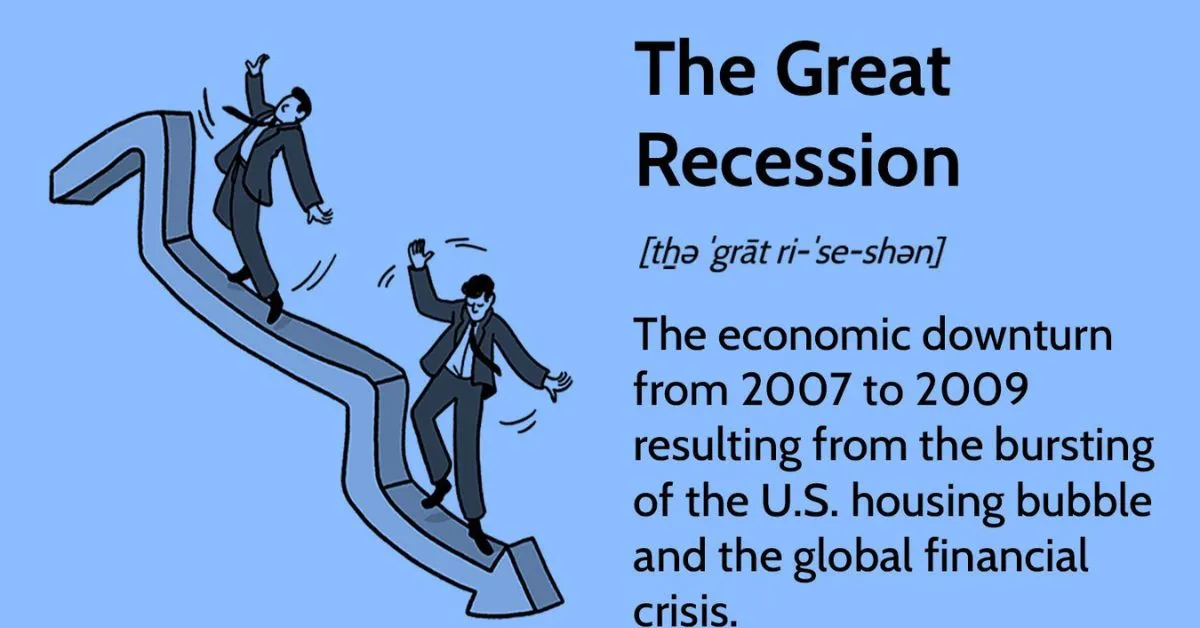
Triggered by the collapse of the housing market and risky banking practices, the 2008 crisis spread worldwide. Major financial institutions failed or required bailouts, unemployment soared, and stock markets plummeted. Governments responded with stimulus packages, interest rate cuts, and stricter financial regulations, helping economies recover gradually over several years.
3. COVID-19 Recession (2020):
The global pandemic caused an unprecedented and sudden economic slowdown. Lockdowns, travel restrictions, and disrupted supply chains led to a sharp decline in GDP for many countries. Unlike previous recessions, this downturn was driven by a health crisis rather than financial mismanagement. Governments and central banks acted quickly with massive fiscal stimulus and monetary support, mitigating some of the worst impacts.
4. Lessons Learned:
Historical recessions show that while downturns are inevitable, their severity can be reduced through timely interventions, careful financial planning, and policy adjustments. Studying these examples also highlights the importance of diversification, saving, and understanding economic indicators to better prepare for future recessions.
How to Prepare for a Recession
While recessions are unavoidable, individuals and businesses can take steps to minimize their impact. Preparation helps reduce financial stress, maintain stability, and even uncover opportunities during economic downturns.
1. Personal Finance Strategies:
Building an emergency fund is one of the most important steps. Experts recommend saving at least three to six months of living expenses to cover unexpected job loss or reduced income. Reducing unnecessary expenses and prioritizing essential spending can help stretch your resources. Diversifying income streams, such as freelancing or part-time work, provides additional financial security. Paying down high-interest debt before a recession also helps reduce financial strain.
2. Business Strategies:
For businesses, maintaining a healthy cash flow is critical. Companies should monitor expenses, delay non-essential investments, and focus on core operations. Diversifying products, services, or markets can make businesses more resilient. Strategic planning, including contingency plans for potential revenue drops, ensures that operations can continue even during difficult economic periods.
3. Government and Policy Awareness:
Understanding government policies and available support can also help. Many governments offer stimulus programs, unemployment benefits, or small business loans during recessions. Keeping informed about these measures allows individuals and businesses to take advantage of relief programs and adjust strategies accordingly.
4. Mindset and Planning:
Lastly, preparing for a recession isn’t just financial it’s mental. Accepting that economic cycles are normal and planning for potential challenges can reduce panic and encourage rational decision-making. Proactive preparation empowers people to humidity the downturn confidently rather than reactively.
By combining financial planning, business strategy, and awareness of government measures, individuals and companies can navigate recessions more securely and emerge stronger when the economy recovers.
Common Myths About Recession
Recessions often come with widespread confusion and misconceptions. Understanding the truth behind these myths can help individuals and businesses respond more effectively and avoid unnecessary panic.
1. “Recession Means Everyone Loses Their Job”
While unemployment often rises during a recession, not everyone loses their job. Many industries remain stable, and some, such as healthcare, utilities, and essential services, may even see growth. Job losses tend to affect specific sectors more than others.
2. “Recessions Can Be Completely Avoided”
Economic slowdowns are a natural part of the business cycle. Governments and central banks can mitigate the severity of a recession, but no country can prevent them entirely. Trying to completely avoid a downturn is unrealistic; preparation and resilience are far more effective strategies.
3. “Only Big Businesses Are Affected”
Small and medium-sized businesses are often more vulnerable during recessions because they typically have fewer financial reserves and limited access to credit. However, large corporations can also face challenges, such as declining demand or market instability. Both are impacted differently, but no business is entirely recession-proof.
4. “Recession Means Prices Always Fall”
While some prices may drop, others, like essential goods and services, can continue rising due to inflation or supply issues. A recession does not automatically guarantee lower prices for consumers.
5. “Recessions Last Forever”
Recessions are temporary phases in the economic cycle. History shows that economies typically recover over time, sometimes stronger than before, especially when appropriate policy measures are taken.
By dispelling these myths, individuals and businesses can approach a recession with clarity and confidence, making informed financial and strategic decisions rather than reacting to fear or misinformation.
The Silver Lining
While recessions are often seen as periods of hardship and uncertainty, they also present opportunities for growth, learning, and strategic advantage. Understanding the potential silver lining can help individuals and businesses navigate economic downturns more effectively.
1. Opportunities for Investment:
During recessions, the value of assets such as stocks, real estate, or businesses often drops. For those with careful financial planning, this can be an opportunity to invest at lower prices, positioning themselves for gains when the economy recovers. Buying wisely during downturns can lead to long-term wealth growth.
2. Encouraging Innovation and Efficiency:
Economic slowdowns force businesses to reassess operations, cut inefficiencies, and innovate. Many successful companies were born or strengthened during recessions by adapting to new market needs, streamlining processes, or launching innovative products. A challenging economy can stimulate creativity and smarter strategies.
3. Personal Growth and Skill Development:
For individuals, recessions provide an opportunity to learn new skills, explore alternative income streams, or advance education. Upskilling or reskilling during tough times increases employability and prepares people for future opportunities, even in a recovering economy.
4. Strengthening Financial Habits:
Recessions encourage better financial discipline, including saving, budgeting, and debt management. Habits built during difficult times often last long after the economy recovers, improving long-term financial stability.
5. Economic Resilience:
Finally, recessions are part of the natural economic cycle. Economies tend to bounce back stronger, often creating new industries, jobs, and investment opportunities in the aftermath.
By focusing on preparation, adaptability, and learning, both individuals and businesses can turn
the challenges of a recession into advantages, emerging stronger when growth resumes.
Frequently Asked Questions (FAQs) About Recession
1. What is a recession?
A recession is a period of economic decline, typically defined as two consecutive quarters of negative GDP growth, combined with reduced employment, spending, and business activity.
2. How long does a recession usually last?
Most recessions last between six months and two years, although severe ones, like the Great Depression, can last much longer. Recovery depends on government intervention, market conditions, and global economic factors.
3. What causes a recession?
Recessions can be caused by internal factors such as reduced consumer spending, high inflation, or declining business investment, and external factors like global financial crises, pandemics, or geopolitical instability.
4. How can I prepare for a recession?
You can prepare by building an emergency fund, reducing debt, cutting unnecessary expenses, diversifying income streams, and staying informed about economic conditions.
5. Are recessions bad for everyone?
Not necessarily. While they create challenges, some sectors and businesses may thrive. Additionally, recessions can provide opportunities for investment, innovation, and skill development.
6. What is the difference between a recession and a depression?
A recession is a temporary economic slowdown, while a depression is a severe, prolonged economic downturn with higher unemployment and longer-lasting effects.
7. How do governments respond to recessions?
Governments and central banks may use monetary policies (like lowering interest rates) and fiscal policies (like stimulus packages) to stabilize the economy and encourage growth.
8. Can we predict a recession?
While economists monitor indicators like GDP decline, unemployment, consumer confidence, and stock market trends, predicting the exact timing and severity of a recession is difficult.
Conclusion
Recessions are an inevitable part of the economic cycle, and understanding them is essential for navigating both personal and financial challenges.
While the term often evokes fear, a recession is simply a period when economic activity slows, affecting employment, spending, and business operations.
Recognizing the causes, warning signs, and potential impacts can help individuals and businesses respond proactively rather than reactively.
For individuals, preparation is key. Building an emergency fund, reducing unnecessary expenses, diversifying income, and managing debt are crucial steps to maintain financial stability.
Businesses can also protect themselves by maintaining cash flow, cutting non-essential costs, and strategically diversifying products or services.
Governments and central banks play a role in mitigating recessions through monetary and fiscal policies, but personal and organizational preparedness remains essential.
It’s also important to remember that recessions are temporary. History shows that economies recover, sometimes stronger than before, offering opportunities for growth, investment, and innovation.
Viewing a recession through this lens encourages a mindset of resilience, planning, and adaptation.
Ultimately, understanding what a recession means empowers individuals and businesses to make informed decisions, reduce risk, and even seize opportunities during challenging times.
Instead of panicking, preparation, awareness, and strategic action are the best ways to navigate the economic slowdown and emerge financially stronger when recovery begins.

Daniel Johansson is an acclaimed Swedish operatic tenor, celebrated internationally for his powerful voice, dramatic presence, and versatile repertoire spanning from Puccini to Wagner. Born in Småland, Sweden, he trained at the University College of Opera in Stockholm, where he laid the foundation for a distinguished career in classical music and opera performance.