

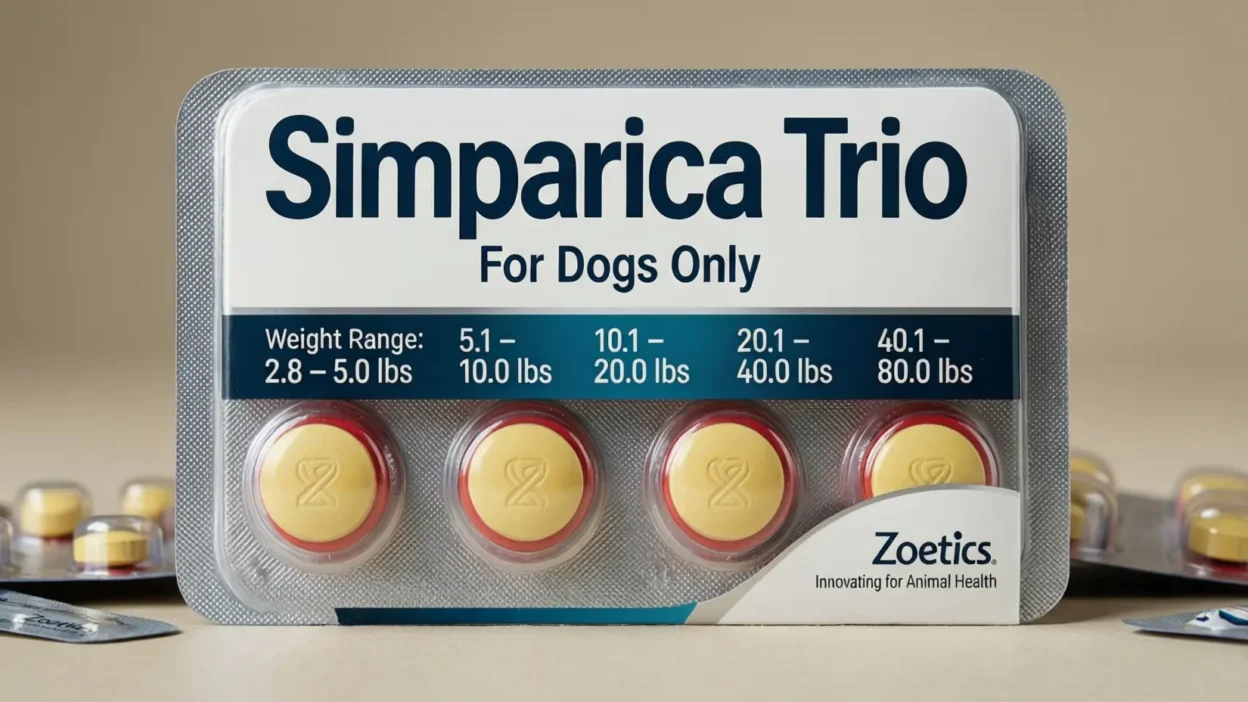
Choosing the correct Simparica Trio weight range is essential for keeping your dog fully protected from harmful parasites.
Simparica Trio is a popular monthly chewable that guards dogs against heartworms, fleas, ticks, roundworms, and hookworms—but its effectiveness depends heavily on giving the right dose based on your dog’s weight.
Using a tablet that’s too small may leave your dog underprotected, while giving the wrong higher dose can increase the risk of side effects.
Many dog owners are unsure which Simparica Trio dosage to choose, especially when their dog falls between weight ranges or is still growing.
Puppies, senior dogs, and large breeds can all require extra attention when it comes to accurate dosing.
In this guide, we’ll break down Simparica Trio weight ranges, explain how to choose the correct dosage, and highlight important safety tips every pet owner should know.
By the end, you’ll have the confidence to ensure your dog receives safe, effective, and consistent parasite protection.
What Is Simparica Trio?
Simparica Trio is a once-monthly, prescription chewable tablet designed to provide broad-spectrum parasite protection for dogs. It combines three active ingredients into a single dose, making it a convenient option for pet owners who want comprehensive coverage without using multiple medications. When given correctly according to your dog’s weight, Simparica Trio helps protect dogs from some of the most common and dangerous parasites they may encounter.
Simparica Trio works by targeting five major parasites. It kills adult fleas and prevents flea infestations, protects against multiple species of ticks that can transmit serious diseases, and prevents heartworm disease when administered monthly. In addition, it treats and controls roundworm and hookworm infections, which can affect both canine health and household hygiene.
The three active ingredients in Simparica Trio are sarolaner, moxidectin, and pyrantel. Sarolaner eliminates fleas and ticks by disrupting their nervous systems. Moxidectin prevents heartworm disease by stopping immature heartworms from developing into adults, while pyrantel targets intestinal worms. Each ingredient is carefully dosed based on your dog’s weight, which is why choosing the correct weight range is so important.
Simparica Trio is approved for use in dogs that meet the minimum age and weight requirements and is commonly recommended by veterinarians for year-round parasite prevention. Because it delivers multiple protections in one chew, it simplifies monthly care while helping ensure your dog stays healthy, comfortable, and protected throughout the year.
Why Simparica Trio Uses Weight Ranges
Simparica Trio uses specific weight ranges to ensure each dog receives the correct amount of medication for safe and effective parasite protection. Unlike one-size-fits-all treatments, this medication is carefully formulated so that the dosage of each active ingredient matches a dog’s body weight. This approach helps maximize effectiveness while minimizing the risk of adverse reactions.
When a dog receives a dose that is too low for its weight, the medication may not reach the necessary concentration in the bloodstream to fully eliminate or prevent parasites. Underdosing can leave dogs vulnerable to flea infestations, tick-borne diseases, and heartworm infection. Over time, inconsistent or insufficient dosing may also contribute to reduced treatment effectiveness.
On the other hand, overdosing—such as giving a tablet meant for a heavier dog—can increase the likelihood of side effects. While Simparica Trio is generally well tolerated when used correctly, excessive dosing may place unnecessary strain on a dog’s system, especially in smaller breeds, puppies, or dogs with underlying health conditions. For this reason, tablets should never be split, combined, or altered to “adjust” the dose.
Weight ranges also account for natural differences in how dogs metabolize medications based on size and body composition. A few pounds can make a significant difference, particularly for small dogs and growing puppies. This is why manufacturers and veterinarians emphasize accurate, up-to-date weight measurements before each monthly dose.
By following Simparica Trio’s established weight ranges, dog owners can ensure consistent protection, reduce health risks, and provide their pets with reliable, long-term parasite control.
Official Simparica Trio Weight Ranges
Simparica Trio is available in several pre-measured dosage strengths, each designed for a specific dog weight range. Choosing the correct tablet ensures your dog receives the proper balance of active ingredients for effective and safe parasite protection. Always select the dosage that matches your dog’s current body weight, not an estimated or past weight.
The approved Simparica Trio weight ranges begin at 2.8 pounds and extend up to 132 pounds, covering most dog sizes. Dogs weighing 2.8–5.5 pounds require the smallest dose and are often toy breeds or very young puppies that meet the minimum age requirement. Dogs weighing 5.6–11 pounds fall into the next category, which is common for small breeds and puppies transitioning upward as they grow.
For dogs weighing 11.1–22 pounds, 22.1–44 pounds, and 44.1–88 pounds, each tablet contains progressively higher amounts of medication to match increasing body mass. These ranges cover the majority of small, medium, and large dog breeds. Extra-large dogs weighing 88.1–132 pounds require the highest strength tablet to maintain adequate parasite control.
If your dog weighs exactly at the upper or lower limit of a range, veterinarians typically recommend choosing the dosage for the higher weight range to avoid underdosing. However, dogs that exceed 132 pounds may require a customized dosing plan recommended by a veterinarian.
Never split or combine tablets to adjust the dose. If you are unsure which weight range applies to your dog, consult your veterinarian before administering Simparica Trio.
How to Choose the Correct Weight Range
Choosing the correct Simparica Trio weight range starts with accurately weighing your dog. Because even small weight differences can affect dosing—especially for small breeds and puppies—it’s important not to rely on estimates. The most accurate method is using a veterinary scale, but you can also weigh your dog at home by stepping on a scale while holding them and subtracting your own weight.
If your dog falls between two weight ranges, most veterinarians recommend selecting the dosage for the higher weight range. This helps prevent underdosing, which could reduce the medication’s effectiveness against parasites. However, this guidance may vary depending on your dog’s overall health, age, and medical history, so professional advice is always best.
It’s also essential to reweigh your dog regularly, especially before each monthly dose. Puppies can gain weight rapidly, and adult dogs may experience weight changes due to diet, activity level, or health conditions. Using an outdated weight can result in giving the wrong dosage over time.
Do not split Simparica Trio tablets or attempt to combine multiple tablets to “customize” a dose. Each tablet is specifically formulated for its designated weight range, and altering it may lead to inaccurate dosing and increased risk of side effects.
If your dog is close to a weight limit, has recently lost or gained weight, or weighs more than the maximum listed range, consult your veterinarian. They can confirm the safest and most effective dosing plan to ensure your dog remains fully protected year-round.
Simparica Trio for Puppies
Simparica Trio can be an effective parasite prevention option for puppies, but age and weight requirements must be met before use. Puppies must reach the minimum approved age and weight before they can safely begin treatment. Giving the medication too early or at the wrong dosage may increase the risk of side effects and reduce its effectiveness.
Because puppies grow rapidly, their weight can change significantly from month to month, making accurate dosing especially important. A dosage that was appropriate one month may no longer be sufficient the next. For this reason, puppies should be weighed before every dose, and their Simparica Trio weight range should be adjusted as needed to match their current size.
Many puppies move through multiple weight ranges in their first year. When a puppy approaches the upper limit of a weight category, veterinarians often recommend transitioning to the next higher dosage to maintain consistent parasite protection. Skipping this adjustment may lead to underdosing, which could leave the puppy vulnerable to fleas, ticks, or heartworm infection during a critical stage of development.
Pet owners should never split tablets or give partial doses to puppies. Each Simparica Trio chewable is formulated to deliver precise amounts of medication for a specific weight range. Altering the dose can compromise safety.
Regular veterinary checkups are especially important during a puppy’s growth phase. A veterinarian can help monitor weight progression, confirm the correct dosage, and ensure Simparica Trio is being used safely as part of a complete preventive care plan.
Safety Considerations & Side Effects
When used according to the correct Simparica Trio weight range, the medication is generally safe and well tolerated by most dogs. However, as with any prescription parasite preventive, some dogs may experience side effects. Understanding potential reactions and following proper dosing guidelines can help reduce risks.
The most commonly reported side effects are mild and temporary. These may include vomiting, diarrhea, decreased appetite, or lethargy shortly after administration. In many cases, these symptoms resolve on their own within a short period. Giving the chewable with food may help minimize digestive upset.
More serious side effects are rare but can occur, particularly in dogs with a history of neurological disorders such as seizures. Some dogs may experience tremors, lack of coordination, or behavioral changes. Because the risk may increase if a dog receives the incorrect dosage, it is critical to select the proper weight-based tablet and avoid overdosing.
Small dogs, puppies, and dogs with underlying health conditions may be more sensitive to incorrect dosing. This is why tablets should never be split, crushed, or combined. Even slight variations in dosage can increase the likelihood of adverse reactions.
If your dog shows unusual symptoms after taking Simparica Trio—such as persistent vomiting, seizures, severe lethargy, or difficulty walking—contact your veterinarian immediately. Ongoing communication with your vet, regular weight checks, and adherence to the recommended dosing schedule are key to ensuring Simparica Trio remains a safe and effective part of your dog’s parasite prevention routine.
What Happens If You Use the Wrong Weight Range?
Using the incorrect Simparica Trio weight range can affect both the safety and effectiveness of the medication. While mistakes happen, understanding the potential outcomes can help you respond quickly and reduce risks to your dog’s health.
If a dog receives a dose that is too low for its weight, the most common issue is reduced parasite protection. Underdosing may allow fleas to survive, ticks to attach, or heartworm larvae to develop. In some cases, this can lead to persistent infestations or increased exposure to parasite-borne diseases. Underdosing over multiple months may also compromise long-term preventive effectiveness.
Giving a dose intended for a heavier dog may increase the likelihood of side effects. Overdosing does not typically improve protection and may lead to digestive upset, lethargy, or neurological symptoms such as tremors or disorientation. Smaller dogs and puppies are especially vulnerable to receiving too much medication.
If you realize your dog has received the wrong dose, do not give another tablet unless directed by a veterinarian. Monitor your dog closely for any unusual behavior or physical symptoms over the next 24 to 48 hours. Mild symptoms may resolve on their own, but persistent or severe reactions require immediate veterinary attention.
To prevent dosing errors, weigh your dog regularly, keep a record of their weight, and double-check the tablet strength before each dose. If your dog’s weight changes or falls near a dosing threshold, consult your veterinarian for guidance. Prompt action and accurate dosing help ensure Simparica Trio remains both safe and effective.
Missed Doses & Weight Changes
Maintaining a consistent monthly schedule is essential for Simparica Trio to provide continuous parasite protection. However, missed doses and natural weight changes can happen, and knowing how to handle them properly helps keep your dog protected.
If you miss a dose, give Simparica Trio as soon as you remember. After that, resume your regular monthly schedule based on the new administration date. Missing a dose may temporarily reduce protection against fleas, ticks, and heartworms, so avoiding gaps in coverage is important—especially during peak parasite seasons.
Weight changes can also impact dosing accuracy. Dogs may gain or lose weight due to aging, dietary adjustments, changes in activity level, or health conditions. Puppies, in particular, can move through weight ranges quickly during growth spurts. For this reason, it’s recommended to weigh your dog before each monthly dose, not just at annual vet visits.
If your dog’s weight crosses into a new Simparica Trio weight range, switch to the appropriate dosage starting with the next scheduled dose. Do not alternate between tablet strengths or attempt to “balance” doses by splitting tablets. Each tablet is formulated to deliver precise amounts of medication for a specific weight category.
Dogs that frequently fluctuate near a weight threshold may benefit from veterinary guidance. Your veterinarian can help determine whether it’s safer to stay in the higher weight range or adjust dosing based on your dog’s overall health and risk factors.
By staying consistent with dosing schedules and monitoring weight changes, you can ensure Simparica Trio continues to provide reliable, year-round parasite protection for your dog.
Simparica Trio vs Other Preventatives
When comparing parasite preventatives, weight-based dosing is an important factor in determining safety, convenience, and effectiveness. Simparica Trio is often compared with other popular options such as NexGard, Heartgard, and Sentinel, each of which uses its own dosing system based on a dog’s size.
Simparica Trio stands out because it combines flea, tick, heartworm, and intestinal worm protection into a single monthly chewable. Like many preventatives, it relies on specific weight ranges to ensure accurate dosing. This simplifies monthly care by eliminating the need to calculate or combine multiple medications for dogs in different weight categories.
Some alternatives, such as NexGard, focus primarily on flea and tick protection and may require a separate heartworm preventive. While these products also use weight ranges, pet owners may need to manage multiple dosing schedules, increasing the risk of missed doses or dosing errors. Heartgard and Sentinel, which target heartworms and intestinal parasites, also use weight-based dosing but do not provide tick protection.
For dogs whose weight fluctuates, managing multiple medications can become more complicated. Simparica Trio’s all-in-one approach reduces this complexity, as only one tablet needs to be adjusted when a dog moves into a new weight range. However, dogs with specific sensitivities or medical conditions may benefit from individualized preventive plans recommended by a veterinarian.
Ultimately, the best preventive depends on your dog’s size, health history, lifestyle, and parasite risk. Consulting your veterinarian can help you determine whether Simparica Trio’s weight-based dosing system is the most suitable choice for your dog.
Frequently Asked Questions (FAQ)
What are the Simparica Trio weight ranges?
Simparica Trio is available for dogs weighing 2.8 to 132 pounds, with multiple dosage strengths designed to match specific weight categories. Each tablet contains carefully measured ingredients to provide effective parasite protection based on body weight.
Can I split a Simparica Trio tablet?
No. Simparica Trio tablets should never be split, crushed, or combined. Each chewable is formulated for a specific weight range, and altering the tablet can result in inaccurate dosing and increased risk of side effects.
What if my dog is between two weight ranges?
If your dog falls between two ranges, veterinarians typically recommend choosing the dosage for the higher weight range to avoid underdosing. However, dogs with certain health conditions should be evaluated individually by a veterinarian.
How often should I weigh my dog?
It’s best to weigh your dog before every monthly dose, especially for puppies or dogs experiencing weight changes. Regular weighing helps ensure ongoing accuracy.
Is Simparica Trio safe for large and senior dogs?
Yes, when used at the correct dosage. Large and senior dogs can safely take Simparica Trio as long as their weight is accurately measured and their overall health is monitored by a veterinarian.
What should I do if I give the wrong dose?
Do not give another tablet. Monitor your dog closely and contact your veterinarian if any unusual symptoms occur or if you’re unsure how to proceed.
Conclusion
Choosing the correct Simparica Trio weight range is one of the most important steps in protecting your dog from parasites safely and effectively.
Because this medication relies on precise, weight-based dosing, even small mistakes can reduce its effectiveness or increase the risk of side effects.
By understanding how the weight ranges work and regularly monitoring your dog’s size, you can ensure consistent protection against fleas, ticks, heartworms, roundworms, and hookworms.
Throughout this guide, we’ve covered how Simparica Trio works, why weight accuracy matters, how to choose the correct dosage, and what to do if your dog’s weight changes or a dose is missed.
Puppies, senior dogs, and dogs near weight thresholds require extra attention, but with regular weighing and veterinary guidance, dosing can remain safe and reliable.
Never split tablets or guess a dose. When in doubt—especially if your dog is between weight ranges or has underlying health conditions—consult your veterinarian.
Their guidance helps ensure your dog receives the correct strength every month without unnecessary risk.
By staying informed, maintaining a consistent dosing schedule, and following veterinary recommendations, Simparica Trio can be a convenient and effective part of your dog’s long-term preventive care.
A few minutes spent checking your dog’s weight each month can make a lasting difference in their health and comfort.

Elena Moretti is a highly accomplished Italian business executive and Country Business Unit Head for Building Products at Siemens S.p.A., known for her expertise in leadership, digital transformation, smart buildings, and strategic business growth. With a degree in Business Administration from Bocconi University, Moretti has built a distinguished career spanning finance, operations, and executive management in complex engineering‑driven industries.