

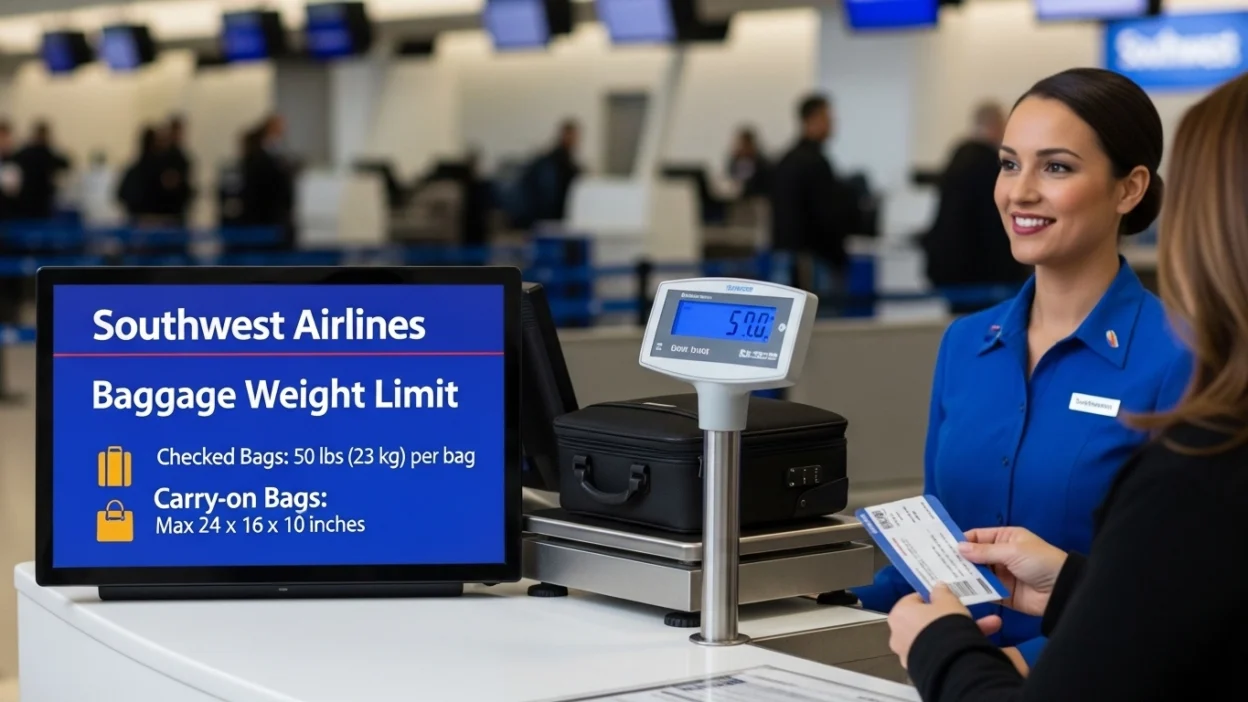
Understanding the Southwest Airlines baggage weight limit is essential for travelers who want a smooth, stress-free airport experience.
Baggage rules can be confusing, especially when different airlines follow different policies. Southwest Airlines stands out because it offers one of the most traveler-friendly baggage allowances in the U.S. airline industry, including free checked bags.
However, weight and size limits still apply, and exceeding them can lead to unexpected fees or even denied baggage at the airport.
Many passengers search for this information to avoid last-minute surprises, extra costs, or delays during check-in. Whether you are a first-time.
Southwest flyer, a frequent traveler, or planning a family trip, knowing the exact baggage weight limits can help you pack smarter and travel confidently.
In this complete guide, you will learn everything about Southwest Airlines’ checked and carry-on baggage rules, overweight fees, special item policies, and practical tips to avoid extra charges in 2026.
Southwest Airlines Baggage Policy At a Glance
Unlike many airlines that charge for checked luggage, Southwest allows two checked bags for free on most flights. This policy applies to all fare types, including Wanna Get Away, Wanna Get Away Plus, Anytime, and Business Select, which means passengers do not need to purchase a premium ticket to enjoy this benefit.
In addition to free checked bags, Southwest permits one carry-on bag and one personal item per passenger at no extra cost. The carry-on must fit in the overhead bin, while the personal item should fit under the seat in front of you.
It is important to understand that even though checked bags are free, weight and size limits still apply. Each checked bag must stay within the airline’s standard weight allowance, and exceeding that limit can result in overweight or oversized baggage fees.
However, knowing the exact rules before you arrive at the airport can save you time, money, and stress. This overview sets the foundation for understanding the detailed baggage weight limits, fees, and special item rules explained in the sections ahead.
Southwest Airlines Checked Baggage Weight Limit
The Southwest Airlines checked baggage weight limit is one of the most important rules travelers need to understand before heading to the airport. The standard weight limit for a checked bag on Southwest Airlines is 50 pounds (23 kilograms). This limit applies to both free checked bags included with your ticket.
Even being a few pounds over the limit can result in extra charges, so it is wise to weigh your luggage at home before leaving. Unlike some airlines, Southwest does not allow passengers to combine weight between two bags, meaning one lighter bag cannot offset another heavier one.
Understanding these checked baggage weight limits helps travelers avoid unexpected fees and delays. By packing efficiently and staying within the allowed weight, you can fully enjoy Southwest’s generous free checked bag policy without any last-minute stress at the airport.
Southwest Airlines Carry On Baggage Rules
Understanding the Southwest Airlines carry-on baggage rules is essential to ensure a smooth boarding experience. The carry-on bag must fit in the overhead bin, while the personal item should fit completely under the seat in front of you. Common personal items include handbags, backpacks, laptop bags, or small purses.
Southwest specifies clear size limits for carry-on luggage. The maximum carry-on dimensions are typically 10 x 16 x 24 inches, including handles and wheels. Personal items should be smaller and compact enough to fit under the seat without blocking the aisle. While Southwest does not usually enforce a strict carry-on weight limit, the bag must be light enough for you to lift into the overhead bin unassisted.
Passengers should be aware that gate agents may ask to check carry-on bags if the flight is full or if luggage does not meet size requirements. However, overweight or oversized carry-on bags may still face restrictions.
To avoid issues, travelers should measure their bags in advance and avoid overpacking. Using soft-sided luggage, minimizing bulky items, and packing essentials in the personal item can help ensure compliance. Following Southwest’s carry-on rules not only speeds up boarding but also helps maintain a comfortable cabin experience for everyone on the flight.
Southwest Airlines Overweight Baggage Fees
Even though Southwest Airlines offers one of the most generous baggage policies, overweight baggage fees still apply when luggage exceeds the allowed weight limit. The standard checked baggage weight limit is 50 pounds, and any bag weighing more than this will be classified as overweight.
Southwest charges a flat overweight baggage fee per bag, not per pound. This means that whether your bag is just one pound over or close to the maximum allowed weight, the same fee applies.
Southwest does not offer waivers for elite status or higher fare classes when it comes to overweight baggage, so all passengers are subject to the same rules.
To avoid overweight baggage fees, travelers should weigh their luggage at home using a digital luggage scale. Redistributing items between two checked bags, wearing heavier clothing during travel, or placing dense items in carry-on luggage can help reduce weight. Planning ahead and staying within the weight limit allows passengers to take full advantage of Southwest’s free checked bag policy without unexpected costs at the airport.
Southwest Airlines Oversized Baggage Policy
In addition to weight limits, Southwest Airlines also enforces oversized baggage rules that travelers must follow. Even if a bag meets the weight requirement, exceeding the size limit can still result in extra charges.
Common examples of oversized luggage include large hard-shell suitcases, extra-large duffel bags, and certain sports or musical equipment cases. Travelers often overlook size restrictions, assuming weight is the only factor, which can lead to unexpected fees at check-in.
To avoid oversized baggage charges, passengers should measure their luggage at home before traveling. Choosing a standard-size suitcase, avoiding expandable luggage when fully packed, and using soft-sided bags that compress slightly can help stay within the size limit. Understanding Southwest’s oversized baggage policy ensures smoother check-in, fewer surprises, and a more budget-friendly travel experience overall.
Special Items Baggage Weight Rules on Southwest Airlines
Southwest Airlines allows passengers to travel with a variety of special items, but these items are still subject to specific weight, size, and handling rules. Understanding these guidelines in advance can help travelers avoid delays or extra fees at the airport.
In many cases, these items count as one of the two free checked bags, as long as they stay within the standard 50-pound weight limit and size requirements. If sports equipment exceeds the allowed weight or size, overweight or oversized baggage fees may apply.
Knowing how Southwest handles special items helps travelers pack confidently and ensures a smoother journey, especially when traveling with valuable or essential equipment.
Southwest Airlines Baggage Rules for International Flights
Travelers flying internationally with Southwest Airlines need to be aware that baggage rules for international flights can differ slightly from domestic flights. While Southwest still allows two free checked bags per passenger, the airline may enforce stricter weight limits, additional documentation, or customs regulations depending on the destination country.
For international checked baggage, the standard weight limit remains 50 pounds per bag, and the maximum size is 62 linear inches. Oversized bags also follow the same size rules, and additional fees may apply.
Passengers should also be mindful of destination-specific regulations. For example, fragile or valuable items may require special handling or customs declarations to avoid confiscation.
When flying internationally, Southwest recommends weighing and measuring all luggage at home to avoid surprises at the airport. Travelers should also check connecting flights and partner airlines’ baggage rules, as these may differ and affect the overall allowance.
Additionally, personal items and carry-on baggage rules generally remain the same: one carry-on bag that fits in the overhead bin and one personal item under the seat. Knowing these rules in advance ensures that passengers comply with both Southwest’s policies and international regulations, avoiding delays, fees, or confiscation.
Understanding these international baggage rules allows travelers to pack efficiently, travel confidently, and make the most of Southwest’s generous free baggage allowance.
Southwest Airlines Baggage Allowance by Fare Type
Southwest Airlines’ baggage policy applies to all fare types, but understanding how baggage allowance works for each ticket class can help travelers plan better. Southwest offers four main fare types: Wanna Get Away, Wanna Get Away Plus, Anytime, and Business Select. Each fare type allows two free checked bags, one carry-on bag, and one personal item. This consistency makes Southwest’s baggage policy simple and traveler-friendly.
The Wanna Get Away fare is the most budget-friendly option and includes the standard free baggage allowance. Despite its low cost, passengers enjoy the same checked and carry-on baggage privileges as higher fare classes. This is one reason Southwest is popular with cost-conscious travelers.
The Wanna Get Away Plus fare provides additional flexibility, including options like early check-in and faster boarding, but the baggage rules remain identical to the standard allowance. Similarly, Anytime and Business Select fares include the same free checked bag and carry-on policy, along with additional perks like refundable tickets or priority boarding.
It’s important to note that overweight or oversized fees apply equally to all fare types. No ticket class waives charges for bags over 50 pounds or oversized items, so even premium passengers must adhere to the weight and size limits.
Understanding how Southwest’s baggage allowance works by fare type allows travelers to choose a ticket that matches their travel priorities without worrying about differences in luggage rules. It ensures that every passenger, regardless of ticket price, can take advantage of Southwest’s generous free baggage policy while avoiding extra fees.
Southwest Airlines Baggage Policy for Families & Groups
This rule applies to children, adults, and infants, making it easier for families to plan their packing without worrying about extra fees.
For families with infants or toddlers, Southwest allows parents to check strollers and car seats for free.
Groups traveling together should also be aware of boarding procedures. Southwest uses an open seating policy with numbered boarding groups, which means that passengers who travel as a group should arrive early to board together. Luggage management is also important, as each person’s bags must comply with weight and size limits. Overweight or oversized fees apply per bag, regardless of group size.
Using luggage scales at home, selecting lightweight suitcases, and keeping essential items in personal bags can prevent overweight or oversized fees.
By following Southwest’s family-friendly baggage policies, travelers can enjoy a smoother airport experience, avoid extra fees, and ensure that all members of the group have what they need for a comfortable journey.
How to Avoid Extra Baggage Fees on Southwest Airlines
Even though Southwest Airlines offers two free checked bags, travelers can still incur extra fees if their luggage exceeds the weight or size limits. Avoiding these fees requires planning and strategic packing. The first step is to weigh your bags at home using a reliable luggage scale. This simple step ensures that each bag stays under the 50-pound weight limit, preventing overweight fees at the airport.
Next, pay attention to bag dimensions. Checked luggage should not exceed 62 linear inches, and carry-on items must fit in the overhead bin. Oversized bags incur additional fees, so measuring your luggage before you leave home can save both money and stress. Soft-sided luggage is often easier to compress and adjust to meet size requirements.
For heavier items, consider redistributing weight between multiple bags. If one bag is slightly over the limit, moving a few items to a lighter bag can keep both under the allowed weight. Travelers can also wear heavier clothing or pack bulky items in their carry-on to reduce checked bag weight.
Additionally, packing efficiently is key. Roll clothing instead of folding, use packing cubes, and avoid unnecessary items. Prioritize essentials in your personal item or carry-on to minimize weight in checked luggage.
By following these tips, passengers can take full advantage of Southwest Airlines’ free baggage allowance without paying extra fees. Smart packing ensures a smoother check-in process, less stress at the airport, and more money saved for the trip itself.
Southwest Airlines Baggage Policy Compared to Other Airlines
Southwest Airlines stands out in the U.S. airline industry for its generous baggage policy, especially when compared to other major carriers like Delta, American Airlines, and United. Most airlines now charge passengers for checked bags, even for their first and second pieces, while Southwest allows two free checked bags per passenger. This simple rule often makes Southwest the more cost-effective option for travelers who pack more or travel with family.
When it comes to weight limits, Southwest follows a standard of 50 pounds per checked bag, which is comparable to many other U.S. airlines. However, carriers like Delta and American often charge fees for the first checked bag, making Southwest more budget-friendly for travelers who need to bring more luggage. In terms of oversized baggage, fees across airlines are generally similar, but Southwest’s transparency and easy-to-understand rules reduce confusion for passengers.
Carry-on baggage rules also differ slightly. Southwest allows one carry-on bag and one personal item, with no weight limit enforced, as long as the bag fits size requirements. Some competitors may impose stricter carry-on size limits or weigh bags at the gate, which can catch travelers off guard.
Southwest’s consistent baggage rules across fare types, family-friendly policies, and transparent fee structure make it a popular choice for domestic travelers. Understanding these differences can help passengers choose the best airline for their travel needs, avoid hidden fees, and enjoy a stress-free trip while maximizing their luggage allowance.
By comparing baggage policies, travelers can see why Southwest continues to be a preferred airline for those looking to save money and travel efficiently.
Common Mistakes Travelers Make with Southwest Baggage
Even with Southwest Airlines’ clear and generous baggage policies, travelers often make mistakes that can lead to extra fees, delays, or stress at the airport. One of the most common errors is assuming unlimited baggage. Although Southwest allows two free checked bags, passengers sometimes overpack, thinking that there are no limits on weight or size. This misconception often results in overweight or oversized baggage fees.
Another frequent mistake is ignoring carry-on size rules. While carry-on bags are not typically weighed, they must fit in the overhead bin. Travelers sometimes try to bring oversized bags onboard, only to have them gate-checked, which can slow down boarding and create unexpected handling.
Last-minute packing is another issue. Travelers who pack in a rush may not check the weight of their bags, leading to overweight fees at check-in. Using small digital luggage scales at home can prevent this problem.
Misunderstanding special item rules is also common. Parents traveling with strollers, families with sports equipment, or musicians carrying instruments sometimes assume these items will automatically bypass baggage restrictions. While Southwest is generous with certain special items, failing to follow the proper procedures can still cause delays or fees.
Finally, travelers occasionally fail to plan for connecting flights or partner airline rules, which may differ from Southwest’s policy.
By understanding and avoiding these mistakes, passengers can fully utilize Southwest’s generous baggage allowance, reduce stress at the airport, and save money. Careful planning, measuring, and packing efficiently are key to a smooth travel experience.
Real Life Scenarios & Examples
Understanding Southwest Airlines’ baggage rules is easier when illustrated with real-life scenarios. For instance, imagine a traveler bringing a checked bag weighing 49 pounds. This bag is within the free checked baggage weight limit, so no additional fees apply. This small difference highlights why weighing luggage at home is essential.
Another common scenario involves oversized luggage. A passenger may have a large duffel bag that fits the weight limit but measures 64 linear inches, exceeding the 62-inch size allowance. In this case, the traveler would need to pay the oversized baggage fee, even though the bag is under the weight limit.
Special items also create unique scenarios. A family traveling with a stroller and car seat can check these items for free, and they do not count toward the two-bag allowance. Similarly, a musician bringing a guitar in a hard case may check it as one of their two free bags if it meets size and weight requirements, but exceeding limits could result in fees.
Sports equipment, such as skis or golf clubs, is another example. These items often count as one checked bag, but weight and size restrictions still apply.
These real-life examples help travelers understand how weight, size, and special item rules work in practice, making it easier to plan ahead, avoid fees, and ensure a smooth airport experience with Southwest Airlines.
FAQs:
1. What is the maximum weight allowed for checked bags on Southwest Airlines?
Each checked bag can weigh up to 50 pounds.
2. Are carry-on bags weighed?
Carry-on bags are not typically weighed, but they must fit the 10 x 16 x 24-inch size limit. Personal items must fit under the seat in front of you. Oversized carry-ons may be gate-checked.
3. How many free checked bags do I get?
Southwest allows two free checked bags per passenger on all fare types, including Wanna Get Away, Anytime, and Business Select.
4. Are there extra fees for oversized bags?
Yes. Bags exceeding 62 linear inches in size are considered oversized and require a separate fee.
5. Do special items like strollers or sports equipment count toward my baggage allowance?
Certain items, including strollers, car seats, and mobility aids, do not count toward your standard two-bag allowance. Sports equipment counts as one checked bag but must comply with weight and size limits.
6. Does baggage policy differ for international flights?
International flights follow the same weight and size rules, but travelers should check destination-specific regulations and customs rules.
Conclusion
Understanding the Southwest Airlines baggage weight limit is essential for a smooth, stress-free travel experience.
From the generous allowance of two free checked bags to clear carry-on rules, Southwest makes packing simpler than many other airlines.
However, staying within the 50-pound weight limit for checked bags, avoiding oversized luggage, and properly handling special items like strollers, sports gear, or musical instruments is crucial to avoid extra fees or delays.
Travelers flying internationally should also pay attention to destination-specific regulations and customs requirements.
By weighing luggage at home, measuring bag dimensions, and packing strategically, passengers can maximize Southwest’s baggage benefits while minimizing costs. Families, groups, and first-time travelers all benefit from planning ahead and understanding the airline’s policies.
Following these guidelines ensures that your journey is comfortable, cost-effective, and hassle-free, allowing you to enjoy the trip rather than worrying about baggage rules.

Amina Khalid is a registered clinical psychologist and certified Behaviour Support Practitioner based in Brisbane, Australia. With a Doctorate in Clinical Psychology and more than a decade of experience supporting families, caregivers, and individuals with complex behavioural needs, she is known for her compassionate approach and evidence‑based practice. Amina also lectures in clinical and counselling psychology and specializes in psychometric assessment and capacity‑building interventions for children and adults.