
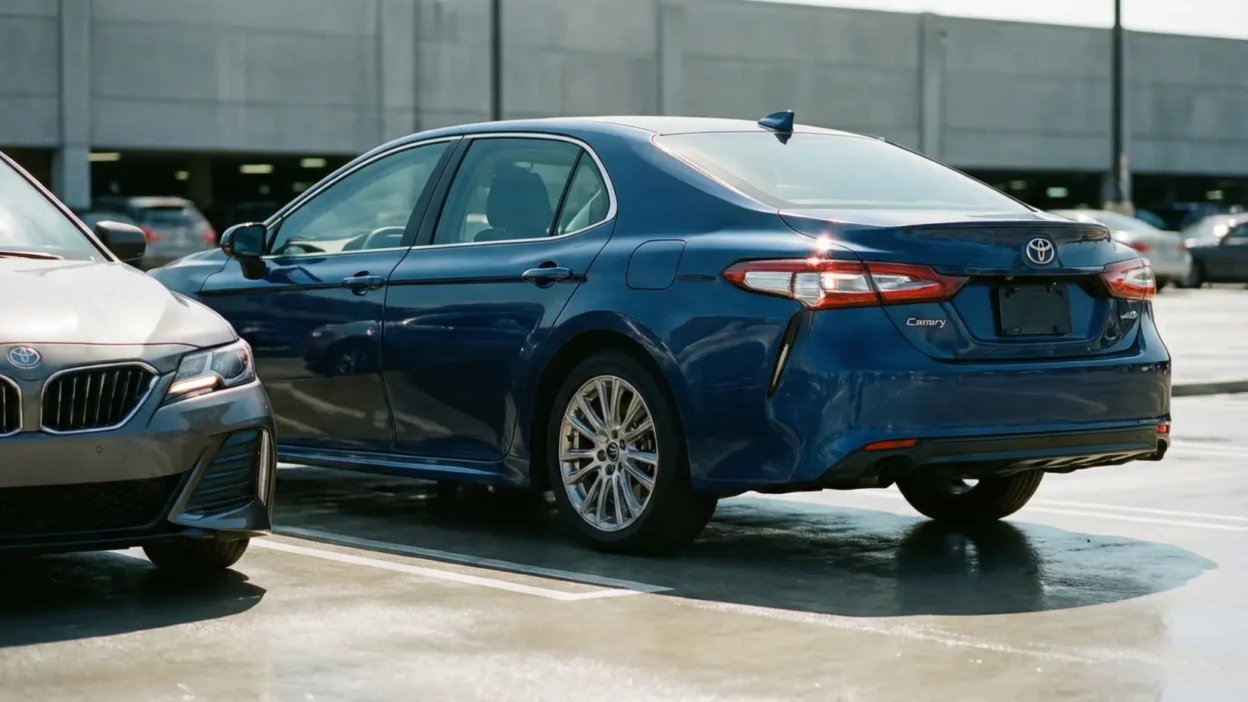
The Toyota Camry has long been one of the most popular mid-size sedans on the market, known for its reliability, comfort, and efficient performance.
Whether you’re a car enthusiast, a potential buyer, or simply curious about automotive specs, understanding the weight of a Camry can provide valuable insights into its fuel efficiency, handling, and overall performance.
From curb weight to gross vehicle weight, each factor plays a crucial role in how the car drives, brakes, and even responds in different road conditions.
Additionally, variations in trim levels, engine types, and hybrid options mean that not all Camrys are created equal in terms of weight.
In this article, we will explore the Toyota Camry’s weight across different model years and trims, compare it to competitors, and explain how weight impacts performance, safety, and practicality, helping you make a more informed decision.
What is Car Weight and Why it Matters
When discussing cars like the Toyota Camry, understanding weight is more important than many people realize. There are two main types of weight to know: curb weight and gross vehicle weight. Curb weight refers to the total weight of the car with all standard equipment and fluids but without passengers or cargo. Gross vehicle weight includes the maximum load the car can safely carry, including passengers, cargo, and additional accessories.
Car weight directly affects several key aspects of driving. A heavier vehicle typically provides a smoother ride and improved stability, especially on highways, but may use more fuel and take slightly longer to accelerate. Lighter vehicles, on the other hand, tend to be more fuel-efficient and agile, but they may feel less stable at high speeds or during sudden maneuvers.
Several factors influence a car’s weight. Engine size plays a major role: a V6 engine adds more weight than a 4-cylinder engine. Drivetrain type is another factor; all-wheel-drive (AWD) versions are heavier than front-wheel-drive (FWD) models. Optional features such as sunroofs, premium audio systems, and hybrid technology can also add pounds.
Understanding these differences is essential when choosing a Camry or comparing it to other mid-size sedans. Weight impacts fuel efficiency, handling, safety, and even everyday usability, making it a critical factor for both buyers and car enthusiasts.
Toyota Camry Weight by Model Year
The Toyota Camry has evolved significantly over the years, and its weight has changed slightly with each generation due to design improvements, added safety features, and technological upgrades. Knowing the weight for each model year helps buyers understand differences in performance, fuel efficiency, and handling.
For example, the 2018 Camry had a curb weight ranging from approximately 3,240 lbs for the 4-cylinder LE trim to 3,540 lbs for the V6 XLE trim. The 2019 and 2020 models saw minor changes, with curb weights slightly increasing due to enhanced safety and comfort features. In these years, 4-cylinder models typically weighed around 3,310–3,350 lbs, while V6 models ranged between 3,580–3,600 lbs.
The 2021 Camry introduced a refreshed design, slightly increasing weight in some trims. The LE and SE trims weighed about 3,310–3,355 lbs, while the XLE and XSE trims with V6 engines reached 3,580–3,635 lbs. Hybrid models were heavier due to their battery packs, typically weighing around 3,580–3,625 lbs.
By the 2022 and 2023 models, Toyota focused on lightweight materials to improve fuel efficiency, slightly offsetting the weight from added features. Most 4-cylinder trims averaged 3,300–3,350 lbs, while V6 trims stayed close to 3,600 lbs. Hybrid versions remained the heaviest due to battery systems.
Toyota Camry Weight by Trim
The Toyota Camry comes in multiple trims, and each trim has slight differences in weight due to added features, engine types, and design upgrades. Understanding the weight by trim can help buyers choose a model that fits their needs for fuel efficiency, handling, and performance.
The LE trim, the most basic option, is typically the lightest. For recent models like 2023–2025, the 4-cylinder LE weighs approximately 3,310–3,350 lbs, making it a more fuel-efficient and agile option. The SE trim adds sportier suspension and styling upgrades, which slightly increases weight to around 3,345–3,380 lbs.
The XLE trim focuses on luxury and comfort, adding features like leather seats, advanced infotainment systems, and extra safety equipment. These additions increase the weight to approximately 3,450–3,500 lbs for 4-cylinder versions and 3,580–3,600 lbs for V6 engines. The XSE trim, combining luxury with sportier performance, has similar weight ranges to the XLE but may feel heavier due to added suspension and performance components.
Hybrid trims are the heaviest of all due to the battery pack. For example, the Camry Hybrid LE weighs around 3,580 lbs, while the Hybrid XLE and XSE can reach 3,600–3,625 lbs.
Knowing the weight differences by trim is important because it affects acceleration, braking, and fuel economy. Lighter trims are easier on gas and more agile, while heavier trims provide additional comfort, safety, and features that many drivers value.
Toyota Camry Weight by Engine and Drivetrain
The Toyota Camry’s weight can vary significantly depending on the engine type and drivetrain configuration. These differences directly impact performance, fuel efficiency, and handling, making them important considerations for buyers.
Most Camry models are equipped with either a 4-cylinder engine or a V6 engine. The 4-cylinder engines, found in trims like the LE and SE, are lighter and more fuel-efficient. For recent models (2023–2025), 4-cylinder Camrys generally weigh between 3,310–3,380 lbs. The V6 engines, available in trims such as XLE and XSE, add power but also additional weight, with curb weights around 3,580–3,600 lbs.
Drivetrain also affects weight. Most Camrys are front-wheel drive (FWD), which keeps weight lower. However, all-wheel drive (AWD) is available on some trims, primarily in the SE and XLE versions, adding approximately 75–100 lbs due to the extra components. This additional weight can slightly reduce fuel efficiency but improves traction and handling in wet or slippery conditions.
Hybrid models are the heaviest due to the battery pack and electric components. The Camry Hybrid LE typically weighs about 3,580 lbs, while Hybrid XLE and XSE trims can reach 3,600–3,625 lbs. Despite the extra weight, hybrids benefit from electric torque and fuel efficiency improvements, balancing performance with economy.
Comparing Toyota Camry Weight with Competitors
When choosing a mid-size sedan, weight can play a big role in performance, fuel efficiency, and overall driving experience. The Toyota Camry is often compared to competitors like the Honda Accord, Nissan Altima, and Hyundai Sonata, and understanding weight differences can help buyers make informed decisions.
The Toyota Camry generally ranges from 3,310 lbs for 4-cylinder trims to 3,600 lbs for V6 or hybrid trims. The Honda Accord, another popular mid-size sedan, is slightly lighter in its base 4-cylinder trims at around 3,100–3,200 lbs, while its 2.0L turbocharged trims approach 3,450–3,500 lbs. This makes the Accord slightly more fuel-efficient but potentially less stable in certain driving conditions.
The Nissan Altima falls in a similar weight range as the Camry, with base models around 3,300–3,350 lbs and AWD versions adding up to 3,450 lbs. Meanwhile, the Hyundai Sonata is comparable, with 4-cylinder trims around 3,215–3,270 lbs and hybrid trims exceeding 3,550 lbs.
While weight differences may seem small, they can impact handling, braking, and fuel efficiency. Heavier vehicles like the Camry tend to provide a more solid feel on the road and enhanced safety in collisions, whereas lighter competitors may feel nimbler and slightly more fuel-efficient.
How Weight Affects Performance and Safety
The weight of a vehicle like the Toyota Camry has a direct impact on both its performance and safety, making it an important factor for drivers to consider. Heavier vehicles often provide a smoother ride and better stability, especially at high speeds or on uneven roads. This increased mass helps the car maintain traction and reduces the feeling of being pushed around during sharp turns or windy conditions.
Acceleration is also influenced by weight. Lighter trims, such as the Camry LE with a 4-cylinder engine, typically accelerate faster relative to their engine size because there’s less mass to move. Conversely, heavier trims, like the V6 XSE or hybrid versions, may have slightly slower acceleration, but the added weight contributes to a more planted, confident driving experience.
Braking distance is another area affected by weight. While heavier cars can take longer to stop under the same conditions, modern braking systems in the Camry are designed to handle the added mass efficiently. Additionally, heavier cars generally perform better in collisions, absorbing more impact and providing increased protection to passengers.
Hybrid trims, while heavier due to battery packs, maintain strong performance thanks to electric torque and advanced engineering. Understanding how weight interacts with handling, acceleration, braking, and safety allows drivers to choose the right Camry trim for their priorities—whether it’s fuel efficiency, sporty driving, or enhanced passenger protection.
FAQs About Toyota Camry Weight
Many buyers and car enthusiasts have questions about the Toyota Camry’s weight, especially because it affects performance, fuel efficiency, and handling. Here are some of the most frequently asked questions:
1. What is the curb weight of a 2025 Toyota Camry?
The 2025 Camry’s curb weight varies by trim. The 4-cylinder LE and SE trims weigh around 3,310–3,380 lbs, while V6 trims like the XLE and XSE range from 3,580–3,600 lbs. Hybrid models are heavier, typically between 3,580–3,625 lbs.
2. How does the hybrid Camry’s weight affect performance?
Hybrid trims weigh more due to their battery packs, but they maintain strong acceleration and fuel efficiency thanks to electric torque. Heavier weight also enhances stability and safety during collisions.
3. Does weight impact fuel efficiency?
Yes. Lighter trims are generally more fuel-efficient because less energy is needed to move the car. Heavier trims may use slightly more fuel but offer additional comfort, features, and stability.
4. How does the Camry compare to competitors?
The Camry is slightly heavier than some competitors like the Honda Accord and Hyundai Sonata, but its weight contributes to better stability and crash protection, making it a balanced choice in the mid-size sedan category.
5. Why do different trims have different weights?
Weight varies due to engine size, drivetrain (FWD vs AWD), hybrid components, and added luxury or safety features. Buyers should consider which trim meets their priorities for fuel efficiency, performance, and comfort.
Conclusion
Understanding the Toyota Camry’s weight is essential for anyone considering this popular mid-size sedan.
From the curb weight to gross vehicle weight, each factor influences the car’s performance, fuel efficiency, handling, and safety.
Over the years, the Camry has evolved, with variations in weight across model years, trims, engine types, and hybrid options.
Lighter trims like the 4-cylinder LE or SE provide better fuel efficiency and nimble handling, while heavier trims, including V6 and hybrid versions, offer enhanced comfort, stability, and safety.
Weight also plays a key role in everyday driving. It affects acceleration, braking, and cornering performance, and can even influence how the car handles additional passengers or cargo.
Comparing the Camry to competitors like the Honda Accord, Nissan Altima, and Hyundai Sonata shows that the Camry strikes a balance between lightness for efficiency and heft for stability.
Hybrid models, while heavier due to battery packs, demonstrate that added weight does not necessarily compromise performance thanks to modern engineering.
For potential buyers, understanding weight differences across trims, model years, and engine options helps make an informed decision.
If prioritizing fuel economy, sporty driving, luxury features, or safety, the Camry offers options that cater to diverse needs.
Considering weight alongside other specifications ensures that your choice will deliver the best combination of performance, comfort, and reliability for years to come.

Fyodor Dostoevsky (1821–1881) was a renowned Russian novelist, short story writer, essayist, and philosopher whose works explore human psychology, morality, and existential dilemmas. Best known for classics like Crime and Punishment, The Brothers Karamazov, and The Idiot, Dostoevsky’s writing has influenced literature, psychology, and philosophy worldwide.